




Breast Cancer
Latest News
Advertisement
Latest Videos






































































Advertisement
More News
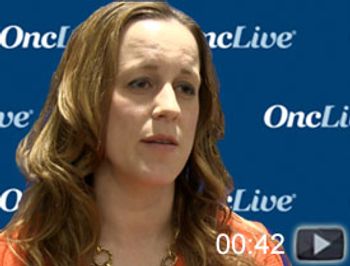
Erika P. Hamilton, MD, director, Breast and Gynecologic Cancer Research Program, Sarah Cannon Research Institute, discusses the FDA approval of pertuzumab (Perjeta) for use in combination with trastuzumab (Herceptin) and chemotherapy for the adjuvant treatment of patients with HER2-positive early breast cancer.

The FDA has approved pertuzumab in combination with trastuzumab and chemotherapy as an adjuvant treatment for patients with HER2-positive early breast cancer at high risk for recurrence.

The introduction of cyclin-dependent kinase 4/6 inhibitors has resulted in a significant paradigm shift in the treatment of hormone receptor–positive breast cancer, helping to make the new agents part of rapidly developing improvements in personalized care for patients.

Susan Domchek, MD, director of the Basser Center for BRCA at Penn Medicine, discusses the MEDIOLA trial in breast cancer.

The European Union’s CHMP has delivered a positive opinion for Herzuma (CT-P6), a trastuzumab (Herceptin) biosimilar in HER2-positive early breast cancer, metastatic breast cancer, and metastatic gastric cancer.

Mothaffar Fahed Rimawi, MD, discusses the significance of precision medicine in HER2-positive breast cancer, as well as the possible role of immunotherapy for this specific population.

Debu Tripathy, MD, professor of medicine, chair, Department of Breast Medical Oncology, The University of Texas MD Anderson Cancer Center, discusses lurbinectedin (PM01183) for patients with breast cancer.

The combination of olaparib (Lynparza) and durvalumab (Imfinzi) demonstrated a disease control rate of 80% for pretreated patients with germline BRCA-mutated, HER2-negative metastatic breast cancer,

Tari King, MD, FACS, chief of Breast Surgery, Dana-Farber Cancer Institute, Brigham Women’s Cancer Center, discusses lymph node resection in breast cancer.

Debu Tripathy, MD, professor of medicine, chair, Department of Breast Medical Oncology, The University of Texas MD Anderson Cancer Center, discusses neratinib (Nerlynx) for the treatment of patients with HER2-positive breast cancer.

The combination of abemaciclib and pembrolizumab showed preliminary signs of activity without additive toxicity for patients with pretreated HR-positive, HER2-negative metastatic breast cancer.

Monotherapy with an antibody drug conjugate targeting the transmembrane protein LIV-1 had encouraging antitumor activity in a phase 1 study of patients with heavily pretreated TNBC.

Enzalutamide (Xtandi) added to exemestane improved progression-free survival in patients with hormone receptor-positive advanced breast cancer and no prior endocrine therapy who were positive for a gene signature-based biomarker indicating androgen receptor-signaling.

Trastuzumab deruxtecan (ds-8201a), a HER2-targeting antibody-drug conjugate, demonstrated significant clinical activity in heavily pretreated patients with HER2-expressing metastatic breast cancers.

Detection of positive circulating tumor cells in the blood 5 years after a breast cancer diagnosis was associated with an increased risk for late recurrence in women with HR–positive, HER2-negative breast cancer

Treatment with the combination of pembrolizumab (Keytruda) and eribulin (Halaven) demonstrated a 26.4% objective response rate for patients with metastatic triple-negative breast cancer.
Harold Burstein, MD, PhD, medical oncologist, Dana-Farber Cancer Institute discusses some key findings from the follow-up data from the SOFT trial.

Losing even some extra weight significantly reduces the risk of breast cancer for postmenopausal women, expert says.

Neoadjuvant treatment with abemaciclib (Verzenio) plus anastrozole induced complete cell cycle arrest as measured by Ki67 for 67.8% of patients with HR-positive/HER2-negative early-stage breast cancer.

Older women with HR–positive breast cancer treated with a CDK4/6 inhibitor may derive a progression-free survival benefit similar to that seen in their younger counterparts

The PARP inhibitor talazoparib reduced the risk of disease progression or death by 46% versus chemotherapy in patients with BRCA-positive advanced breast cancer.
Dawn Hershman, MD, MS, professor of Medicine and Epidemiology, Columbia University Medical Center, discusses the use of acupuncture to treat joint pain caused by aromatase inhibitors in patients with breast cancer.

Substituting nab-paclitaxel (Abraxane) for solvent-based paclitaxel as neoadjuvant chemotherapy improved disease-free survival in patients with high-risk early breast cancer.
Susan Domchek, MD, director of the Basser Center for BRCA at Penn Medicine, discusses some questions that remain after the recent phase II MEDIOLA trial.

Halle Moore, MD, medical oncologist, the Cleveland Clinic, discusses the use of GnRH agonists to preserve ovarian function and fertility in women with breast cancer.
Advertisement
Advertisement
Trending on OncLive
1
FDA Approves Tucatinib Plus Trastuzumab/Pertuzumab as First-Line Maintenance in Advanced HER2+ Breast Cancer
2
FDA Grants Breakthrough Device Designation to Natera’s Multi-Cancer Early Detection Assay
3
Five Under 5: Top Oncology Videos for the Week of 10/5/2026
4
GI Cancer Monthly Rewind: Key News and Expert Insights You May Have Missed in September 2026
5