




Precision Medicine in Oncology®
Latest News
Advertisement
Latest Videos

































































Advertisement
More News

Revumenib demonstrated clinically meaningful activity, including high response and minimal residual disease negativity rates, in heavily pretreated patients with KMT2A-rearranged acute leukemia.

In this seventh episode of OncChats: Assessing the Promise of AI in Oncology, Toufic A. Kachaamy, MD, and Douglas Flora, MD, LSSBB, FACCC, discuss how artificial intelligence tools may be utilized to improve wait time for treatment, to provide more time for provider-patient interactions, and more.

The addition of inavolisib to palbociclib and fulvestrant improved progression-free survival vs palbociclib and fulvestrant alone in select patients with PIK3CA-mutated, hormone receptor–positive, HER2-negative, locally advanced or metastatic breast cancer.

In this final episode of OncChats: Reviewing Best Practices in the Surgical Management of Breast Cancer, Gladys Giron, MD, FACS, and Cristina Lopez-Peñalver, MD, shed light on clinical outcomes following surgery of the primary tumor in patients with stage IV breast cancer.
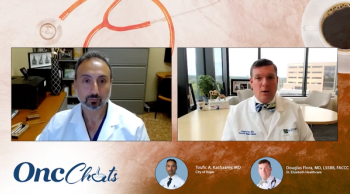
In this sixth episode of OncChats: Assessing the Promise of AI in Oncology, Toufic A. Kachaamy, MD, and Douglas Flora, MD, LSSBB, FACCC, discuss potential opportunities to leverage artificial intelligence tools in cancer screening, diagnosis, staging, and prognosis.

Christopher M. Gallagher, MD, discusses unmet needs surrounding the use of antibody-drug conjugates, as well as questions remaining with other approved agents in breast cancer.

Shridar Ganesan, MD, PhD, discusses the current limitations and advantages of leveraging circulating-tumor DNA to detect minimal residual disease in patients with cancer, as well as how ctDNA assays may address mechanisms of resistance in clinical practice.
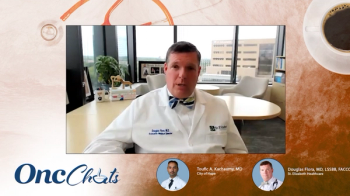
In this fifth episode of OncChats: Assessing the Promise of AI in Oncology, Toufic A. Kachaamy, MD, and Douglas Flora, MD, LSSBB, FACCC, discuss the need for evidence to support the utilization of different artificial intelligence tools in healthcare.
The Center for Drug Evaluation of China’s National Medical Products Administration has accepted the new drug application seeking the approval of the next-generation ROS1 TKI taletrectinib for the treatment of patients with locally advanced or metastatic ROS1-positive non-small cell lung cancer with prior exposure to a ROS1 TKI.

Bayer has voluntarily recalled 1 lot of the larotrectinib 20 mg/mL oral solution that is packaged in 100-mL glass bottles because of the presence of Penicillium brevicompactum contamination that was observed during ongoing, routine stability testing.
Alan Tan, MD, discusses the ongoing potential utility of circulating tumor DNA in patients with renal cell carcinoma and highlights how this approach is being used in his own practice.
The FDA has approved the FoundationOne® CDx for use as a companion diagnostic to identify patients with advanced hormone receptor–positive, HER2-negative advanced breast cancer who may be eligible for treatment with the combination of capivasertib and fulvestrant.

MRT-2359 had acceptable tolerability with a favorable pharmacokinetic and pharmacodynamic profile in heavily pretreated patients with MYC-driven solid tumors, including lung cancer and high-grade neuroendocrine cancer.

A supplemental biologics license application seeking the approval of amivantamab in combination with platinum-based chemotherapy for the treatment of patients with locally advanced or metastatic non–small cell lung cancer harboring EGFR exon 19 deletions has been submitted to the FDA.

In this fourth episode of OncChats: Assessing the Promise of AI in Oncology, Toufic A. Kachaamy, MD, and Douglas Flora, MD, LSSBB, FACCC, explain the importance of having a diverse editorial board behind a new journal on artificial intelligence in precision oncology.
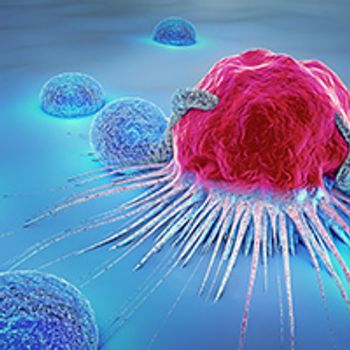
The HER2-directed CAR-macrophage therapy CT-0508 displayed a tolerable safety profile and signs of antitumor activity in patients with a variety of solid tumors.
Christopher M. Gallagher, MD, discusses treatment sequencing considerations with antibody-drug conjugates in patients with HER2-low metastatic breast cancer.

China’s National Medical Products Administration has granted conditional marketing approval to vebreltinib for the treatment of patients with non–small cell lung cancer harboring MET exon 14 skipping mutations.
The FDA has approved repotrectinib (Augtyro) for the treatment of adult patients with locally advanced or metastatic ROS1-positive non–small cell lung cancer.

Howard S. Hochster, MD, discusses the importance of clinical trial participation for patients with cancer and highlights the use of precision medicine across the treatment armamentarium.

In this third episode of OncChats: Assessing the Promise of AI in Oncology, Toufic A. Kachaamy, MD, and Douglas Flora, MD, LSSBB, FACCC, discuss the launch of a new journal that will focus on educating the field on the latest research efforts being made with artificial intelligence.

CMG901 induced responses with a manageable toxicity profile in patients with CLDN18.2-positive gastric or gastroesophageal junction cancer, according to updated data from the dose-expansion phase of the phase 1 KYM901 study.
In this second episode of OncChats: Assessing the Promise of AI in Oncology, Toufic A. Kachaamy, MD, and Douglas Flora, MD, LSSBB, FACCC, explain how artificial intelligence tools may be leveraged in the oncology field to provide personalized care.

The European Medicines Agency had validated a marketing authorization application seeking the approval of the combination of encorafenib and binimetinib for the treatment of adult patients with BRAF V600–mutant advanced non–small cell lung cancer.

Sarah Goldberg, MD, MPH, highlights the mechanism of action of VIC-1911, expands on its ongoing investigation in the phase 1 trial, and sheds light on next steps planned for the agent’s investigation in KRAS G12C–mutant non–small cell lung cancer.
Advertisement
Advertisement
Trending on OncLive
1
Ifinatamab Deruxtecan BLA Voluntarily Withdrawn in Previously Treated Extensive-Stage SCLC
2
Etentamig Improves Response and PFS vs Standard Therapies in Triple-Class Exposed Relapsed/Refractory Myeloma
3
Dr Voorhees on Eligibility Criteria for the CERVINO Trial in Multiple Myeloma
4
FDA Approves Lirafugratinib for Pretreated, Locally Advanced or Metastatic Cholangiocarcinoma
5