




Chronic Lymphocytic Leukemia
Latest News
Advertisement
Latest Videos



























































Advertisement
More News

Researchers are combining the novel CD20-targeting agent ublituximab (TG-1101) with ibrutinib to determine whether the regimen can improve outcomes in CLL, particularly for patients whose disease has high-risk features.

The FDA has assigned a priority review to venetoclax for use in adults with chronic lymphocytic leukemia, including patients with a 17p deletion, following at least 1 prior therapy.

John C. Byrd, MD, discusses the second-generation BTK inhibitor acalabrutinib, which had a 95% response rate in patients with relapsed/refractory chronic lymphocytic leukemia.
Stephan Stilgenbauer, MD, discusses the significance of a clinical trial and the impact venetoclax could have on patients with CLL who harbor a 17p deletion.

Treatment with the combination of the CD20 inhibitor obinutuzumab and the BCL-2 inhibitor venetoclax was tolerable and demonstrated promising signs of efficacy for elderly patients with previously untreated chronic lymphocytic leukemia and comorbidities.
Jeff Sharman, MD, director of Research with Willamette Valley Cancer Institute and Research Center, medical director of Hematology Research for The US Oncology Network, discusses clinical activity of entospletinib in patients with chronic lymphocytic leukemia (CLL) and small lymphocytic lymphoma (SLL) who were previously treated with a B-cell receptor pathway signaling inhibitor.

The FDA has approved a rapid infusion formulation of bendamustine under the trade name Bendeka for the treatment of patients with chronic lymphocytic leukemia or indolent B-cell non-Hodgkin lymphoma that has progressed during or within six months of treatment with rituximab or a rituximab-containing regimen.
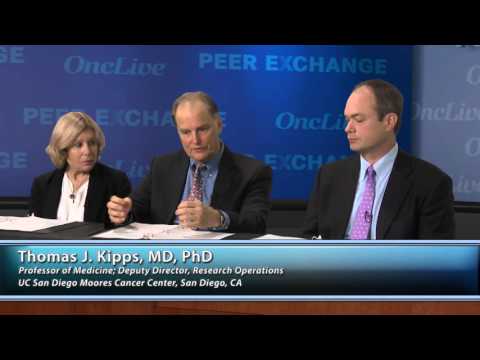
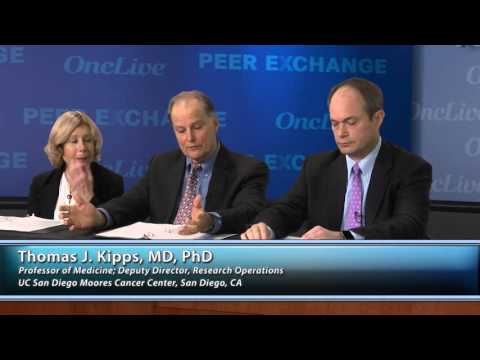
Thomas J. Kipps, MD, PhD, deputy director of Research, Moores University of California, San Diego Cancer Center, professor of Medicine, University of California San Diego, School of Medicine, discusses results of the RESONATE-2 study, which compared ibrutinib versus chlorambucil in elderly patients with treatment-naïve chronic lymphocytic leukemia (CLL)/small lymphocytic lymphoma (SLL).

Preliminary data from an ongoing clinical trial suggest ibrutinib has an acceptable safety profile when used to prevent disease progression in patients with asymptomatic, early-stage chronic lymphocytic leukemia.
Acalabrutinib has demonstrated a 95% response rate and durable remissions with a favorable safety profile in a phase I/II study for patients with chronic lymphocytic leukemia.

Ibrutinib sparks more durable remissions than temsirolimus in patients with relapsed or refractory mantle cell lymphoma.

Updated findings from early stage clinical trials exploring chimeric antigen receptor-modified T-cell therapies continue to highlight the effectiveness of these approaches for patients with non-Hodgkin lymphoma.
Venetoclax, demonstrated an overall response rate of nearly 80% among patients with chronic lymphocytic leukemia harboring the chromosome 17p deletion.

Ibrutinib reduced the risk of death by 84% versus chlorambucil in treatment-naïve elderly patients with chronic lymphocytic leukemia.

The addition of idelalisib to bendamustine and rituximab (BR) reduced the risk of progression or death by 67% compared with BR alone for patients with relapsed/refractory chronic lymphocytic leukemia.

Gene therapy has the potential to deliver long-lasting remissions for patients with advanced B-cell malignancies who already have undergone an allogeneic hematopoietic stem cell transplant.
William G. Wierda, MD, PhD, professor, Department of Leukemia, Division of Cancer Medicine, The University of Texas MD Anderson Cancer Center, discusses two combination studies with venetoclax for patients with chronic lymphocytic leukemia (CLL) during the 2015 ASH Annual Meeting.

William G. Wierda, MD, PhD, gives a better understanding of the changing landscape of chronic lymphocytic leukemia and how treatment options vary among different patient subtypes.

Dr. Thomas Kipps discusses how challenges in CLL may be met in the future and the impact obinutuzumab, venetoclax, and other novel agents could have on CLL treatment.

A phase III study exploring idelalisib in combination with bendamustine and rituximab for patients with previously treated chronic lymphocytic leukemia has been stopped early following a positive interim analysis.
A supplemental new drug application has been submitted for ibrutinib (Imbruvica) for use in combination with bendamustine and rituximab to treat patients with relapsed or refractory chronic lymphocytic leukemia.

Experts discuss developments in CLL, myeloma, and Hodgkin lymphoma.

B-cell pathway inhibitors have shown impressive survival benefits for patients with chronic lymphocytic leukemia, but require careful monitoring and possible suspension to control adverse events.

Alessandra Ferrajoli, MD, discusses the impact of the CLL11 and COMPLEMENT 1 trials, as well as other treatments that may be beneficial to the elderly chronic lymphocytic leukemia population.
Advertisement
Advertisement
Trending on OncLive
1
Adjuvant Giredestrant Preserves QOL With Sustained Tolerability in ER+, HER2– Early Breast Cancer
2
Arcotatug Tavatecan Improves Survival in CLDN18.2+ Advanced Gastric or GEJ Adenocarcinoma
3
Sacituzumab Govitecan Triplet Elicits Durable Responses in Treatment-Naive Metastatic Urothelial Cancer
4
Perioperative Enfortumab Vedotin Plus Pembrolizumab Improves ctDNA Clearance in Cisplatin-Eligible MIBC
5