


Chronic Lymphocytic Leukemia
Latest News
Latest Videos

CME Content
More News

Joseph Flynn, DO, MPH, focuses on the development of novel therapeutics for the treatment of chronic lymphocytic leukemia (CLL) and non-Hodgkin lymphoma (NHL) in his research at The Ohio State University Comprehensive Cancer Center.

Jennifer Woyach, MD, discusses the association of disease progression on ibrutinib therapy with the acquisition of resistance mutations.

As gatekeepers of the cell cycle, the cyclin-dependent kinases are often implicated in the progression of cancer and make prime targets for therapy.

Ofatumumab (Arzerra) failed to meet its primary endpoint of improvement in progression-free survival (PFS) in a phase III study of the drug versus physicians' choice for bulky fludarabine-refractory chronic lymphocytic leukemia (CLL),

The novel agents idelalisib and ABT-199 in combination with rituximab have demonstrated impressive activity with manageable toxicity for patients with relapsed or refractory chronic lymphocytic leukemia.
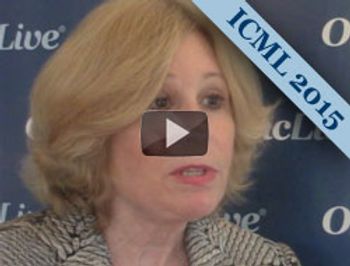
John C. Byrd, MD, from The Ohio State University Comprehensive Cancer Center, discusses the promising findings from the phase III RESONATE trial that compared ofatumumab to ibrutinib in patients with relapsed or refractory chronic lymphocytic leukemia.

Treatment with single-agent ibrutinib dramatically increased PFS by nearly 80% and significantly extended OS by 57% compared with ofatumumab in patients with relapsed or refractory CLL.

At the 18th Annual International Congress on Hematologic Malignancies, Anas Younes, MD, sat down with Oncology & Biotech News to discuss trends in the management of hematologic malignances.

The FDA has approved ofatumumab plus chlorambucil for previously untreated patients with chronic lymphocytic leukemia who are considered inappropriate for treatment with fludarabine therapy.

William G. Wierda, MD, PhD, professor, Department of Leukemia, Division of Cancer Medicine, The University of Texas MD Anderson Cancer Center, discusses treatment options for patients with CLL who harbor the 17p deletion.

Alessandra Ferrajoli, MD, from The University of Texas MD Anderson Cancer Center, discusses managing chronic lymphocytic leukemia (CLL) in elderly patients.

Joseph M. Flynn, DO, MPH, FACP, co-director, Division of Hematology, associate physician-in-chief, OSUCCC - James, discusses cyclin-dependent kinase (CDK) inhibitors for the treatment of chronic lymphocytic leukemia (CLL).

The approval of the first small-molecule, targeted therapy for patients with chronic lymphocytic leukemia (CLL) launches a new era that promises to transform management of the disease, yet significant challenges in translating research advances into improvements in long-term outcomes remain

Renier J. Brentjens, MD, PhD, associate professor, chief, Cellular Therapeutics Center, Memorial Sloan Kettering Cancer Center, discusses the challenges associated with CAR-modified T cells.

Amid advances in targeted therapies for patients with chronic lymphocytic leukemia (CLL), researchers also have been making strides in the realm of chemoimmunotherapy regimens for the disease.

Founded in 1987, Gilead Sciences made a name for itself in 1996, when it launched Vistide, a treatment for cytomegalovirus retinitis in patients with AIDS.

Alessandra Ferrajoli, MD, associate professor, Department of Leukemia, Division of Cancer Medicine, The University of Texas MD Anderson Cancer Center, discusses individualizing the treatment of chronic lymphocytic leukemia (CLL).

William G. Wierda, MD, PhD, professor, Department of Leukemia, Division of Cancer Medicine, The University of Texas MD Anderson Cancer Center, discusses treatment recommendations for patients with CLL.

Jennifer R. Brown, MD, PhD, and John Byrd, MD, are leading researchers in the emerging field of Bruton tyrosine kinase (BTK) inhibition in chronic lymphocytic leukemia (CLL) and other B-cell malignancies.

A greater understanding of the molecular mechanisms underlying lymphoid malignancies has fostered the development of targeted therapies, including those aimed at B-cell signaling pathways.

Alessandra Ferrajoli, MD, discusses the recent approval of ibrutinib for patients with chronic lymphocytic leukemia (CLL) who have received at least one previous therapy.

The FDA has expanded the approval of ibrutinib to include the treatment of patients with chronic lymphocytic leukemia who have received at least one previous therapy.

A crop of targeted agents have demonstrated promising results in fighting chronic lymphocytic leukemia (CLL), suggesting that a range of emerging therapies and drug combinations may be more effective and better tolerated than standard chemotherapy

Renier J. Brentjens, MD, PhD, associate professor, chief, Cellular Therapeutics Center, Memorial Sloan-Kettering Cancer Center, discusses clinical responses in patients with chronic lymphoblastic leukemia (CLL) or acute lymphoblastic leukemia (ALL) following infusion with CD19-targeted T Cells.