
Gastrointestinal Cancer
Latest News
Latest Videos

CME Content
More News

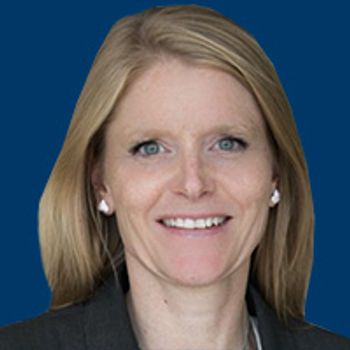
Syma Iqbal, MD, associate professor of clinical medicine, Keck School of Medicine, University of Southern California, discusses the treatment of patients with HER2-driven gastric cancer.

Second-line treatment with pembrolizumab improved overall survival versus chemotherapy in patients with advanced or metastatic esophageal or esophagogastric junction carcinoma whose tumors expressed PD-L1.

Juan Manuel O’Connor, MD, head, Department Gastrointestinal Oncology, Department of Clinical Oncology, Institute Alexander Fleming, Buenos Aires, discusses real-world results with regorafenib (Stivarga) in the treatment of patients with metastatic colorectal cancer (mCRC).


Kabir Mody, MD, medical oncologist, Mayo Clinic, discusses treatment options for patients with hepatocellular carcinoma.

The FDA has approved pembrolizumab for the treatment of patients with hepatocellular carcinoma who have previously received sorafenib.

Jonathan Strosberg, MD, associate professor, Moffitt Cancer Center, discusses updates from the NETTER-1 study in patients with neuroendocrine tumors (NETs).

Tanios Bekaii-Saab, MD, medical oncologist, Mayo Clinic, discusses the utility of next-generation sequencing in metastatic colorectal cancer (mCRC).

As researchers gain a better understanding of the unique aspects of individual tumor types and their surrounding microenvironment, the design of novel therapies categorized as prodrugs is become increasingly sophisticated, and several novel constructs show particular promise.

Syma Iqbal, MD, associate professor of clinical medicine, Keck School of Medicine, University of Southern California, discusses the impact of peptide receptor radionuclide therapy (PRRT) on the treatment of patients with neuroendocrine tumors (NETs).

Afsaneh Barzi, MD, assistant professor of clinical medicine, Norris Comprehensive Cancer Center, University of Southern California, discusses available and emerging neoadjuvant strategies for the treatment of patients with nonmetastatic pancreatic cancer.

Obesity is associated with an increased risk of early-onset colorectal cancer among women and correlates with higher rates of cancer resections in gastrointestinal malignancies across age groups.

Based on fresh studies in the setting of metastatic pancreatic cancer, the American Society of Clinical Oncology now recommends routine testing for mismatch repair deficiency or high microsatellite instability for candidates for checkpoint inhibitor therapy.

Michael Pishvaian, MD, PhD, director, Phase I Clinical Program, co-director of the Ruesch Center Pancreatic Cancer Program Medical Oncology, Otto J. Ruesch Center for the Cure of Gastrointestinal Cancer, Georgetown University Lombardi Comprehensive Cancer Center, discusses the combination of atezolizumab (Tecentriq) and bevacizumab (Avastin) in patients with hepatocellular carcinoma.

A. David McCollum, MD, attending oncologist, Baylor University Medical Center, discusses the clinical utility of regorafenib (Stivarga) in metastatic colorectal cancer (mCRC).

Milind Javle, MD, discusses findings from a phase II study of infigratinib in patients with intrahepatic cholangiocarcinoma, emphasizing the importance of molecular testing.

Syma Iqbal, MD, discusses the evolving treatment paradigm of neuroendocrine tumors.

The second-line treatment of gastric and gastroesophageal junction cancers has shifted considerably in the last few years, due in part to the addition of immunotherapy for select subgroups of patients.

Andrea Cercek, MD, medical oncologist, Memorial Sloan Kettering Cancer Center, discusses induction chemotherapy in patients with mismatch repair deficient rectal cancer.

Juan Manuel O’Connor, MD, discusses the final results of the CORRELATE regorafenib study in patients with metastatic colorectal cancer, emphasizing the importance of real-world data.

Heinz-Josef Lenz, MD, associate director for Adult Oncology and co-leader of the Gastrointestinal Cancers Program, USC Norris Comprehensive Cancer Center, discusses the benefit of regorafenib (Stivarga) in the treatment of patients with colorectal cancer (CRC).

The FDA has granted a priority review to a supplemental new drug application for TAS-102 for use in previously treated patients with advanced or metastatic gastric adenocarcinoma, including cancer of the gastroesophageal junction.

Shirley Michelle Shiller, DO, member of the Precision Medicine Institute's Advisory Committee, Baylor University Medical Center, discusses molecular diagnostics in gastrointestinal (GI) cancers.

Josep M. Llovet, MD, PhD, discusses the rapidly evolving treatment landscape for hepatocellular carcinoma and the work that lies ahead.

Syma Iqbal, MD, associate professor of clinical medicine, Keck School of Medicine, University of Southern California, discusses second- and third-line therapies in gastric cancer.

First results from a study of neoadjuvant ipilimumab plus nivolumab in patients with early-stage colon cancer found a major pathologic response achieved in all 7 patients with mismatch repair deficient tumors.