




Genitourinary Cancers
Latest News
Advertisement
Latest Videos



























































Advertisement
More News

Nizar M. Tannir, MD, FACP, from The University of Texas MD Anderson Cancer Center, discusses a phase I trial of sunitinib and temsirolimus in patients with metastatic renal cell carcinoma.
Arjun Balar, MD, assistant professor of medicine, Division of Hematology & Oncology, New York University Cancer Institute, NYU Langone Medical Center, discusses two trials that evaluate the efficacy of bevacizumab in bladder cancer.

High tumor expression of the protein PD-L1 is independently associated with shorter OS in patients with mRCC receiving treatment with VEGF-targeted therapy.

Two new combinations demonstrated activity in refractory or advanced, previously untreated urothelial carcinoma in phase II evaluations.

Robert Figlin, MD, FACP, discusses updated data on the ADAPT trial, which is an ongoing international phase III randomized trial of autologous dendritic cell immunotherapy (AGS-003) plus standard treatment in metastatic renal cell carcinoma (mRCC)

Survival, measured as either disease-specific survival or relative conditional survival, has not improved for patients with metastatic urothelial carcinoma despite increasing use of second-line therapies with no formal indication in this setting.

Sumanta Kumar Pal, MD, assistant professor, genitourinary cancers, City of Hope, discusses changes in relative conditional survival in metastatic urothelial carcinoma.

A vast, pooled retrospective analysis has demonstrated that the use of ASIs may significantly improve survival outcomes in patients with mRCC.

During the past decade, several oral tyrosine kinase inhibitors targeting the vascular endothelial growth factor have been approved for the first-line treatment of metastatic renal cell carcinoma.

Organization into large group practices will be a key way for urologists to successfully navigate a healthcare system that continues to be fraught with an enormous amount of change, a keynote speaker said during LUGPA's annual meeting in Chicago in November.
Deepak A. Kapoor, MD, former president of the Large Urology Group Practice Association (LUGPA), discusses the successes of and challenges facing LUGPA.

We enjoyed record attendance this year by both physicians and administrators, and despite the pressures of groups being purchased by integrated hospital systems, the organization continues to grow.

Poor nutritional status-specifically, a low level of serum albumin-is a predictor of complications following radical cystectomy for patients with bladder cancer

As fee-for-service models dwindle under healthcare reform, new reimbursement models based on risk are emerging.

Robert Laszewski, President, Health Policy and Strategy Associates, LLC, discusses the effects of the Affordable Care Act (ACA) on urology practices.

Juan A. Reyna, MD, President, LUGPA, discusses in-office ancillary services among LUGPA members.
Raoul Concepcion, MD, director of clinical research, urologic surgeon, Urology Associates, PC, in Nashville, Tennessee discusses some of the challenges that independent and community urologists face.

The mTOR inhibitor temsirolimus has limited utility in combination with frontline bevacizumab and as a second-line single agent for patients with metastatic renal cell carcinoma
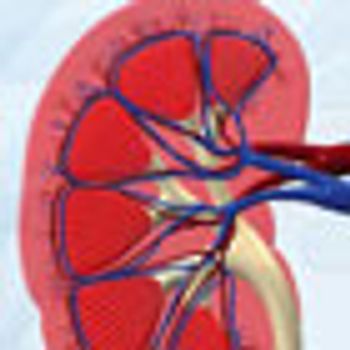
Hyponatremia is significantly associated with worse outcomes in patients with metastatic renal cell carcinoma (mRCC) who received treatment with VEGF- and mTOR-targeted agents
Matthew D. Galsky, MD, assistant professor of medicine, Department of Medicine, Division of Hematology and Medical Oncology, Icahn School of Medicine at Mount Sinai, director, Genitourinary Medical Oncology, Tisch Cancer Institute at Mount Sinai Medical Center, discusses the role of ipilimumab in bladder cancer.

With seven targeted therapies approved for metastatic renal cell carcinoma, researchers and drug developers are now focusing on understanding the best way to sequence these therapies and on identifying predictive biomarkers of response.
Sumanta Kumar Pal, MD, assistant professor, genitourinary cancers, City of Hope, discusses sequencing nivolumab in the treatment of renal cell carcinoma.
Arjun Balar, MD, assistant professor of medicine, Division of Hematology & Oncology, New York University Cancer Institute, NYU Langone Medical Center, discusses the potential of immunotherapy agents as treatment for bladder cancer.

Over the past few years, seven new drugs have gained approval from the FDA for the treatment of patients with metastatic renal cell carcinoma. Primarily these approaches target angiogenesis and mTOR. The advent of these molecularly targeted therapies has significantly improved the standard of care for patients with RCC.
Matthew D. Galsky, MD, from the Tisch Cancer Institute at Mount Sinai Medical Center, explains the mechanism of action of ipilimumab in bladder cancer.
Advertisement
Advertisement
Trending on OncLive
1
Savolitinib Plus Osimertinib NDA Submitted to FDA for MET-Driven, EGFR-Mutated NSCLC After EGFR TKI
2
FDA Grants Priority Review to Elinzanetant for Endocrine Therapy–Associated Vasomotor Symptoms in HR+ Breast Cancer
3
China's NMPA Approves Pirtobrutinib Across CLL
4
Calculating the Real Cost of False Positive Findings in Cancer Screening
5