

Genitourinary Cancers
Latest News
Advertisement
Latest Videos













































Advertisement
More News
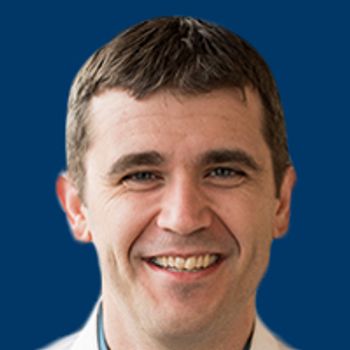
As immunotherapy has become increasingly utilized, urologists are more frequently participating in the management of patients who are receiving immunotherapy.

Bradley McGregor, MD, clinical director, Lank Center for Genitourinary Oncology, senior physician, Dana-Farber Cancer Institute, and instructor of medicine, Harvard Medical School, discusses the combination of atezolizumab (Tecentriq) and bevacizumab (Avastin) in renal cell carcinoma (RCC).
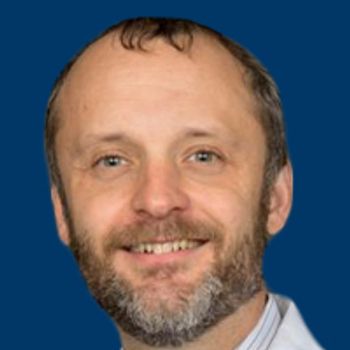
The FDA approved indications in urologic cancers for 6 immune checkpoint inhibitors since 2015. That is unquestionably a good thing for patients, but the rise of these agents means that the role of the urologist in cancer care is changing, and some urologists are still on the fence about these agents.
Combining telaglenastat (CB-839) with everolimus (Afinitor) doubled the median progression-free survival versus everolimus alone in heavily pretreated patients with advanced renal cell carcinoma.
Scott T. Tagawa, MD, Richard A. Stratton Associate Professor in Hematology and Oncology, associate professor of clinical medicine & urology at Weill Cornell Medicine, associate attending physician, NewYork-Presbyterian–Weill Cornell Medical Center, discusses next steps with sacituzumab govitecan in advanced urothelial carcinoma.
The search for effective alternatives to radical cystectomy (RC) in patients with bladder cancer has lasted more than 3 decades. Progress has been slow, but investigators have proved that a combination of radiation, chemotherapy, and maximal transurethral resection of the bladder tumor works as well as RC in carefully selected patients.
Over the past 5 years, medical oncologists have witnessed the revolutionary impact of immunotherapy on patients with advanced urologic malignancies. Over the next 5 years, these therapies likely will similarly transform urologic surgical care.
Bernard H. Bochner, MD, FACS, Sir Murray F. Brennan Chair in Surgery, Memorial Sloan Kettering Cancer Center, discusses future treatment strategies in early-stage non–muscle invasive bladder cancer.
Toni Choueiri, MD, discusses the biomarker analysis results from JAVELIN Renal 101 and provided insight on where the renal cell carcinoma field stands following pivotal data presented at the 2019 ASCO Annual Meeting.
Toni Choueiri, MD, director, Lank Center for Genitourinary Oncology, director, Kidney Cancer Center, senior physician, Dana-Farber Cancer Institute, and Jerome and Nancy Kohlberg Associate Professor of Medicine, Harvard Medical School, discusses findings from the subgroup analysis of the phase III JAVELIN Renal 101 trial in advanced renal cell carcinoma (RCC).
Bradley McGregor, MD, clinical director, Lank Center for Genitourinary Oncology, senior physician, Dana-Farber Cancer Institute, and instructor of medicine, Harvard Medical School, discusses advances made in the adjuvant setting of renal cell carcinoma (RCC).
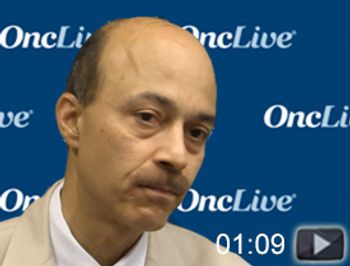
Guru P. Sonpavde, MD, director of Bladder Cancer at Dana-Farber Cancer Institute, discusses the potential for neoadjuvant immunotherapy in bladder cancer.
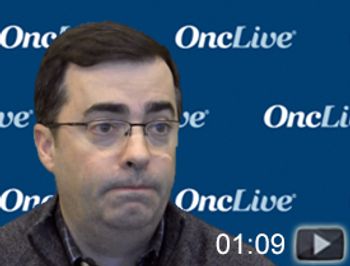
David F. McDermott, MD, director of the Biologic Therapy Program at Beth Israel Deaconess Medical Center, discusses the promise of single-agent pembrolizumab in advanced non–clear cell renal cell carcinoma.
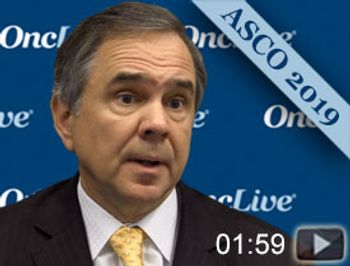
Daniel P. Petrylak, MD, professor of medicine and urology at Yale Cancer Center, 2017 Giant of Cancer Care in Genitourinary Cancers, discusses the phase II EV-201 trial of enfortumab vedotin in patients with locally advanced or metastatic urothelial cancer who were previously treated with platinum-based chemotherapy or a PD-1/PD-L1 checkpoint inhibitor.
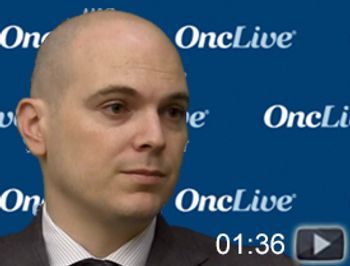
Brian M. Shuch, MD, director, Kidney Cancer Program, Alvin & Carrie Meinhardt Endowed Chair of Kidney Cancer Research, University of California, Los Angeles Institute of Urologic Oncology, discusses caveats of the avelumab plus axitinib combination in frontline advanced renal cell carcinoma.
Advertisement
Advertisement
Trending on OncLive
1
Savolitinib Plus Osimertinib NDA Submitted to FDA for MET-Driven, EGFR-Mutated NSCLC After EGFR TKI
2
Daraxonrasib Approval Signals a New Era for RAS-Targeted Therapy in Pancreatic Cancer
3
Calculating the Real Cost of False Positive Findings in Cancer Screening
4
Cilta-Cel Shows Long-Term Treatment-Free Remissions in Lenalidomide-Refractory Myeloma
5