




Genitourinary Cancers
Latest News
Advertisement
Latest Videos

















































Advertisement
More News

Thomas W. Flaig, MD, discusses the utility of immune checkpoint inhibitors in advanced bladder cancer.

Ulka Vaishampayan, MD, discusses the historical management of patients with metastatic renal cell carcinoma and how advances with systemic therapy have impacted the sequencing of cytoreductive nephrectomy in the treatment paradigm.
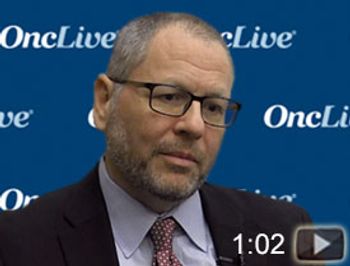
Daniel A. Barocas, MD, MPH, FACS, discusses adjuvant TKI therapy in patients with renal cell carcinoma at high risk of recurrence following cytoreductive nephrectomy.
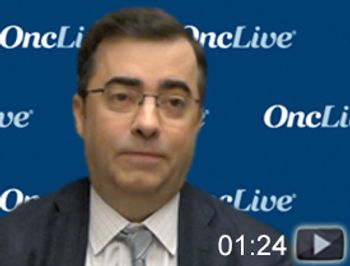
David F. McDermott, MD, discusses the use of PD-1 inhibitors in combination with VEGF inhibitors and CTLA-4 inhibitors in metastatic renal cell carcinoma.

Ajjai Shivaram Alva, MBBS, highlights ongoing advances made in the treatment of patients with metastatic renal cell carcinoma.

Ajjai Shivaram Alva, MBBS, discusses class-specific toxicities of TKIs in renal cell carcinoma.

Ulka Vaishampayan, MD, professor of oncology at Wayne State University, and the chief of the Solid Tumor Program at Barbara Ann Karmanos Cancer Institute, discusses the current role of cytoreductive nephrectomy in metastatic renal cell carcinoma.
Ulka Vaishampayan, MD, discusses the role of frontline immunotherapy and patient selection in metastatic renal cell carcinoma. 
Nancy B. Davis, MD, discusses the excitement with targeted therapies as well as anticipated combination strategies under investigation in advanced urothelial cancer.

OncLive interviewed experts at the State of the Science Summits™ in December 2019 on what the biggest advances in oncology were in 2019.
Japan’s Pharmaceuticals and Medical Devices Agency has approved the combination of pembrolizumab and axitinib for the first-line treatment of patients with radically unresectable or metastatic renal cell carcinoma.
The FDA has granted a priority review designation to a new drug application for UGN-101 for the treatment of patients with low-grade, upper tract urothelial cancer.
The FDA has approved enfortumab vedotin-ejfv for the treatment of adult patients with locally advanced or metastatic urothelial cancer who have received prior treatment with a PD-1/PD-L1 inhibitor and platinum-containing chemotherapy.

Robert J. Motzer, MD, discusses the current frontline treatment landscape of metastatic renal cell carcinoma amongst an influx of approvals.
Martin H. Voss, MD, discusses results of a randomized phase I/II trial looking at the combination of MEDI0680 and durvalumab (Imfinzi) versus nivolumab (Opdivo) in metastatic renal cell carcinoma.
The current management of metastatic renal cell carcinoma reflects the progress of medical oncology throughout the past several decades. The standard of care has evolved from cytokine-based therapies to targeted molecular therapies and immune checkpoint inhibitor–based strategies.

Kathryn E. Beckermann, MD, PhD, instructor of medicine, Division of Hematology/Oncology, Department of Medicine, Vanderbilt University Medical Center, discusses sequencing strategies in metastatic renal cell carcinoma (mRCC).

Nancy B. Davis, MD, discusses the results of the phase III IMvigor130 trial in metastatic urothelial cancer.

Kathryn E. Beckermann, MD, PhD, discusses the available single-agent and combination options for the treatment of patients with metastatic renal cell carcinoma.

Immunotherapy prescriptions for patients with metastatic bladder cancer declined rapidly after the FDA altered the indications of 2 drugs, suggesting that oncologists can keep pace with changes associated with the agency’s accelerated approval program.

Erik P. Castle, MD, discusses minimally invasive surgical approaches in renal cell carcinoma.

As the first targeted therapy in bladder cancer, erdafitinib (Balversa) expands the limited treatment options for the subset of patients with urothelial carcinoma.
Erik P. Castle, MD, discusses the role of cytoreductive nephrectomy in renal cell carcinoma based on interpretation of the CARMENA trial results.
Thai H. Ho, MD, PhD, discusses frontline treatment considerations in metastatic renal cell carcinoma, the utility of TKI monotherapy, and new combinations on the horizon.

Eric Jonasch, MD, discusses how to modulate the tumor microenvironment in renal cell carcinoma.
Advertisement
Advertisement
Trending on OncLive
1
Savolitinib Plus Osimertinib NDA Submitted to FDA for MET-Driven, EGFR-Mutated NSCLC After EGFR TKI
2
Daraxonrasib Approval Signals a New Era for RAS-Targeted Therapy in Pancreatic Cancer
3
Cilta-Cel Shows Long-Term Treatment-Free Remissions in Lenalidomide-Refractory Myeloma
4
Calculating the Real Cost of False Positive Findings in Cancer Screening
5