





Genitourinary Cancers
Latest News
Advertisement
Latest Videos















































Advertisement
More News









A supplemental Biologics License Application has been filed with the FDA for avelumab for the frontline maintenance treatment of patients with locally advanced or metastatic urothelial carcinoma.

Rana R. McKay, MD, discusses the evolving role of cabozantinib in the renal cell carcinoma treatment paradigm and the research being done examining novel combinations.

UGN-102 for intravesical solution induced a 65% complete response rate in patients with low-grade intermediate-risk non-muscle invasive bladder cancer.

Gopa Iyer, MD, discusses the challenges faced with identifying an optimal screening methodology to select patients with bladder cancer for FGFR inhibitor therapy.
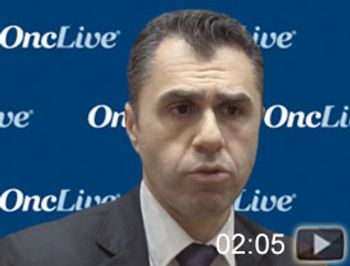
Reza Mehrazin, MD, discusses the findings of the phase III CARMENA trial in metastatic renal-cell carcinoma.

Matthew T. Campbell, MD, discusses the evolving treatment options in the renal cell carcinoma paradigm.

Ziad Bakouny, MD, MSc, discusses the utility of checkpoint inhibitors in renal cell carcinoma with sarcomatoid differentiation.

Stephen A. Boorjian, MD, professor of urology, Mayo Clinic, discusses research with intravesical nadofaragene firadenovec in patients with nonmuscle invasive bladder cancer (NMIBC).

Jonathan E. Rosenberg, MD, medical oncologist, chief, Genitourinary Medical Oncology Service, Memorial Sloan Kettering Cancer Center, discusses the updated results of the phase Ib/II EV-103 trial (NCT03288545) with enfortumab vedotin-ejfv (Padcev) and pembrolizumab (Keytruda) in patients with locally advanced or metastatic urothelial carcinoma.
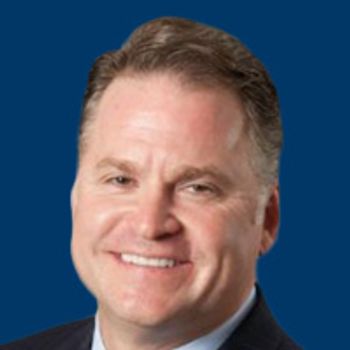
A new drug application has been submitted to the FDA for tivozanib for the treatment of patients with relapsed/refractory renal cell carcinoma, according to Aveo Oncology, the company developing the VEGFR TKI.
The role of immunotherapy in metastatic renal cell carcinoma has grown tremendously with dual immune checkpoint inhibition and combinations of anti–PD-1/VEGF inhibitors.

Advertisement
Advertisement
Trending on OncLive
1
Savolitinib Plus Osimertinib NDA Submitted to FDA for MET-Driven, EGFR-Mutated NSCLC After EGFR TKI
2
Calculating the Real Cost of False Positive Findings in Cancer Screening
3
FDA Grants Priority Review to Elinzanetant for Endocrine Therapy–Associated Vasomotor Symptoms in HR+ Breast Cancer
4
Cilta-Cel Shows Long-Term Treatment-Free Remissions in Lenalidomide-Refractory Myeloma
5