

Genitourinary Cancers
Latest News
Advertisement
Latest Videos















































Advertisement
More News

More than 70% of patients with cisplatin-ineligible locally advanced urothelial cancer had objective responses to the investigational antibody-drug conjugate enfortumab vedotin plus pembrolizumab (Keytruda).

Sacituzumab govitecan demonstrated clinical activity with an overall response rate of 29% in patients with heavily pretreated metastatic urothelial carcinoma.

Adding the investigational glutaminase inhibitor telaglenastat to everolimus extends progression-free survival compared with everolimus alone in patients with heavily pretreated advanced renal cell carcinoma.

The European Medicines Agency’s Committee for Medicinal Products for Human Use has adopted a positive opinion to recommend approval of the combination of avelumab and axitinib for the frontline treatment of adult patients with advanced renal cell carcinoma.

Eric Jonasch, MD, on how understanding features within the tumor microenvironment and mutated epigenetic modifying genes may provide insight on prognosis or treatment strategies in renal cell carcinoma.

Elizabeth Petri Henske, MD, director of the Center for LAM Research and Clinical Care, co-director of the Pulmonary Genetics Center at Brigham and Women’s Hospital, and professor at Harvard Medical School, discusses a newly discovered pathway in chromophobe renal cell carcinoma.
Toni Choueiri, MD, discusses the rationale behind the Kidney Cancer Research Summit and recent advances in the renal cell carcinoma landscape.

The FDA has granted a priority review designation to a biologics license application for enfortumab vedotin for the treatment of patients with locally advanced or metastatic urothelial cancer who have received prior treatment with a PD-1/PD-L1 inhibitor and platinum-containing chemotherapy in the neoadjuvant/adjuvant, locally advanced, or metastatic setting.

Bradley McGregor, MD, clinical director, Lank Center for Genitourinary Oncology, senior physician, Dana-Farber Cancer Institute, and instructor of medicine, Harvard Medical School, discusses how to choose between combination treatments in advanced renal cell carcinoma.
Hans Hammers, MD, PhD, associate professor of internal medicine, Division of Hematology-Oncology, UT Southwestern Medical Center, discusses the challenges with using CAR T-cell therapy in renal cell carcinoma.
Toni Choueiri, MD, discusses what therapy to give patients with renal cell carcinoma after they have received a PD-1/PD-L1 blockade.

Results from the second prespecified analysis of the TIVO-3 trial showed a hazard ratio for overall survival of 0.99 for tivozanib compared with sorafenib in patients with highly refractory metastatic renal cell carcinoma.
Shilpa Gupta, MD, associate professor of medicine, Hematology/Oncology and Transplantation Division, University of Minnesota, discusses the results of the phase I/Ib trial investigating the use of frontline enzalutamide, gemcitabine and cisplatin in metastatic bladder cancer.
Petros Grivas, MD, highlights the evolving role of immunotherapy in bladder cancer and ongoing research slated to further progress along.

The European Commission has approved the combination of pembrolizumab (Keytruda) and axitinib (Inlyta) for the frontline treatment of patients with advanced renal cell carcinoma.
Richard W. Joseph, MD, internist and oncologist, Mayo Clinic, discusses molecular signatures in metastatic renal cell carcinoma (mRCC).

Michael E. Hurwitz, MD, PhD, assistant professor of medicine, Yale Cancer, Center, discusses the various patient cohorts in the ongoing phase I/II PIVOT-02 trial.
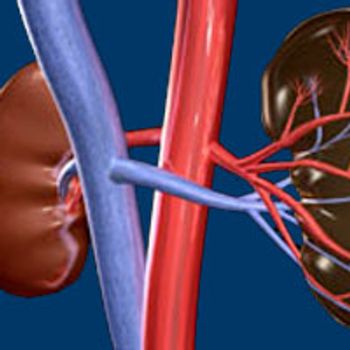
The combination of the off-the-shelf cancer immune primer ilixadencel and sunitinib elicited a 11% complete response rate in patients with metastatic renal cell carcinoma, according to topline findings from the phase II MERECA trial (NCT02432846).

Parminder Singh, MD, discusses ongoing research in advanced urothelial cancer and the focus on incorporating precision medicine in the field.
David D. Thiel, MD, provides perspective on the CARMENA findings in metastatic renal cell carcinoma.

Emerging immunotherapy combinations have offered a strong challenge to sunitinib (Sutent) in the setting of frontline advanced clear cell renal cell carcinoma.

David D. Thiel, MD, chair, Department of Urology, Mayo Clinic, discusses the advancements in surgical techniques for renal cell carcinoma.

Vicinium led to 6- and 12-month complete response rates in patients with high-risk non-muscle invasive bladder cancer who did not respond to Bacillus Calmette-Guérin therapy, according to updated results of the phase III VISTA trial.
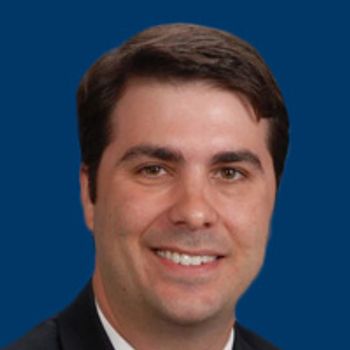
Richard W. Joseph, MD, discusses the factors that must be considered when selecting the appropriate frontline treatment for patients with metastatic renal cell carcinoma, the need for clarity regarding the role of cytoreductive nephrectomy, as well as the research that is being done in those with rarer subtypes of kidney cancer.

David D. Thiel, MD, chair, Department of Urology, Mayo Clinic, discusses resectability in metastatic renal cell carcinoma (mRCC).
Advertisement
Advertisement
Trending on OncLive
1
Savolitinib Plus Osimertinib NDA Submitted to FDA for MET-Driven, EGFR-Mutated NSCLC After EGFR TKI
2
Daraxonrasib Approval Signals a New Era for RAS-Targeted Therapy in Pancreatic Cancer
3
Calculating the Real Cost of False Positive Findings in Cancer Screening
4
Cilta-Cel Shows Long-Term Treatment-Free Remissions in Lenalidomide-Refractory Myeloma
5