






Head & Neck Cancers
Latest News
Advertisement
Latest Videos






































































Advertisement
More News

Joseph A. Califano, MD, professor of surgery, University of California, San Diego, discusses the future of surgery in head and neck cancer.
Kathryn A. Gold, MD, discusses HPV status and prognosis, as well recognizing risk factors of virally-associated head and neck squamous cell carcinoma.

Gregory Daniels, MD, PhD, discusses the current treatment landscape of thyroid cancer and the development of immunotherapy for patients with this disease.

Gregory A. Daniels, MD, PhD, medical oncologist, associate professor of medicine, UC San Diego Health, discusses treatment options for patients with thyroid cancer.

Ezra Cohen, MD, associate director, Moores Cancer Center at the University of California, San Diego, discusses the role of entrectinib in treating patients with head and neck cancer.

Ezra Cohen, MD, discusses the role of immunotherapy, the potential of entrectinib, and the importance of multidisciplinary teams for the treatment of patients with head and neck cancer.
Daniel Zandberg, MD, discusses results from the HAWK study as well as current combination approaches for patients with head and neck cancer.

Although surgery and radiotherapy are standard treatment modalities for grade T1/T2 oral cavity cancer, both approaches have well-documented limitations, including their association with adverse effects that lower quality of life for patients.
The presence of metastatic lymph nodes was directly correlated with poorer survival in patients with oral cancer, according to findings published in the Journal of Clinical Oncology.

The UK’s National Institute for Health and Care Excellence has issued guidelines recommending against nivolumab (Opdivo), lenvatinib (Lenvima), and sorafenib (Nexavar).

Kathryn A. Gold, MD, medical oncologist, associate professor of medicine, UC San Diego Heath, discusses the current state of human papilloma virus (HPV)-related head and neck cancer.
Dan Zandberg, MD, assistant professor of medicine, the University of Maryland School of Medicine, discusses biomarker development in patients with head and neck cancer.
Dan Zandberg, MD, assistant professor of medicine, University of Maryland School of Medicine, discusses the role of immunotherapy in head and neck cancer.
Dan Zandberg, MD, assistant professor of Medicine, the University of Maryland Medical Center, discusses the role of durvalumab (Imfinzi) in patients with metastatic head and neck cancer.

The incidence of mouth and throat cancer is on the rise due to transmission of the human papilloma virus, but physicians at Memorial Sloan Kettering Cancer Center have managed to significantly reduce the intensity of treatment and improve quality of life for these patients.
Ezra Cohen, MD, associate director, Moores Cancer Center at the University of California, San Diego, discusses the phase III KEYNOTE-040 trial in head and neck cancer.

Dan Zandberg, MD, assistant professor, medicine, University of Maryland School of Medicine, discusses the HAWK trial of durvalumab (Imfinzi) in patients with recurrent or metastatic squamous cell carcinoma of the head and neck.

Barbara A. Burtness, MD, discusses the current role of immunotherapy in head and neck cancer and potential combination regimens on the horizon.
Pembrolizumab (Keytruda) reduced the risk of death compared with standard of care therapy in patients with relapsed/metastatic head and neck squamous cell carcinoma, but the difference fell just shy of statistical significance.

High-intensity local radiation combined with systemic therapy improved overall survival compared with systemic therapy alone in patients with head and neck squamous cell carcinoma.
Two doses of nivolumab given about 1 month prior to surgery are well tolerated and reduces tumor size in about half of patients with squamous cell carcinoma of the head and neck.

18Fluorodeoxyglucose-positron emission tomography/computed tomography scanning reliably detected residual neck disease in newly diagnosed patients with locoregionally advanced head-and-neck squamous cell carcinoma.

Results from an analysis of 3D tumor volume measurements shows papillary thyroid cancers ≤1.5 cm grew slowly during a period of active surveillance, suggesting that surgery may not be necessary for all patients.
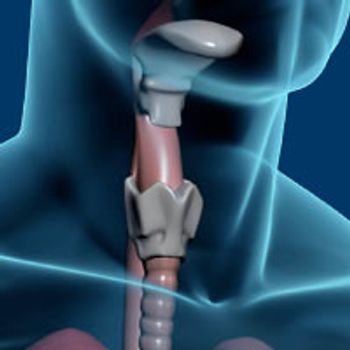
Cabozantinib (Cabometyx) demonstrated durable activity in patients with radioiodine-refractory differentiated thyroid cancer who progressed on VEGFR-targeted therapy.

Pembrolizumab (Keytruda) induced an overall response rate of 25.9% and was well tolerated in patients with PD-L1–positive recurrent or metastatic nasopharyngeal carcinoma.
Advertisement
Advertisement
Trending on OncLive
1
FDA Approves Nogapendekin Alfa Inbakicept Plus BCG for High-Grade, Papillary-Only BCG-Unresponsive NMIBC
2
SurVaxM Cancer Vaccine Shows Clinically Meaningful OS Signal in Newly Diagnosed Glioblastoma
3
VS-7375 Elicits Responses in KRAS G12D–Mutated Pancreatic Cancer
4
FDA Receives NDA Resubmission for Rivoceranib Plus Camrelizumab in Frontline Unresectable or Metastatic HCC
5