

Head & Neck Cancers
Latest News
Advertisement
Latest Videos

































































Advertisement
More News

In recent years, tyrosine kinase inhibitors that specifically target RET have entered the pipeline. Although none have yet received FDA approval, the promise of these agents has spurred interest in diagnostic assays.
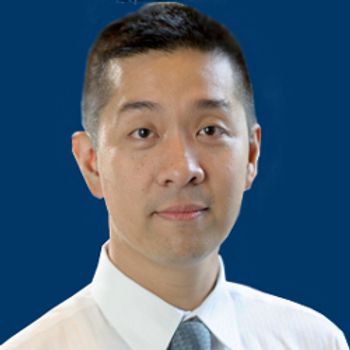
Alexander E. Drilon, MD, discusses the data with LOXO-292 thus far and the promise for this agent in patients with RET alterations.
Investigators are evaluating the potential of LOXO-292, an oral small molecule inhibitor of RET signaling, to improve outcomes in patients with RET fusion–positive non–small cell lung cancer, medullary thyroid cancer, and other tumors.

The European Medicines Agency’s Committee for Medicinal Products for Human Use has recommended approval of pembrolizumab (Keytruda) for the treatment of adult patients with recurrent or metastatic head and neck squamous cell carcinoma who progressed following platinum-based chemotherapy and have a PD-L1 tumor proportion score ≥50%.

Pembrolizumab (Keytruda) significantly improved overall survival compared with the standard frontline regimen of cetuximab (Erbitux) plus platinum chemotherapy and 5-FU in patients with recurrent or metastatic HNSCC.
Jed A. Katzel, MD, hematology, Kaiser Permanente Santa Clara Medical Center, discusses why women with head and neck cancer are undertreated.

The combination of the CDK4/6 inhibitor palbociclib and cetuximab induced an overall response rate of 39% in patients with platinum-resistant, HPV-unrelated recurrent/metastatic head and neck squamous cell carcinoma.
Suzanne L. Topalian, MD, director, Melanoma Program, professor of Surgery and Oncology, Johns Hopkins Medicine, discusses the immunosuppressive microenvironment of nasopharyngeal cancer.
Jed Katzel, MD, Hematology, Kaiser Permanente Santa Clara Medical Center, discusses research presented at the 2018 ASCO Annual Meeting, which evaluated whether women are undertreated for head and neck cancer.
Waun K. Hong, MD, FACP, DMSc, division head, American Cancer Society Professor, Samsung Distinguished University Chair in Cancer Medicine, Department of Thoracic Head and Neck Medical Oncology, Division of Cancer Medicine, The University of Texas MD Anderson Cancer Center, and 2018 Giant of Cancer Care® in Head and Neck Cancer, discusses advances in the treatment of patients with head and neck cancer.

Robert Ferris, MD, PhD, vice chair for Clinical Operations, associate director for Translational Research, and co-leader of the Cancer Immunology Program at the University of Pittsburgh Cancer Institute, discusses nivolumab (Opdivo) in the treatment of patients with head and neck cancer.

Lori J. Wirth, MD, associate professor, Medicine, Harvard Medical School, medical director, Center for Head and Neck Cancers, Massachusetts General Hospital, discusses the use of lenvatinib in hypertensive patients with thyroid cancer.
Lenvatinib added to pembrolizumab demonstrated promising activity in patients with squamous cell carcinoma of the head and neck in an ongoing open-label phase Ib/II clinical trial.
The highly-selective RET inhibitor LOXO-292 demonstrated robust clinical activity across RET-altered solid tumors, including in patients with brain metastases and the RET V804M gatekeeper mutation.
Women with head and neck cancer may be severely undertreated and have higher death rates compared with their male counterparts.

Farah Succaria, MD, postdoctoral fellow, Johns Hopkins Medicine, discusses the potential for combination immunotherapy in the treatment of patients with head and neck cancer.

Patients who used mobile and sensor technology to track their symptoms demonstrated reduced severity of their symptoms compared with patients who received standard care.

The FDA has approved combination therapy with dabrafenib and trametinib for the treatment of patients with unresectable or metastatic BRAF V600E–positive anaplastic thyroid cancer.
Robert L. Ferris, MD, PhD, discusses the implications of the updated findings from the phase III CheckMate-141 trial in squamous cell carcinoma of the head and neck.

Amy Duffield, MD, PhD, assistant professor of pathology, Johns Hopkins University School of Medicine, member, Johns Hopkins Kimmel Cancer Center, discusses the implications for immunotherapy in nasopharyngeal carcinoma.
Suzanne L. Topalian, MD, director, Melanoma Program, professor of Surgery and Oncology, Johns Hopkins Medicine, discusses the treatment of patients with nasopharyngeal carcinoma.
Robert Ferris, MD, PhD, vice chair for Clinical Operations, associate director for Translational Research, and co-leader of the Cancer Immunology Program at the University of Pittsburgh Cancer Institute, discusses the updated findings from the CheckMate-141 trial in head and neck cancer.
Treatment with nivolumab reduced the risk of death by 32% compared with investigator’s choice of therapy for patients with metastatic or recurrent squamous cell carcinoma of the head and neck.

Vivek Subbiah, MD, associate medical director, Clinical Center for Targeted Therapy, assistant professor, Department of Investigational Cancer Therapeutics, Division of Cancer Medicine, The University of Texas MD Anderson Cancer Center, discusses the safety and efficacy findings of BLU-667 in RET-altered solid tumors in an interview during the 2018 AACR Annual Meeting.

BLU-667, a next-generation tyrosine kinase inhibitor, appeared to be well-tolerated and had broad clinical benefit among patients with advanced, RET-altered solid tumors who progressed on prior therapies.
Advertisement
Advertisement
Trending on OncLive
1
FDA Approves Nogapendekin Alfa Inbakicept Plus BCG for High-Grade, Papillary-Only BCG-Unresponsive NMIBC
2
SurVaxM Cancer Vaccine Shows Clinically Meaningful OS Signal in Newly Diagnosed Glioblastoma
3
VS-7375 Elicits Responses in KRAS G12D–Mutated Pancreatic Cancer
4
FDA Receives NDA Resubmission for Rivoceranib Plus Camrelizumab in Frontline Unresectable or Metastatic HCC
5