


Head & Neck Cancers
Latest News

April 5th 2018
By Tony Hagen
When investigators looked at roughly 150,000 cases of well-differentiated thyroid cancer using the SEER database of the National Cancer Institute, they knew that the use of radioactive iodine in conjunction with surgery and other treatments for thyroid cancer had increased dramatically over the years.
Advertisement
Latest Videos

































































Advertisement
More News

Loren K. Mell, MD, assistant professor, Department of Radiation Medicine and Applied Sciences, University of California, San Diego School of Medicine, discusses individualizing treatments for patients with head and neck cancer.

Assuntina G. Sacco, MD, assistant professor of medicine, medical oncologist, UC San Diego Health, discusses ongoing trials investigating chemoradiation for patients with head and neck cancer.
The addition of weekly carboplatin following surgery and radiation therapy did not improve freedom from locoregional relapse in patients with high-risk cutaneous head and neck squamous cell carcinoma.
Gilberto Lopes Jr, MD, a medical director for International Programs at Sylvester Comprehensive Cancer Center, University of Miami Miller School of Medicine, discusses the role of immunotherapy for patients with head and neck cancer.

The FDA has put a clinical hold on a phase I/II study of axalimogene filolisbac plus durvalumab (Imfinzi) for the treatment of patients with cervical cancer or head and neck cancer.

Kathryn A. Gold, MD, medical oncologist, associate professor of medicine, UC San Diego Heath, differentiates carcinogen-induced and virally associated head and neck squamous cell carcinoma.

Loren K. Mell, MD, assistant professor, Department of Radiation Medicine and Applied Sciences, University of California, San Diego School of Medicine, discusses flaws in the current model of risk stratification for patients with head and neck cancer.
Larotrectinib (LOXO-101) induced durable responses in patients with TRK fusion–positive solid tumors, according to updated results for the novel pan-TRK inhibitor.
Joshua Bauml, MD, assistant professor, Perelman School of Medicine, University of Pennsylvania, discusses HPV vaccination for patients with HPV-related head and neck cancer.
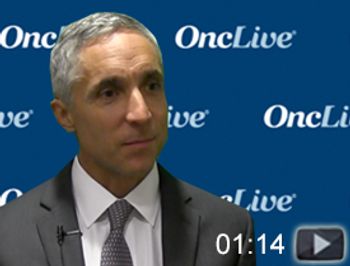
Joseph A. Califano, MD, professor of surgery, University of California, San Diego, discusses the role of surgery in head and neck cancer.
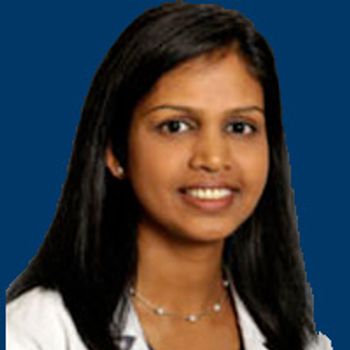
Development of effective therapies for metastatic head and neck cancer has been challenging, and progress has been slow.

Assuntina G. Sacco, MD, assistant professor of medicine, medical oncologist, UC San Diego Health, discusses the importance of multidisciplinary care in the treatment of patients with head and neck cancer.
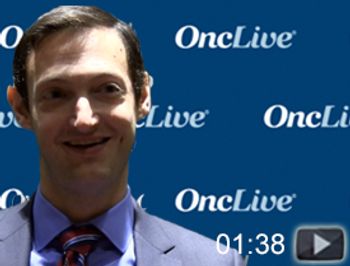
Joshua Bauml, MD, assistant professor, Perelman School of Medicine, University of Pennsylvania, discusses biomarker development for patients with head and neck cancer.
Loren K. Mell, MD, assistant professor, Department of Radiation Medicine and Applied Sciences, University of California, San Diego School of Medicine, discusses factors that contribute to risk stratification and treatment of head and neck cancer.

Nearly 7 in 10 patients with locally advanced or metastatic BRAF V600E–mutated anaplastic thyroid cancer responded to treatment with the combination of the BRAF inhibitor dabrafenib and the MEK inhibitor trametinib.
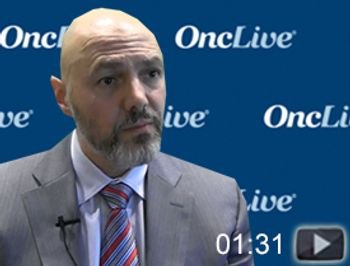
Ezra Cohen, MD, associate director, Moores Cancer Center at the University of California, San Diego, discusses immunotherapy combinations in head and neck cancer.
Joseph A. Califano, MD, discusses how surgery factors into modern multidisciplinary care for patients with head and neck cancer.

Michael Bouvet, MD, highlights the evolving surgical options in the thyroid cancer field
Assuntina G. Sacco, MD, discusses the importance of multidisciplinary care for patients with head and neck cancer.

Younger patients, women, and white patients with HPV-related cancers had superior survival at 5 years, indicating that increased HPV vaccination and better access to cancer screening and treatment are likely needed to reduce survival disparities

Michael Bouvet, MD, professor of surgery, University of California, San Diego, discusses the diagnosis of thyroid cancer.
While the incidence of HPV-related oropharyngeal cancer is increasing, the risk for developing the disease remains low for most people.

Gregory A. Daniels, MD, PhD, medical oncologist, associate professor of medicine, UC San Diego Health, discusses the role of immunotherapy for patients with head and neck cancer.
Joseph A. Califano, MD, professor of surgery, University of California, San Diego, discusses the role of multidisciplinary care for patients with head and neck cancer.

Loren K. Mell, MD, explains his research for risk-stratifying patients with head and neck cancer.
Advertisement
Advertisement
Trending on OncLive
1
FDA Approves Nogapendekin Alfa Inbakicept Plus BCG for High-Grade, Papillary-Only BCG-Unresponsive NMIBC
2
SurVaxM Cancer Vaccine Shows Clinically Meaningful OS Signal in Newly Diagnosed Glioblastoma
3
VS-7375 Elicits Responses in KRAS G12D–Mutated Pancreatic Cancer
4
FDA Receives NDA Resubmission for Rivoceranib Plus Camrelizumab in Frontline Unresectable or Metastatic HCC
5