


Head & Neck Cancers
Latest News
Advertisement
Latest Videos































































Advertisement
More News
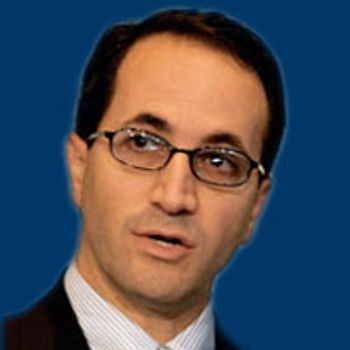
Robert Ferris, MD, PhD, discusses the RTOG 3504 trial, as well as the utility of immunotherapy agents for patients with intermediate and high-risk head and neck squamous cell carcinoma.
Robert Ferris, MD, PhD, vice chair for Clinical Operations, associate director for Translational Research, and co-leader of the Cancer Immunology Program at the University of Pittsburgh Cancer Institute, discusses the safety profile of the RTOG 3504 trial for patients with head and neck cancer.
Jean-Pascal Machiels, MD, head of the Department of Medical Oncology, Cliniques Universitaires Sain-Luc, discusses pembrolizumab (Keytruda) in patients with head and neck cancer.
Robert Ferris, MD, PhD, vice chair for Clinical Operations, associate director for Translational Research, and co-leader of the Cancer Immunology Program at the University of Pittsburgh Cancer Institute, discusses the rationale for combining radiation therapy with immunotherapy for the treatment of patients with head and neck cancer.
Jean-Pascal Machiels, MD, head of the Department of Medical Oncology, Cliniques Universitaires Sain-Luc, discusses toxicities with pembrolizumab (Keytruda) in combination with chemoradiation for patients with head and neck cancer.
Nancy Y. Lee, MD, vice chair, Department of Radiation Oncology, Memorial Sloan Kettering Cancer Center, discusses the combination of a PD-L1 inhibitor to the standard of care for patients with head and neck cancer.
Robert Ferris, MD, PhD, vice chair for Clinical Operations, associate director for Translational Research, and co-leader of the Cancer Immunology Program at the University of Pittsburgh Cancer Institute, discusses immunotherapy in patients with locally advanced head and neck cancer.
Lenvatinib (Lenvima) significantly improved overall survival in patients older than 65 years with radioiodine-refractory differentiated thyroid cancer.
Jean-Pascal Machiels, MD, head of the Department of Medical Oncology, Cliniques Universitaires Sain-Luc, discusses an ongoing clinical trial of pembrolizumab (Keytruda) combined with chemoradiation in patients with locally advanced head and neck squamous cell carcinoma (HNSCC).
Nancy Y. Lee, MD, vice chair, Department of Radiation Oncology, Memorial Sloan Kettering Cancer Center, discusses the impact of immunotherapy in head and neck cancer.
Robert Ferris, MD, PhD, vice chair for Clinical Operations, associate director for Translational Research, and co-leader of the Cancer Immunology Program at the University of Pittsburgh Cancer Institute discusses the RTOG 3504 study in head and neck cancer.
The combination of the IDO inhibitor epacadostat and nivolumab demonstrated promising signs of activity for patients with squamous cell carcinoma of the head and neck and those with melanoma.
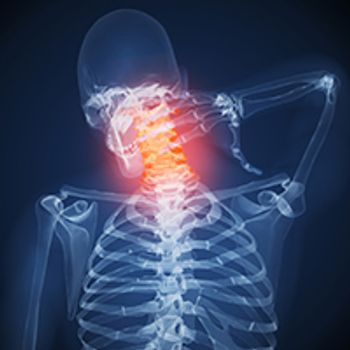
An analysis in locally advanced squamous cell carcinoma of the head and neck showed that weekly low-dose schedules of chemoradiotherapy produce comparable survival outcomes and response rates as the standard 3-weekly schedule.

Dhanya K. Nambiar, PhD, Stanford University, discusses the detection of Galectin-1 for patients with head and neck cancer.

Iain Morgan, PhD, discusses research that redefines HPV-positive head and neck cancer and may also identify new therapeutic targets.
Dhanya K. Nambiar, PhD, Stanford University, discusses the importance of continuing to study Galectin-1 for patients with head and neck cancer.
Researchers are hoping to build on the success of the KEYNOTE-012 and CheckMate-141 trials, which led to the approvals of pembrolizumab and nivolumab, respectively, by examining anti–PD-1/PD-L1 agents in the frontline and as a part of combination regimens for patients with head and neck cancer.
Louise Davies, MD, discusses the experience of patients with incidentally identified thyroid cancer who choose to not receive treatment.
Sophie Papa, PhD, MBBS, MRCP, medical oncologist, Clinical Academic Group, Department of Research Oncology, King’s College London, discusses leukapheresis manufacturing approach in head and neck cancer.
The US Preventive Services Task Force announced that it recommends against screening for thyroid cancer in asymptomatic adults.
High PD-L1 expression is closely associated with local failure following radiotherapy in HPV-negative head and neck squamous cell carcinomas, according to recent study.
Aarti Bhatia, MD, highlights the newer single agents and combination treatments being investigated for patients with head and neck cancer.
Lynn Acton, MS, CCC (SLP), discusses the significance of swallowing modalities for patients with head and neck cancer.
Dhanya K. Nambiar, PhD, Stanford University, explains the rationale behind targeting Galectin-1 (Gal-1) in head and neck cancer.
Benjamin L. Judson, MD, highlights the importance of a multidisciplinary team and shares insight on some of the advancements related to surgery for patients with head and neck cancer.
Advertisement
Advertisement
Trending on OncLive
1
FDA Approves Nogapendekin Alfa Inbakicept Plus BCG for High-Grade, Papillary-Only BCG-Unresponsive NMIBC
2
SurVaxM Cancer Vaccine Shows Clinically Meaningful OS Signal in Newly Diagnosed Glioblastoma
3
VS-7375 Elicits Responses in KRAS G12D–Mutated Pancreatic Cancer
4
FDA Receives NDA Resubmission for Rivoceranib Plus Camrelizumab in Frontline Unresectable or Metastatic HCC
5