



Hematologic Oncology
Latest News
Advertisement
Latest Videos























































Advertisement
More News
















Bijal D. Shah, MD, medical oncologist, Moffitt Cancer Center, assistant professor of oncology, University of South Florida, discusses the treatment of patients with p53-mutated mantle cell lymphoma.

Sarah K. Tasian, MD, an attending physician and assistant professor of pediatrics in the Division of Oncology at Children’s Hospital of Philadelphia, discusses the challenges in treating pediatric patients with Philadelphia chromosome (Ph)-like acute lymphoblastic leukemia (ALL).

Simon Rule, MD, PhD, professor of Hematology at Plymouth University Medical School, United Kingdom, discusses the role of BTK inhibitors in the treatment of patients with mantle cell lymphoma.
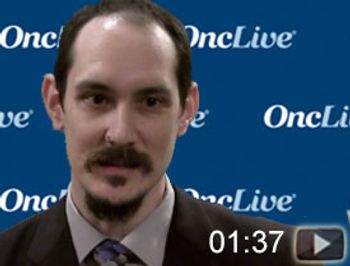
Andrew Kin, MD, assistant professor, Karmanos Cancer Institute, discusses triplet regimens for the treatment of patients with relapsed multiple myeloma.

Robyn M. Scherber, MD, MPH, physician, The Mays Cancer Center, the newly named center of UT Health San Antonio MD Anderson Cancer Center, discusses the treatment of patients with myelofibrosis.
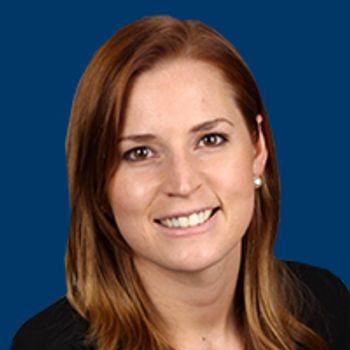
Researchers are exploring combination approaches with ruxolitinib (Jakafi) in myelofibrosis as a potential strategy for reinvigorating the drug’s effect in patients who progress, relapse, or become intolerant on single-agent treatment with the JAK inhibitor.
Updated safety data of the ASPIRE and ENDEAVOR trials showed that carfilzomib-based (Kyprolis) regimens demonstrate benefit across patient populations of multiple myeloma.
Alexander M. Lesokhin, MD, assistant attending, Department of Medicine and Myeloma Service, Memorial Sloan Kettering Cancer Center, discusses the current treatment landscape for patients with multiple myeloma.

Phase I data showed that combining venetoclax and navitoclax plus chemotherapy demonstrated encouraging responses and tolerability in patients with relapsed/refractory acute lymphoblastic leukemia or lymphoblastic lymphoma.
Javier A. Pinilla-Ibarz, MD, PhD, senior member, Moffitt Cancer Center, discusses the FDA approval of moxetumomab pasudotox for the treatment of adult patients with hairy cell leukemia who have received at least 2 prior lines of therapy.
Advertisement
Advertisement
Trending on OncLive
1
FDA Accepts NDA for Daraxonrasib in Previously Treated Metastatic Pancreatic Cancer
2
Teclistamab Plus Talquetamab Yields Significant Survival Benefits in Earlier-Line R/R Myeloma
3
European Commission Approves Camizestrant Plus CDK4/6 Inhibition for Emergent ESR1-Mutated Advanced Breast Cancer
4
FDA Approves Zidesamtinib in Pretreated ROS1+ NSCLC
5