

Hematologic Oncology
Latest News
Advertisement
Latest Videos



















































Advertisement
More News
Jason Valent, MD, oncologist, Cleveland Clinic, discusses the potential application of minimal residual disease (MRD) negativity in patients with multiple myeloma.
Hetty Carraway, MD, oncologist, Cleveland Clinic, discusses predisposition to acute myeloid leukemia (AML).
Aaron Gerds, MD, discusses the activity and drawbacks with current systemic agents in myeloproliferative neoplasms.
Mikkael A. Sekeres, MD, discusses the characteristics of myelodysplastic syndrome and the evolving armamentarium of treatment.

Jeffrey A. Zonder, MD, discusses triplet regimens in multiple myeloma and patient eligibility for clinical trials.
Srdan Verstovsek, MD, PhD, director of the Hanns A. Pielenz Clinical Research Center for Myeloproliferative Neoplasms at The University of Texas MD Anderson Cancer Center, discusses accelerated phase myelofibrosis.
Sandy Wong, MD, assistant professor, University of California, San Francisco (UCSF) School of Medicine, discusses a trial with an anti-CD46 antibody in multiple myeloma.
Michael Green, MD, discusses treatment strategies following early relapse in multiple myeloma.
Neil Shah, MD, PhD, professor, Department of Medicine (Hematology/Oncology), University of California, San Francisco (UCSF) Program Leader, Hematopoietic Malignancies Program, UCSF Helen Diller Family Comprehensive Cancer Center, discusses frontline treatment considerations for patients with chronic myeloid leukemia.
Lloyd Damon, MD, discusses novel therapies in acute myeloid leukemia, including FLT3 and IDH1/2 inhibitors.
Thomas G. Martin, MD, discusses the clinical utility of autologous stem cell transplantation and the rapidly evolving treatment paradigm of myeloma.
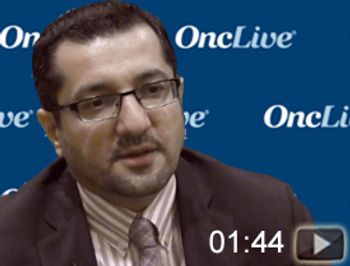
Abdulraheem Yacoub, MD, associate professor of medicine, University of Kansas Medical Center, discusses the potential of pegylated interferon treatment in patients with polycythemia vera.
Ehab Atallah, MD, discusses the discontinuation of treatment for patients with chronic myeloid leukemia.
Michael Green, MD, Northern California Oncologist, discusses early relapse in multiple myeloma.
Noopur Raje, MD, director, Center for Multiple Myeloma, Massachusetts General Hospital, discusses the potential of quadruplet regimens in the multiple myeloma treatment paradigm.
Abhinav Deol, MD, associate professor with Karmanos Cancer Institute, discusses patient eligibility for chimeric antigen receptor (CAR) T-cell therapy in hematologic oncology.
Jerald P. Radich, MD, clinical research division, Fred Hutchinson Cancer Research Center, discusses treatment discontinuation off trial for patients with chronic myeloid leukemia (CML).
Joseph Uberti, MD, PhD, discusses the risk and benefit of a bone marrow transplant for patients with myelodysplastic syndrome.
Jay Yang, MD, explains that drug development is not as simple as identifying a molecular target and matching inhibitor.
Laura Michaelis, MD, associate professor of medicine, Medical College of Wisconsin, discusses implications for the JAK2 mutation in patients with myeloproliferative neoplasms.
Jay Yang, MD, oncologist, Barbara Ann Karmanos Cancer Institute, discusses the future of acute myeloid leukemia (AML).
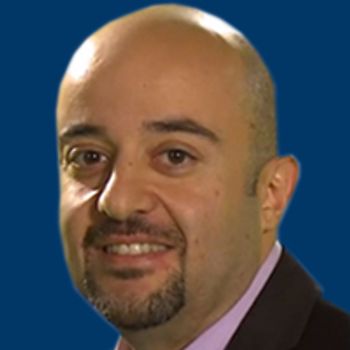
Rami S. Komrokji, MD, reflects on the diverse acute myeloid leukemia treatment landscape and touches on the prognostic importance of biomarkers.
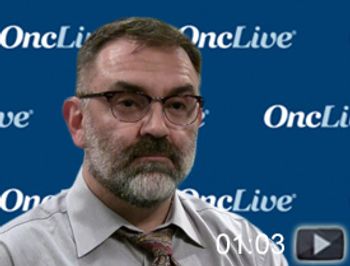
Jeffrey Zonder, MD, associate professor of oncology and medicine, Barbara Ann Karmanos Cancer Institute, Wayne State University, discusses induction therapy in the treatment of patients with newly diagnosed multiple myeloma.
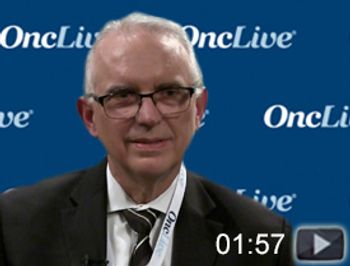
Joseph Uberti, MD, PhD, division head, BMT, Leukemia & Lymphoma, professor of medicine, Department of Oncology, Barbara Ann Karmanos Cancer Institute, Wayne State University, discusses the use of transplant in myelodysplastic syndrome (MDS).
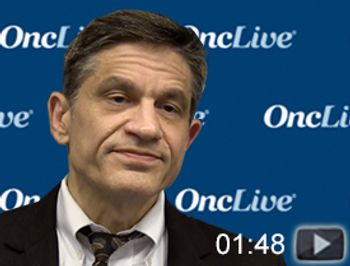
Robert J. Kreitman, MD, chief, Clinical Immunotherapy Section, Laboratory of Molecular Biology, Center for Cancer Research, National Cancer Institute, discusses the prognosis for patients diagnosed with hairy cell leukemia.
Advertisement
Advertisement
Trending on OncLive
1
FDA Accepts NDA for Daraxonrasib in Previously Treated Metastatic Pancreatic Cancer
2
Teclistamab Plus Talquetamab Yields Significant Survival Benefits in Earlier-Line R/R Myeloma
3
European Commission Approves Camizestrant Plus CDK4/6 Inhibition for Emergent ESR1-Mutated Advanced Breast Cancer
4
FDA Approves Zidesamtinib in Pretreated ROS1+ NSCLC
5