



Hematologic Oncology
Latest News
Advertisement
Latest Videos























































Advertisement
More News

Here is your snapshot of all therapeutic options greenlit by the FDA in December 2024 spanning tumor types.
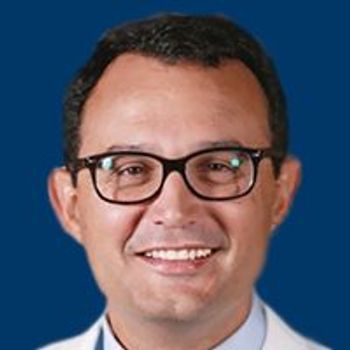
Beyond a lengthy list of accomplishments across the leukemia spectrum of treatment, Garcia-Manero holds the importance of mentorship as incredibly dear to his heart and a way to pass the torch forward in cancer care.

With a focus on closing gaps in cancer care for underserved populations, Joseph A. Sparano, MD, FACP, always strives to put patients first—a quality that has become a hallmark of his research and career in oncology.

The addition of pegcrisantaspase to venetoclax may overcome resistance to prior BCL-2 inhibitor–based regimens for patients with relapsed/refractory AML.

Uproleselan plus chemotherapy did not improved overall survival in relapsed/refractory acute myeloid leukemia.

Olverembatinib demonstrated preliminary efficacy and was well tolerated in patients with heavily pretreated chronic-phase myeloid leukemia.
The FDA granted fast track designation to NX-5948 for Waldenstrom macroglobulinemia that is relapsed/refractory to at least 2 lines of therapy.

The FDA has approved remestemcel-L-rknd for pediatric steroid-refractory acute graft-vs-host disease.

Javier Pinilla, MD, PhD, and Talha Badar, MBBS, MD, discuss factors that influence later-line treatment choices in chronic myeloid leukemia.
Javier Pinilla, MD, PhD, and Talha Badar, MBBS, MD, on the implications of the FDA approval of asciminib in newly diagnosed CP-CML.
Orca-Q led to low rates of graft-vs-host disease and non-relapse mortality in high-risk hematologic malignancies.

Treatment with a 100-mg dose of bezuclastinib had a favorable safety and tolerability profile in patients with non-advanced systemic mastocytosis.
Iopofosine I 131 demonstrated durable efficacy and tolerability in heavily pretreated relapsed/refractory Waldenström macroglobulinemia.

Select safety measures have improved the prevention and management of risks associated with ponatinib in ALL and CML over 10 years.

IO-202 plus azacitidine elicited an ORR of 66.7% in patients with HMA-naive chronic myelomonocytic leukemia.

NFKB1 rs230511 reduces inflammation and amplifies responses to ropeginterferon alfa-2b in polycythemia vera and essential thrombocythemia.

Tafasitamab plus lenalidomide and rituximab improved median PFS vs lenalidomide and rituximab in patients with relapsed/refractory follicular lymphoma.

Eunice S. Wang, MD, on ziftomenib plus intensive induction in newly diagnosed, NPM1-mutated or KMT2A-rearranged acute myeloid leukemia.
BGB-16673 monotherapy showed early activity and a tolerable safety profile in relapsed/refractory Waldenström macroglobulinemia, CLL, and SLL.
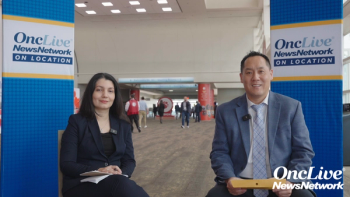
S. Vincent Rajkumar, MD, of Mayo Clinic; Nosha Farhadfar, MD, of Methodist Physician Practices; and Sonali Smith, MD, of University of Chicago Medicine, sit down with Chandler Park, MD, FACP, to discuss the latest in multiple myeloma, graft-vs-host disease, and non-Hodgkin lymphoma, respectively, from the 2024 ASH Annual Meeting.

Frontline treatment with zanubrutinib continued to improve PFS vs bendamustine plus rituximab at 5 years in patients with treatment-naive CLL/SLL.
Second-generation BTK inhibitors were associated with a significantly lower incidence of cardiac adverse effects in B-cell malignancies.
The addition of uproleselan to chemotherapy did not meet the primary OS end point of a phase 3 trial evaluating patients with relapsed/refractory AML.

Outpatient lymphodepletion prior to brexu-cel was safe and generated comparable 60-day non-relapse mortality vs inpatient administration in B-ALL and MCL.

Patients with treatment naive DLBCL experienced high response rates when treated with zilovertamab vedotin plus R-CHP and a RP2D dose of the agent was selected.
Advertisement
Advertisement
Trending on OncLive
1
FDA Approves Bioequivalent Olaparib Across Previously Approved Cancer Indications
2
Alpha DaRT Plus Pembrolizumab Yields 100% ORR in Elderly Recurrent or Metastatic HNSCC
3
Experts Revisit the Most Notable Data in GU Oncology From ASCO 2026
4
Longer-Term Data Help Shape TKI Selection in ROS1+ and ALK+ NSCLC
5