


Hematologic Oncology
Latest News
Advertisement
Latest Videos
















































Advertisement
More News
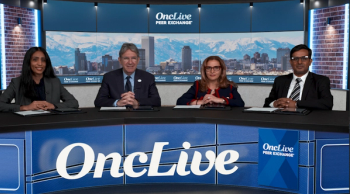
Speculation on anticipated innovations in allo-HSCT and cellular therapy technologies in the future.
The expert panel shares emerging data on an engineered, allogeneic cell-based therapy administered as part of conditioning for allo-HSCT in patients with relapsed, refractory, or high-risk hematologic cancers.
Early data seen with acalabrutinib plus axi-cel indicate the combination’s feasibility as bridging therapy in relapsed/refractory B-cell lymphoma.

The FDA has granted IO-202 an orphan drug designation for patients with chronic myelomonocytic leukemia.
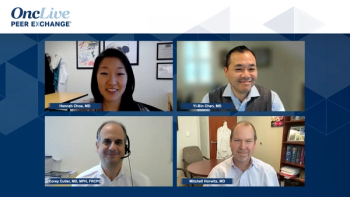
Drs Yi-Bin Chen, Corey Cutler, Hannah Choe, and Mitchell Horwitz share their predictions for the next 3 to 5 years in chronic GVHD management. The panel anticipates advancements in earlier treatment, potential elimination of frontline corticosteroids, and a shift towards preventive strategies and personalized medicine.
The panel reviews axatilimab, an emerging agent for chronic GVHD under clinical studies. The experts explore findings from the Agave-201 study, highlighting potential challenges of intravenous administration and axatilimab’s unique mechanisms.
The FDA granted an orphan drug designation to ocifisertib for use as a potential therapeutic option in patients with acute myeloid leukemia.
Clinical insights on selecting appropriate erythropoiesis-stimulating agents in patients with myelodysplastic syndromes.
Catherine C. Coombs, MD, spotlights the use of bispecific antibodies in diffuse large B-cell lymphoma and pirtobrutinib in mantle cell lymphoma.

Carrie L. Kitko, MD, and Sagar S. Patel, MD, discuss recent treatment developments and ongoing unmet needs in the graft-vs-host treatment paradigm.
Criteria for identifying patients with MDS most likely to benefit from transplant and choosing the optimal donor source and conditioning regimen on a case-by-case basis.
Experts discuss how treatments, either monotherapy or combination, may impact the treatment landscape for MF and how they might choose among the new agents.
Safety and toxicity data from a clinical trial investigating a novel, precision-engineered allo-HSCT conditioning regimen for older patients with high-risk blood cancers.
Drs Yi-Bin Chen, Corey Cutler, Hannah Choe, and Mitchell Horwitz discuss a complex chronic GVHD case post-allogeneic transplant. The panel explores third-line options, including belumosudil, ibrutinib, photopheresis, and clinical trials, emphasizing shared decision-making and the need for well-designed trials in guiding treatment decisions.
Drs Yi-Bin Chen, Corey Cutler, Hannah Choe, and Mitchell Horwitz review a clinical scenario of chronic GVHD post-allogeneic transplant. They explore treatment options and emphasize shared decision-making, considering patient preferences and therapeutic benefits.
Mikkael A. Sekeres, MD, MS, highlights recent approvals and emerging therapeutics in hematologic malignancies discussed by his colleagues.
The expert panel provides comprehensive insights on another patient case, a 77-year-old with MDS who presented with symptomatic anemia.
Continuing their discussion on the first patient profile, the expert panel focuses on the second-line treatment of patients with lower-risk MDS and symptomatic anemia.
Catherine C. Coombs, MD, discusses future directions for BTK inhibitors in chronic lymphocytic leukemia and combination therapies in myelofibrosis.

A new drug application for Dasynoc, a protein kinase inhibitor product candidate for patients with chronic myeloid leukemia, has been accepted by the FDA.
A comprehensive overview of safety considerations for bispecific antibodies in patients treated for R/R DLBCL.
Experts transition their discussion to highlight the emergence of bispecific antibodies as an additional treatment option for patients with R/R DLBCL.
Caron A. Jacobson, MD, and Miguel-Angel Perales, MD, review the impact of real-world analysis and how they may shape guidelines and clinical approaches with respect to the use of CAR T-cell therapy in LBCL.In particular, they note how continued research bolsters the safety profile of these agents.
A panel of experts discuss how to sequence BTK inhibitors and CAR T-cell therapies in patients with MCL.
Caron A. Jacobson, MD, discusses the significance of a real-world follow-up analysis of liso-cel in which safety and efficacy findings in patients with comorbidities and others who were not eligible for clinical trials were consistent with those studies.
Advertisement
Advertisement
Trending on OncLive
1
FDA Approves Bioequivalent Olaparib Across Previously Approved Cancer Indications
2
Longer-Term Data Help Shape TKI Selection in ROS1+ and ALK+ NSCLC
3
Experts Revisit the Most Notable Data in GU Oncology From ASCO 2026
4
Dr Mardones on Giredestrant Plus Palbociclib in Estrogen Receptor+ Breast Cancer
5