



Hematologic Oncology
Latest News
Advertisement
Video Series



Latest Videos
Shorts
0:41
Overused Buzzwords in Hematology and Oncology
10 months ago
by
Riley Kandel
0:37
Hematologic Oncologists Share Conference Must-Haves
10 months ago
by
Riley Kandel
1:24
The Role of Molecular and Genetic Testing in Ph+ Acute Lymphoblastic Leukemia
10 months ago
by
Nicholas J. Short, MD
1:10
Patient-Level Clinical Trial Communication Skills For Hematology/Oncology Fellows
10 months ago
by
Carma L. Bylund, PhD

2:38
How I Became a Healer
a year ago
by
Ross Camidge, MD, PhD(+1 more)
1:04
The Evolving Treatment Paradigm for Leukemia and Lymphoma
a year ago
by
Jorge Cortes, MD
Podcasts
CME Content
































































Advertisement
More News
Alex Herrera, MD, discusses the FDA approval of nivolumab plus AVD for untreated classical Hodgkin lymphoma.
Hematologic oncology experts outline the top data and themes to emerge from the 2026 EHA Congress

The European Commission has approved epcoritamab plus lenalidomide and rituximab for relapsed or refractory follicular lymphoma.
The FDA approved Orca-T, issued a CRL to a NET imaging agent, and more.
Everett Meyer, MD, PhD, discusses the significance of the FDA approval of Orca-T for patients with hematologic malignancies.

The FDA approved Orca-T for use in matched donor HSCT with a myeloablative preparative regimen in hematological malignancies.
At the 6th World Congress of Cutaneous Lymphoma, a group of world-leading CTCL expert consider what the field will abandon in the next decade.
Both annamycin-containing arms produced numerically higher CR and CRc rates vs cytarabine alone in relapsed/refractory AML.

Romiplostim N01 supported platelet engraftment after unrelated umbilical cord blood transplantation with no serious TRAEs in hematologic malignancies.
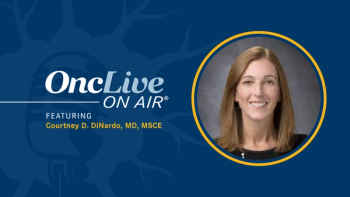
Courtney D. DiNardo, MD, MSCE, discusses the FDA approval of decitabine and cedazuridine plus venetoclax in acute myeloid leukemia.
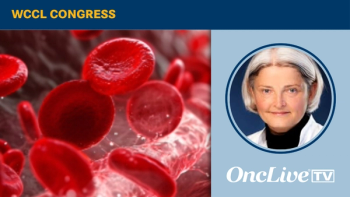
Lena Specht, MD, DMSc, discusses data for mogamulizumab in Danish patients with mycosis fungoides or Sezary syndrome and their effect on clinical practice.
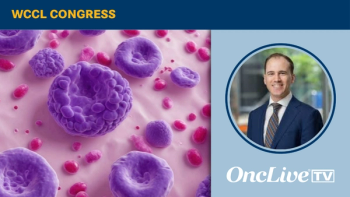
Robert Stuver, MD, discusses how to approach treatment for primary cutaneous peripheral T-cell lymphoma and which factors to consider.
H. Miles Prince, MD, MBBS discusses data for mogamulizumab from MAVORIC vs real-world vorinostat in R/R MF and SS.

The top 5 OncLive TV videos of the week cover insights in breast cancer, lymphoma, melanoma, prostate cancer, and ovarian cancer.
From CD94 antibodies to TNF-α and EZH2, Neha Mehta-Shah, MD, MSCI, explains how a wave of newly mapped targets is reshaping cutaneous T-cell lymphoma.

IV ST-001 nanoFenretinide produced a 28% response rate in heavily pretreated cutaneous T-cell lymphoma in a first-in-human phase 1a trial.
Neha Mehta-Shah, MD, MSCI explains how rational combinations to overcome CTCL treatment resistance keep running into added toxicity.

Julia Scarisbrick, MD, explains how better recognition of mogamulizumab-associated rash is moving the drug earlier in the mycosis fungoides and Sézary treatment course.
Julia Scarisbrick reviews real-world data showing mogamulizumab eased itch, pain, flaking, sleep, and fatigue in MF and Sézary syndrome as early as 4 weeks.
Christiane Querfeld, MD, PhD, discusses why early symptom relief drives adherence in mycosis fungoides and Sézary syndrome, and reframing MAR as an immune flare helps patients stay the course.
Christiane Querfeld, MD, PhD, discusses how targeted sequencing data show Sézary syndrome responds to mogamulizumab better than mycosis fungoides.
Jan P. Nicolay, MD, PhD, explains how early single-cell data suggest mogamulizumab resistance switches on anti-apoptotic survival proteins.
Jan P. Nicolay, MD, PhD, explains why some patients stop responding to mogamulizumab comes down to the tumor shedding its target and new survival mechanisms the cell switches on.
In an MAIC, mogamulizumab led to an OS improvement vs vorinostat in patients with relapsed/refractory mycosis fungoides or Sézary syndrome.
Advertisement
Advertisement
Trending on OncLive
1
GFH375 Shows Antitumor Activity in KRAS G12D–Mutated CCA and CRC
2
Sitagliptin Added to ATG-Based Prophylaxis Reduces Acute GVHD After Alternative Donor Transplant in Hematologic Malignancies
3
Dr. Mina Sedrak Awarded ACS Grant to Improve Breast Cancer Treatment for Older Adults
4
Molecular Profiling and Shared Decision-Making Guide First-Line EGFR-Mutant NSCLC
5