

HER2+ Breast Cancer
Latest News
Advertisement
Latest Videos



































































Advertisement
More News
The FDA has approved subcutaneous use of trastuzumab and hyaluronidase-oysk injection in combination with chemotherapy for the treatment of select patients with HER2-positive early breast cancer, in combination with paclitaxel in patients with metastatic HER2-positive breast cancer as a frontline treatment, and alone for patients with metastatic disease who have received at least 1 prior chemotherapy regimen

Theresa Shao, MD, assistant professor of hematology-oncology, Icahn School of Medicine, Tisch Cancer Institute, Mount Sinai Health System, discusses the prognosis of patients with HER2-positive breast cancer.

Theresa Shao, MD, discusses the neoadjuvant and adjuvant findings with pertuzumab as well as the adjuvant use of neratinib in patients with locally advanced HER2-positive breast cancer.
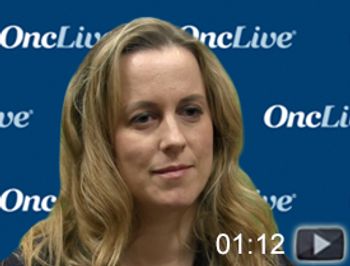
Erika P. Hamilton, MD, director, Breast and Gynecologic Research Program, Sarah Cannon Research Institute, discusses emerging therapies in HER2-positive breast cancer.
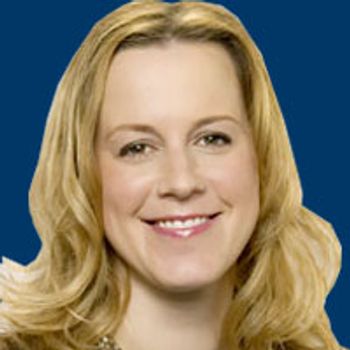
Erika P. Hamilton, MD, reflects on the latest data in HER2-positive breast cancer and additional therapies moving through the pipeline.

Margetuximab in combination with chemotherapy improved progression-free survival compared with trastuzumab and chemotherapy in heavily pretreated patients with metastatic HER2-positive breast cancer.

Genentech has completed its FDA submission of a supplemental Biologics License Application for ado-trastuzumab emtansine as an adjuvant treatment for patients with HER2-positive early breast cancer who had residual disease following neoadjuvant therapy.
Howard “Skip” A. Burris, III, MD, chief medical officer, Sarah Cannon Research Institute, and a 2014 Giant of Cancer Care® in Drug Development, discusses the promise of T-DM1 in the treatment of patients with HER2-positive breast cancer.

During a recent OncLive Peer Exchange®, panel members discussed the use of HER2-targeted therapies in patients with early-stage HER2-positive breast cancer in the neoadjuvant and adjuvant settings.
Erika P. Hamilton, MD, director of the Breast and Gynecologic Research Program at Sarah Cannon Research Institute, discusses adjuvant therapy for the treatment of patients with HER2-positive breast cancer.

Charles E. Geyer, Jrm, MD, discusses the clinical implications of the KATHERINE trial and the outlook for T-DM1 in patients with HER2-positive breast cancer.

Stephen C. Malamud, MD, reflects on the intriguing and practice-changing data presented at the 2018 SABCS.
Sara A. Hurvitz, MD, director of the Breast Oncology Program, medical director of the Clinical Research Unit, University of California, Los Angeles Jonsson Comprehensive Cancer Center, discusses the role of pertuzumab in HER2-positive breast cancer.

Charles E. Geyer, Jr, MD, professor of medicine, Virginia Commonwealth University School of Medicine; associate director for clinical research and Harrigan, Haw, Luck Families chair in Cancer Research, Massey Cancer Center, discusses the impact of targeted agents in HER2-positive breast cancer.
Mothaffar F. Rimawi, MD, an associate professor and director of Clinical Research at the Lester and Sue Smith Breast Center at Baylor College of Medicine, discusses the KATHERINE trial in HER2-positive breast cancer.

Theresa Shao, MD, assistant professor of medicine, hematology and medical oncology, Icahn School of Medicine, Mount Sinai Medical Center, discusses managing toxicities associated with neratinib (Nerlynx) in patients with HER2-positive breast cancer.

Mothaffar F. Rimawi, MD, discusses the current options in HER2-positive breast cancer and sheds light on where future research is headed.
Debu Tripathy, MD, professor and chairman, Department of Breast Medical Oncology, Division of Cancer Medicine, The University of Texas MD Anderson Cancer Center, discusses the impact of T-DM1 in HER2-positive breast cancer.
Novel agents are showing impressive ability to cross the blood–brain barrier and impair tumor development in several malignancies, raising the prospect of achieving a long-elusive goal of anticancer therapy.
Mothaffar F. Rimawi, MD, associate professor and director of clinical research at the Lester and Sue Smith Breast Center at Baylor College of Medicine, discusses the role of TKIs in the treatment of HER2-positive breast cancer.

Charles E. Geyer, Jr, MD, professor of medicine, Virginia Commonwealth University School of Medicine; associate director for clinical research and Harrigan, Haw, Luck Families chair in Cancer Research, Massey Cancer Center, discusses pertuzumab in HER2-positive breast cancer.
Patients with HER2-positive early or locally advanced breast cancer who were exposed to reference trastuzumab lots with a marked downward shift in antibody-dependent cell-mediated cytotoxicity (ADCC) had worse outcomes than those not exposed to at least 1 shifted ADCC lot or those treated with its biosimilar.
Debu Tripathy, MD, professor and chairman, Department of Breast Medical Oncology, Division of Cancer Medicine, The University of Texas MD Anderson Cancer Center, discusses the use of pertuzumab in HER2-positive breast cancer.

Neratinib led to a statistically significant improvement in centrally confirmed progression-free survival compared with lapatinib and capecitabine in patients with HER2-positive metastatic breast cancer who have failed 2 or more prior lines of HER2-directed therapy.
Ciara O’Sullivan, MB, BCh, discusses the need for treatment de-escalation for patients with HER2-positive breast cancer, as well as the challenges that remain in tailoring treatment.
Advertisement
Advertisement
Trending on OncLive
1
FDA Approves Tucatinib Plus Trastuzumab/Pertuzumab as First-Line Maintenance in Advanced HER2+ Breast Cancer
2
Iberdomide Plus Daratumumab/Dexamethasone Yields Significant PFS Benefit in R/R Myeloma
3
FDA Approves Atezolizumab Plus Chemo for Stage III dMMR Colon Cancer
4
VIR-5500 Receives FDA Fast Track Designation in mCRPC
5