





HER2+ Breast Cancer
Latest News
Advertisement
Latest Videos





































































Advertisement
More News

Neelima Denduluri, MD, shares treatment approaches in patients with early-stage hormone receptor-positive, HER2-negative breast cancer.
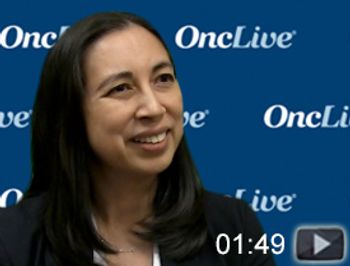
Katherine D. Crew, MD, MS, director of Clinical Breast Cancer Prevention Program, Columbia University Irving Medical Center, and director of DataBase Shared Resource at Herbert Irving Comprehensive Cancer Center, Columbia University, discusses updated data with margetuximab in HER2-positive breast cancer.
Nancy U. Lin, MD, discusses central nervous system activity with HER2-directed TKIs in HER2-positive breast cancer.

Faculty voice their opinion on the clinical utility of trastuzumab deruxtecan in patients with metastatic HER2-positive breast cancer.

The Japanese Ministry of Health, Labor, and Welfare has approved trastuzumab deruxtecan for the treatment of patients with HER2-positive unresectable or recurrent breast cancer who have had prior chemotherapy.

The FDA has approved a 420-mg multidose vial of the biosimilar trastuzumab-dttb (SB3; Ontruzant).

Forrest Thompson, MD, discusses sequencing strategies in HER2-positive breast cancer.

During a recent OncLive Peer Exchange®, experts in breast cancer research expressed optimism that new therapies would improve outcomes for patients with this challenging disease.

Sara M. Tolaney, MD, MPH, associate director, Susan F. Smith’s Center for Women’s Cancers, director, Clinical Trials, Breast Oncology, senior physician, Dana-Farber Cancer Institute, and assistant professor of medicine at Harvard Medical School, discusses considerations for adjuvant therapy in patients with early-stage HER2-positive breast cancer.

Hope S. Rugo, MD, discusses the utility of margetuximab in HER2-positive metastatic breast cancer.
The paradigm for treating patients with HER2-positive breast cancer is changing throughout the spectrum of the disease as a result of recent clinical trial findings regarding novel and established treatment regimens, according to Sara A. Hurvitz, MD
Katherine D. Crew, MD, MS, discusses the results of the APHINITY trial in HER2-positive breast cancer.

Mark E. Robson, MD, discusses the potential utility of tucatinib in the treatment of patients with HER2-positive breast cancer.

Hyun C. Chung, MD, PhD, discusses the rationale of the KEYNOTE-811 study in HER2-positive gastric cancer.
Sara M. Tolaney, MD, MPH, discusses novel approaches in treating patients with HER2-positive breast cancer.
The FDA has approved a supplemental new drug application for neratinib in combination with capecitabine for the treatment of adult patients with advanced or metastatic HER2-positive breast cancer who have received ≥2 prior anti–HER2-based regimens in the metastatic setting.
The FDA has accepted a Biologics License Application for a fixed-dose combination of pertuzumab and trastuzumab with hyaluronidase, administered by subcutaneous injection in combination with intravenous chemotherapy, for the treatment of eligible patients with HER2-positive breast cancer.

Jasmeet C. Singh, MD, discusses the findings of a retrospective analysis and how they may impact treatment for patients with HER2-positive breast cancer.
Katherine Crew, MD, MS, discusses treatment for patients with favorable-risk early-stage HER2-positive breast cancer.

Erika P. Hamilton, MD, discusses the superiority of ado-trastuzumab emtansine (T-DM1; Kadcyla) in the phase III KATHERINE study.
The FDA has granted a priority review designation to a new drug application for tucatinib for use in combination with trastuzumab and capecitabine for the treatment of patients with unresectable locally advanced or metastatic HER2-positive breast cancer, including patients with brain metastases, following at least 3 prior HER2-directed agents separately or in combination, in the neoadjuvant, adjuvant, or metastatic setting.

Nancy Lin, MD, discusses central nervous system–specific outcomes with neratinib (Nerlyx) in HER2-positive breast cancer.

Katherine D. Crew, MD, discusses the results of HER2CLIMB and DESTINY-Breast01, as well as other impactful data in HER2-positive breast cancer that emerged from the 2019 San Antonio Breast Cancer Symposium.

Erika P. Hamilton, MD, director of the Breast Cancer and Gynecologic Research Program and principal investigator at Sarah Cannon Research Institute, discusses the phase II DESTINY-Breast01 trial in advanced HER2-positive breast cancer.
Katherine D. Crew, MD, discusses the updated results of the KATHERINE trial, as well as other data regarding the adjuvant treatment paradigm in early-stage HER2-positive breast cancer.
Advertisement
Advertisement
Trending on OncLive
1
FDA Approves Tucatinib Plus Trastuzumab/Pertuzumab as First-Line Maintenance in Advanced HER2+ Breast Cancer
2
Iberdomide Plus Daratumumab/Dexamethasone Yields Significant PFS Benefit in R/R Myeloma
3
FDA Approves Atezolizumab Plus Chemo for Stage III dMMR Colon Cancer
4
VIR-5500 Receives FDA Fast Track Designation in mCRPC
5