



Immuno-Oncology
Latest News
Advertisement
Latest Videos


































































Advertisement
More News

Eric S. Nadler, MD, medical oncologist, Baylor University Medical Center, medical director, US Oncology Health Informatics and Internet Technology, discusses the impact of immunotherapy in squamous non–small cell lung cancer.

Eric Whitman, MD, medical director of Atlantic Health System Cancer Care, Atlantic Health System, discusses ways to expand the benefit of immunotherapy in non-immunogenic solid tumors.

Viola W. Zhu, MD, PhD, explains how the use of immunotherapy has improved survival for patients with advanced squamous cell non–small cell lung cancer.

Guru P. Sonpavde, MD, director, Bladder Cancer, and physician, Dana-Farber Cancer Institute, discusses key data with immunotherapy in metastatic bladder cancer.
The FDA has approved the combination of avelumab and axitinib for the frontline treatment of patients with advanced renal cell carcinoma.

Bradley McGregor, MD, speaks about the various data that have emerged in renal cell carcinoma with combinations of immunotherapy, TKIs, and how he chooses between the available treatments for his patients.



Guru Sonpavde, MD, discusses the current use of immunotherapy and the numerous strategies in development in bladder cancer.
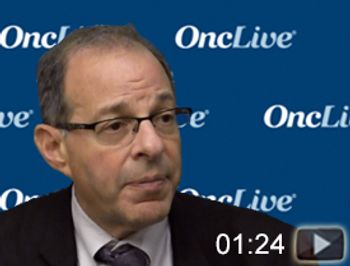
Mario Sznol, MD, professor of medicine, co-director, Yale SPORE in Skin Cancer, Yale Cancer Center, discusses patient selection for combination therapy in metastatic renal cell carcinoma.
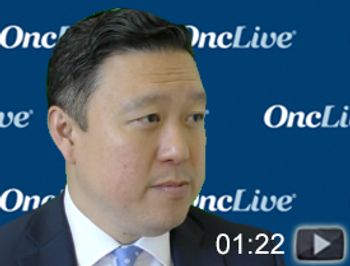
Stephen Liu, MD, associate professor of medicine, Division of Hematology and Oncology, Georgetown University Medical Center, discusses the potential of pembrolizumab in the treatment of patients with small cell lung cancer.

The rationale for frontline chemoimmunotherapy in stage IV nonsquamous non–small cell lung cancer, now made evident by several phase III trials, stems from its synergistic activity, stimulatory effects on neoantigens, and tolerable safety profile.

Eric S. Nadler, MD, medical oncologist, Baylor University Medical Center, medical director, US Oncology Health Informatics and Internet Technology, discusses the IMpower131 study in squamous metastatic non–small cell lung cancer.
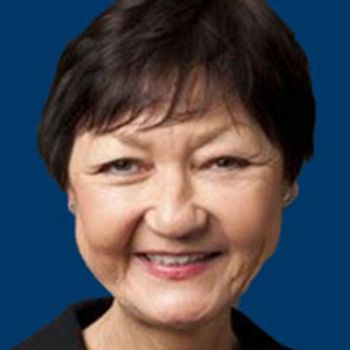
In an effort to improve outcomes for intermediate- or poor-risk patients with renal cell carcinoma, the phase III COSMIC-313 trial is being initiated, which will evaluate cabozantinib (Cabometyx) in combination with nivolumab and ipilimumab in patients with previously untreated advanced disease.




Many oncology practices are learning lessons about the importance of persistence, persuasion, and creativity in getting I/O drugs to the patients who need them.

Eric S. Nadler, MD, medical oncologist, Baylor University Medical Center, medical director, US Oncology Health Informatics and Internet Technology, discusses the role of PD-L1 in patients with squamous non–small cell lung cancer.
Advertisement
Advertisement
Trending on OncLive
1
FDA Approves Tucatinib Plus Trastuzumab/Pertuzumab as First-Line Maintenance in Advanced HER2+ Breast Cancer
2
Iberdomide Plus Daratumumab/Dexamethasone Yields Significant PFS Benefit in R/R Myeloma
3
FDA Approves Atezolizumab Plus Chemo for Stage III dMMR Colon Cancer
4
VIR-5500 Receives FDA Fast Track Designation in mCRPC
5