





Immuno-Oncology
Latest News
Advertisement
Latest Videos



































































Advertisement
More News

Petros Grivas, MD, PhD, director, University of Washington Medicine’s Genitourinary Cancers Program, associate professor, oncology, University of Washington, Seattle Cancer Care Alliance, discusses the role of checkpoint inhibitors in the treatment of patients with localized bladder cancer.

The European Medicines Agency’s Committee for Medicinal Products for Human Use has adopted a positive opinion for first-line treatment with pembrolizumab in combination with carboplatin and either paclitaxel or nab-paclitaxel in patients with metastatic squamous non–small cell lung cancer.

The European Medicine’s Agency Committee for Medicinal Products for Human Use has recommended approval for the frontline combination of atezolizumab, bevacizumab, paclitaxel, and carboplatin for the first-line treatment of patients with metastatic, nonsquamous non–small cell lung cancer.

Although multiple checkpoint inhibitors have been introduced into the bladder cancer treatment paradigm during the past several years, their use in the malignancy remains an unfolding story.

The FDA has expanded the indication for pemetrexed in combination with pembrolizumab and platinum-based chemotherapy for the first-line treatment of patients with metastatic nonsquamous non–small cell lung cancer without EGFR or ALK alterations.

Mark A. Socinski, MD, executive medical director, AdventHealth Medical Group, discusses combination versus single-agent immunotherapy in patients with squamous non–small cell lung cancer.

Despite the rapidly expanding therapeutic options available in immunotherapy for patients with non-small cell lung cancer, there are still a number of drawbacks to treatment, explaining why not all patients respond to current treatment options.
Rogerio Lilenbaum, MD, highlights the current treatment approaches for patients with EGFR-positive non–small cell lung cancer and shed light on the potential for immunotherapy in the space.

Julie R. Brahmer, MD, associate professor of oncology, co-director of the Upper Aerodigestive Department, Bloomberg Kimmel Institute for Cancer Immunotherapy, Johns Hopkins Medicine, discusses managing immune-related adverse events in lung cancer.

Edward B. Garon, MD, director of Thoracic Oncology at the Jonsson Comprehensive Cancer Center at University of California, Los Angeles, discusses the potential for immunotherapy in the treatment of patients with EGFR-positive non–small cell lung cancer.

Bristol-Myers Squibb has withdrawn its supplemental biologics license application for the combination of nivolumab (Opdivo) and ipilimumab (Yervoy) for the frontline treatment of patients with advanced non–small cell lung cancer with tumor mutational burden ≥10 mutations per megabase.
Clinical trial evidence is building for moving checkpoint blockade immunotherapy forward in the treatment timeline for non–small cell lung cancer, but improving patient selection for these therapies remains a key challenge.

Toni Choueiri, MD, director, Lank Center for Genitourinary Oncology, director, Kidney Cancer Center, Jerome and Nancy Kohlberg Associate Professor of Medicine, Harvard Medical School, Dana-Farber Cancer Institute, discusses immunotherapy in the treatment of patients with renal cell carcinoma.

Joshua K. Sabari, MD, assistant professor of medicine, NYU Langone's Perlmutter Cancer Center, discusses the role of immunotherapy in the treatment of patients with small cell lung cancer.

Several clinical trials have evaluated the addition of immunotherapy to standard chemotherapy in the frontline treatment of patients with advanced non–small cell lung cancer, all of which echo similar conclusions: these combinations are a mainstay in this population.

The development of cancer treatments and diagnostic tools using CRISPR/Cas9 and other gene-editing technology is a promising area of research in the United States, although the field is moving into human studies at a relatively slow pace.
The FDA has accepted a supplemental biologics license application for atezolizumab, carboplatin, and nab-paclitaxel as a first-line treatment for patients with metastatic nonsquamous non–small cell lung cancer.

Janakiraman Subramanian, MD, medical oncologist, director of Thoracic Oncology, Center for Precision Medicine, Saint Luke’s Cancer Institute, discusses ongoing trials evaluating the use of immunotherapy in patients with nonsquamous non–small cell lung cancer (NSCLC).
Petros Grivas, MD, PhD, discusses the rapidly evolving field of locally advanced and metastatic bladder cancer.
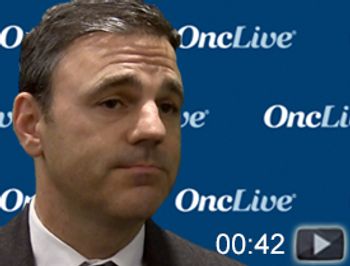
Jonathan L. Wright, MD, MS, FACS, medical director, Urology Clinic, University of Washington Medical Center, affiliate investigator, Fred Hutchinson Cancer Research Center, Seattle Cancer Care Alliance, discusses immunotherapy in bladder cancer.

The European Commission has approved nivolumab combined with low-dose ipilimumab as a frontline treatment for patients with intermediate- and poor-risk advanced renal cell carcinoma.

Sumanta K. Pal, highlights the different combination regimens that are making headlines in the treatment of patients with metastatic renal cell carcinoma.
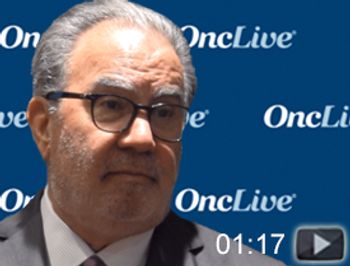
Robert A. Figlin, MD, director, Division of Hematology/Oncology, Steven Spielberg Professor of Biomedical Sciences and Medicine, Cedars-Sinai Medical Center, discusses considerations when combining TKIs and immunotherapy agents in the management of advanced renal cell carcinoma.
Immune checkpoint inhibitors, with their favorable safety and antitumor activity profiles, have heralded a new era in urothelial carcinoma treatment.
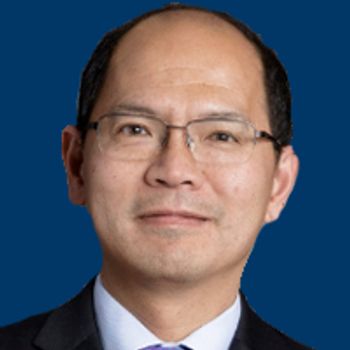
Kwok-Kin Wong, MD, PhD, discusses updates in non–small cell lung cancer and the importance of enrolling patients in clinical trials to further progress the field.
Advertisement
Advertisement
Trending on OncLive
1
FDA Approves Tucatinib Plus Trastuzumab/Pertuzumab as First-Line Maintenance in Advanced HER2+ Breast Cancer
2
Iberdomide Plus Daratumumab/Dexamethasone Yields Significant PFS Benefit in R/R Myeloma
3
FDA Approves Atezolizumab Plus Chemo for Stage III dMMR Colon Cancer
4
VIR-5500 Receives FDA Fast Track Designation in mCRPC
5