




Immuno-Oncology
Latest News
Advertisement
Latest Videos
































































Advertisement
More News
Hussein A. Tawbi, MD, PhD, associate professor, The University of Texas MD Anderson Cancer Center, discusses the promise of checkpoint inhibition in the treatment of melanoma.

Thomas Hensing, MD, discusses the emergence of immunotherapy in the stage III non–small cell lung cancer armamentarium, and questions that must be answered to build on this initial success.
Lawrence E. Feldman, MD, discusses exciting new data surrounding immunotherapy combinations in lung cancer.

Jonathan E. Rosenberg, MD, medical oncologist, chief, Genitourinary Medical Oncology Service, Memorial Sloan Kettering Cancer Center, discusses challenges in the treatment of patients with metastatic urothelial carcinoma.

Ronald de Wit, MD, PhD, group leader, Experimental Systematic Therapy of Urogenital Cancers program, Erasmus MC Cancer Institute, Rotterdam, Netherlands, discusses findings with pembrolizumab (Keytruda) in non-muscle invasive bladder cancer.

The frontline combination of durvalumab (Imfinzi) and tremelimumab did not induce a statistically significant improvement in overall survival compared to standard chemotherapy in patients with metastatic non–small cell lung cancer.

David F. McDermott, MD, director of the Biologic Therapy Program at Beth Israel Deaconess Medical Center, discusses an analysis of the CheckMate-214 study in advanced renal cell carcinoma (RCC).
Lawrence E. Feldman, MD, medical oncologist, University of Illinois Cancer Center, discusses the future of durvalumab (Imfinzi) and tremelimumab in non–small cell lung cancer (NSCLC).

Thomas Powles MBBS, MRCP, MD, professor of Genitourinary Oncology, lead, Solid Tumour Research, Barts Cancer Institute, director, Barts Cancer Centre, discusses biomarkers for immunotherapy in bladder cancer.
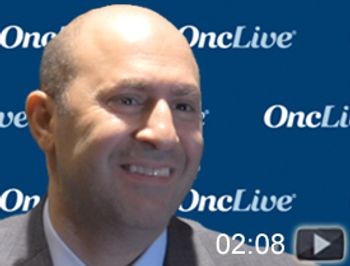
Toni Choueiri, MD, director, Lank Center for Genitourinary Oncology, director, Kidney Cancer Center, Jerome and Nancy Kohlberg Associate Professor of Medicine, Harvard Medical School, Dana-Farber Cancer Institute, discusses biomarkers in renal cell carcinoma.

The FDA has granted a priority review designation to a supplemental biologics license application for the frontline combination of atezolizumab plus nab-paclitaxel for patients with unresectable locally advanced or metastatic PD-L1–positive triple-negative breast cancer.
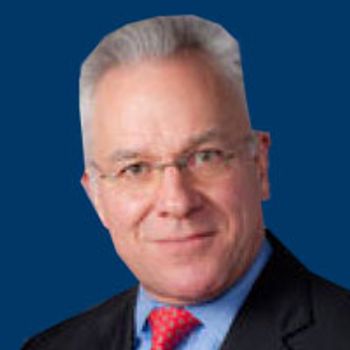
In the 44 years since John M. Kirkwood, MD began his career, he has seen melanoma become a growing field of research.
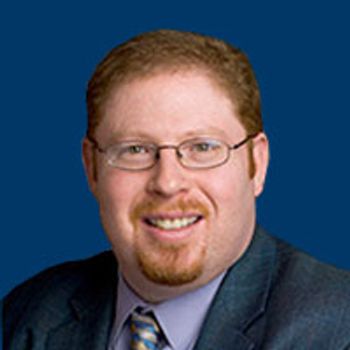
Jonathan E. Rosenberg, MD, discusses the extended follow-up of the CheckMate-032 study, as well as the future of immunotherapy in urothelial carcinoma.
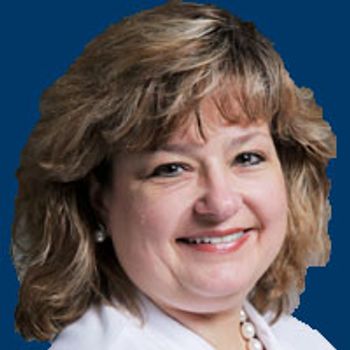
Treatment for cutaneous squamous cell carcinoma (CSCC) took a great leap forward in September 2018 with the PD-1 inhibitor cemiplimab becoming the first agent specifically approved by the FDA for advanced CSCC.
Future development of novel immunotherapy combinations should be based on individual patient characteristics, such as patient-level immune targets and tumor microenvironment.

Balazs Halmos, MD, discusses the latest developments in the treatment paradigm for patients with squamous cell non–small cell lung cancer.
Joshua J. Meeks, MD, PhD, assistant professor of urology, Northwestern University Feinberg School of Medicine, discusses the mutations associated with T1 progression in bladder cancer.

Ronald de Wit, MD, PhD, discusses the clinical implications of pembrolizumab in the non–muscle invasive bladder cancer patient population.

Asim Amin, MD, discusses the current role of checkpoint inhibitors in advanced renal cell carcinoma and where the future is heading in this space.
Earle Burgess, MD, associate professor of medicine, Levine Cancer Institute, discusses the role of immunotherapy in prostate cancer.

The efficacy of combination therapy with a checkpoint inhibitor and chemotherapy has been proved in the triple-negative breast cancer space, and the additive and early toxicity may be worth the survival benefit, according to Lisa A. Carey, MD.

D. Ross Camidge, MD, PhD, a professor of medical oncology at the University of Colorado, discusses the FDA approval of first-line pembrolizumab (Keytruda) in metastatic squamous non–small cell lung cancer regardless of PD-L1 expression.
The FDA has approved first-line pembrolizumab for use in combination with carboplatin and either paclitaxel or nab-paclitaxel for the treatment of patients with metastatic squamous non–small cell lung cancer.

Asim Amin, MD, PhD, director of immunotherapy, Levine Cancer Institute, discusses how to manage toxicities associated with immunotherapy and tyrosine kinase inhibitor combinations in renal cell carcinoma.
Omid Hamid, MD, director of Research and Immuno-Oncology at The Angeles Clinic, discusses a retrospective analysis of pembrolizumab (Keytruda) in patients with melanoma.
Advertisement
Advertisement
Trending on OncLive
1
FDA Approves Tucatinib Plus Trastuzumab/Pertuzumab as First-Line Maintenance in Advanced HER2+ Breast Cancer
2
VIR-5500 Receives FDA Fast Track Designation in mCRPC
3
FDA Grants Breakthrough Device Designation to Natera’s Multi-Cancer Early Detection Assay
4
Iberdomide Plus Daratumumab/Dexamethasone Yields Significant PFS Benefit in R/R Myeloma
5