
Immuno-Oncology
Latest News
Advertisement
Latest Videos






























































Advertisement
More News
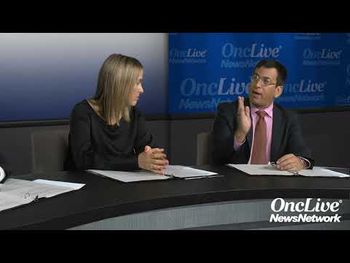
Michelle Krogsgaard, PhD, associate professor, Department of Pathology, NYU Langone's Perlmutter Cancer Center, discusses mechanisms of resistance to PD-1 checkpoint blockade.
Thomas F. Gajewski, MD, PhD, has made inroads in the field of cancer immunotherapy, most notably discovering the connections between the microbiome and clinical outcomes—findings that will enable the creation of microbiota-modulating interventions to improve outcomes in patients undergoing cancer treatments.
David Spigel, MD, chief scientific officer, director, Lung Cancer Research Program, principal investigator, Sarah Cannon Research Institute, reflects on the results of the PACIFIC trial in patients with non–small cell lung cancer.
Although checkpoint-blocking antibodies dominate the anticancer immunotherapy field today, researchers are increasingly exploring the potential to leverage growing knowledge about tumor-infiltrating lymphocytes to develop new drugs.
James P. Allison, PhD, reflects on his research in immunology, the impact it has had on patients with cancer, and where the field is headed.
Peter O’Donnell, MD, discusses the integration of immunotherapy in the treatment paradigm of advanced bladder cancer and its potential role as combination therapy.
The dismal prognosis for patients with metastatic renal cell carcinoma has fueled an earnest quest for more effective treatments, culminating in a better understanding of the disease and regulatory approval of several new drugs and therapeutic combinations.

James P. Allison, PhD, chair of Immunology and executive director of the Immunotherapy Platform at The University of Texas MD Anderson Cancer Center, and a recipient of the 2018 Nobel Prize in Physiology or Medicine, discusses the future of immunotherapy in the treatment of patients with cancer.
Investigators are hopeful that M7824, a bifunctional fusion protein that inhibits the PD-L1 and TGF-β pathways, will improve immune system responses across tumor types.
Bradley McGregor, MD, physician, Genitourinary Oncology program, Dana-Farber Cancer Institute, and instructor of medicine, Harvard Medical School, discusses immunotherapy in rare genitourinary (GU) cancers.
Immunotherapy pioneers James P. Allison, PhD, and Tasuku Honjo, MD, PhD, have won the 2018 Nobel Prize in Physiology or Medicine for their research that eventually led to the use of immune checkpoint inhibitors to treat cancer.
Jeffrey S. Weber, MD, PhD, discusses the promise of nivolumab in this setting and a general overview of the melanoma treatment landscape.
Ongoing analyses suggest enhanced clinical benefit is derived from the combined use of entinostat and pembrolizumab in a subgroup of patients with PD-1/PD-L1–refractory non–small cell lung cancer who have high levels of peripheral blood monocytes.
The addition of atezolizumab to standard carboplatin and etoposide in the frontline setting significantly prolonged survival in patients with extensive-stage small cell lung cancer compared with the chemotherapy regimen alone.
Durvalumab induced a clinically meaningful improvement in overall survival compared with placebo in patients with stage III, unresectable non–small cell lung cancer who have not progressed following chemoradiotherapy.
The addition of atezolizumab to carboplatin/cisplatin in the first-line setting and to pemetrexed as maintenance therapy significantly improved progression free survival in patients with stage IV nonsquamous NSCLC.
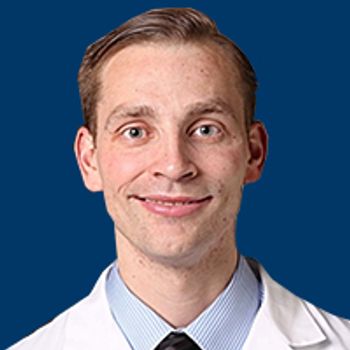
Wade T. Iams, MD, and Erin A. Gillaspie, MD, MPH, discuss the impact that immunotherapy has had on the treatment of patients with early-stage non–small cell lung cancer.
Alexander M. M. Eggermont, MD, PhD, director general of Gustave Roussy Cancer Campus Grand Paris in Villejuif, France, discusses the impact of pembrolizumab in melanoma.
Robert Ferris, MD, PhD, vice chair for Clinical Operations, associate director for Translational Research, and co-leader of the Cancer Immunology Program at the University of Pittsburgh Cancer Institute discusses the significance of the CheckMate-041 trial for patients with head and neck cancer.
Paul A. Bunn Jr, MD, distinguished professor, Division of Medical Oncology, James Dudley Chair in Lung Cancer Research, University of Colorado Denver, 2014 Giant of Cancer Care in Lung Cancer, discusses the treatment of patients with early-stage non–small cell lung cancer.
Matthew Powell, MD, discusses the promise of immunotherapy in ovarian cancer despite its challenges.
Parminder Singh, MD, hematologist/oncologist, Mayo Clinic, discusses the evolving role of chemotherapy in the treatment of bladder cancer.
Angeles Alvarez Secord, MD, gynecologic cancers specialist, Duke Cancer Center, discusses the growing potential for personalized treatment in ovarian cancer.
Advertisement
Advertisement
Trending on OncLive
1
FDA Approves Tucatinib Plus Trastuzumab/Pertuzumab as First-Line Maintenance in Advanced HER2+ Breast Cancer
2
FDA Grants Breakthrough Device Designation to Natera’s Multi-Cancer Early Detection Assay
3
VIR-5500 Receives FDA Fast Track Designation in mCRPC
4
FDA Approves Atezolizumab Plus Chemo for Stage III dMMR Colon Cancer
5