




Lung Cancer
Latest News
Advertisement
Latest Videos






























































Advertisement
More News

Frances A. Shepherd, MD, has spent more than 3 decades demonstrating that medical oncology can help patients with lung cancer during all stages of their journey.
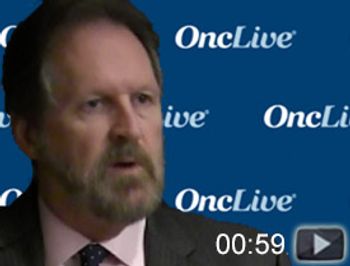
Frank E. Mott, MD, associate professor, Department of Thoracic/Head and Neck Medical Oncology, Division of Cancer Medicine, The University of Texas MD Anderson Cancer Center, discusses the sequencing of treatments for patients with non-small cell lung cancer (NSCLC).
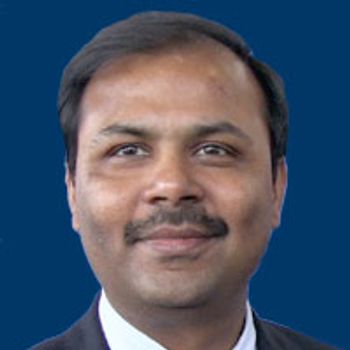
Suresh A. Ramalingam, MD, discusses some of the changes to the NCCN guidelines in non-small cell lung cancer, specifically with EGFR-mutation–positive disease, and how the frontline recommendation of osimertinib will impact clinical practice.




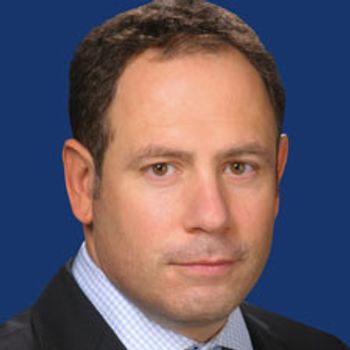
The combination of the CD122-biased cytokine NKTR-214 and the PD-1 inhibitor nivolumab demonstrated target lesion reductions of 72% for patients with advanced cancers.
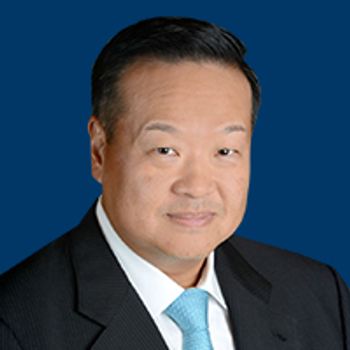
It has been a “renaissance” in the non–small cell lung cancer landscape with the rapid evolution of targeted treatment for patients with EGFR-mutation–positive disease, says Edward S. Kim, MD.
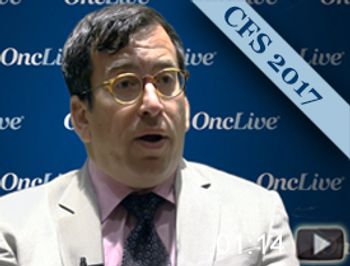
Edward B. Garon, MD, director of Thoracic Oncology at the Jonsson Comprehensive Cancer Center at UCLA, discusses the possibility of administering PD1 or PD-L1 blockades as a third-line or salvage therapy for patients with advanced lung cancer.
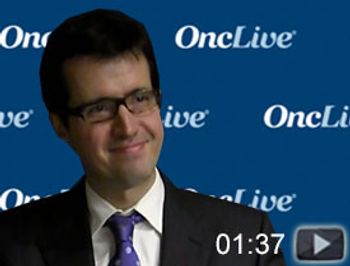
Ferdinandos Skoulidis, MD, PhD, MRCP, assistant professor, Department of Thoracic/Head and Neck Medical Oncology, The University of Texas MD Anderson Cancer Center, discusses combining chemotherapy and immunotherapy in non-small cell lung cancer (NSCLC).

The approach to first-line treatment of advanced non-small cell lung cancer (NSCLC) has been evolving rapidly, particularly with respect to patients with lung adenocarcinoma.
Alexander Drilon, MD, medical oncologist, Memorial Sloan Kettering Cancer Center, discusses central nervous system penetration in the treatment of non-small cell lung cancer.
Gerard Zalcman, MD, discusses the promise of immunotherapy in patients with mesothelioma.
Advertisement
Advertisement
Trending on OncLive
1
FDA Approves Tucatinib Plus Trastuzumab/Pertuzumab as First-Line Maintenance in Advanced HER2+ Breast Cancer
2
FDA Grants Breakthrough Device Designation to Natera’s Multi-Cancer Early Detection Assay
3
VIR-5500 Receives FDA Fast Track Designation in mCRPC
4
Iberdomide Plus Daratumumab/Dexamethasone Yields Significant PFS Benefit in R/R Myeloma
5