


Lung Cancer
Latest News
Advertisement
Latest Videos

































































Advertisement
More News
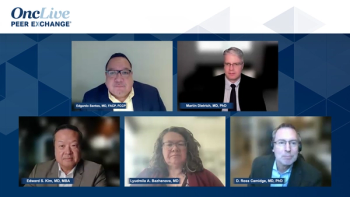
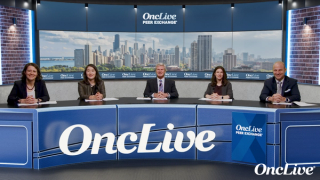
The panel offers comprehensive insights on the Beamion LUNG-1 clinical trial, which is investigating zongertinib in patients with advanced HER2-mutated non–small cell lung cancer.

Millie Das, MD, of Stanford Cancer Center, discusses the progress in small cell lung cancer treatment.

In case you missed it, below is your guide to the important regulatory approvals made by the FDA in April 2024.

Anne Chiang, MD, PhD, discusses understanding the heterogeneity of SCLC to determine which patients will respond to targeted therapy.
In case you missed any, below is a recap of every episode of OncLive On Air that aired in April 2024.
Repotrectinib has been approved by China’s National Medical Products Administration for the treatment of patients with ROS1-positive NSCLC.
Nivolumab plus concurrent chemoradiotherapy, followed by nivolumab plus ipilimumab, did not improve PFS in unresectable stage III NSCLC.
SNB-101 has received FDA fast track designation for potential use in patients with small cell lung cancer.
Edward Kim, MD, MBA, describes the potential role of tyrosine kinase inhibitors (TKIs) in the treatment of patients with HER2-mutated non–small cell lung cancer.
Lyudmila A. Bazhenova, MD, an expert on non–small cell lung cancer, provides clinical insights on the management of adverse events associated with antibody-drug conjugates.

The zenocutuzumab BLA for patients with NRG1-positive non–small cell lung cancer and pancreatic cancer has received priority review from the FDA.
D. Ross Camidge, MD, PhD, of University of Colorado Health Lung Cancer Clinic – Anschutz Medical Campus, discusses clinical efficacy with agents targeted for NRG1-fusion–positive non–small cell lung cancer.
D. Ross Camidge, MD, PhD, of University of Colorado Health Lung Cancer Clinic – Anschutz Medical Campus, discusses ongoing research for patients with non–small cell lung cancer who harbor NRG1 fusions.
D. Ross Camidge, MD, PhD, of University of Colorado Health Lung Cancer Clinic – Anschutz Medical Campus, discusses standard treatments for patients with non–small cell lung cancer who harbor NRG1 fusions.

Stephen V. Liu, MD, discusses the potential benefits and ongoing investigation of zidesamtinib for patients with ROS1-positive tumors.
Fox Chase Cancer Center researchers showed that estrogen is metabolized in lungs, contributing to the development of lung cancer in never smokers.
Edward S. Kim, MD, MBA, discusses the DESTINY-Lung04 trial, a study evaluating trastuzumab deruxtecan as first-line treatment for patients with HER2-mutated NSCLC.
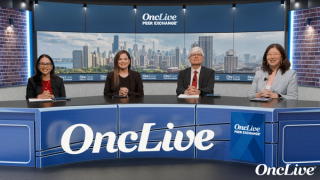
Experts on HER2-mutated NSCLC discuss the patient populations in which they’d utilize trastuzumab deruxtecan and share their clinical experiences with the therapy.

Glecirasib elicited responses and demonstrated a manageable safety profile in patients with pretreated advanced NSCLC harboring KRAS G12C mutations.

Manmeet Singh Ahluwalia, MD, MBA, FASCO, discusses how advancements in precision medicine have improved outcomes for patients with brain metastases.
D. Ross Camidge, MD, PhD, of University of Colorado Health Lung Cancer Clinic – Anschutz Medical Campus, discusses differences between DNA and RNA fusions for detecting NRG1 fusions.
D. Ross Camidge, MD, PhD, of University of Colorado Health Lung Cancer Clinic – Anschutz Medical Campus, discusses the prevalence of NRG1 fusions in lung cancer.
Frontline Amivantamab Plus Chemo Receives Positive EU CHMP Opinion for EGFR Exon 20 Insertion+ NSCLC
Frontline amivantamab with chemotherapy has been recommended for approval by the CHMP in EGFR exon 20 insertion+ non–small cell lung cancer.
Raj Singh, MD, discusses unmet medical needs in the treatment of patients with lung cancer.
Lyudmila A. Bazhenova, MD, and D. Ross Camidge, MD, PhD, review the DESTINY-Lung01 and DESTINY-Lung02 trials, and the panel provides its impressions of the data.
Advertisement
Advertisement
Trending on OncLive
1
FDA Approves Tucatinib Plus Trastuzumab/Pertuzumab as First-Line Maintenance in Advanced HER2+ Breast Cancer
2
Iberdomide Plus Daratumumab/Dexamethasone Yields Significant PFS Benefit in R/R Myeloma
3
FDA Approves Atezolizumab Plus Chemo for Stage III dMMR Colon Cancer
4
VIR-5500 Receives FDA Fast Track Designation in mCRPC
5