

Lung Cancer
Latest News

Advertisement
Latest Videos






























































Advertisement
More News

Osimertinib after definitive chemoradiotherapy improved PFS vs placebo in locally advanced, EGFR-mutated non–small cell lung cancer.
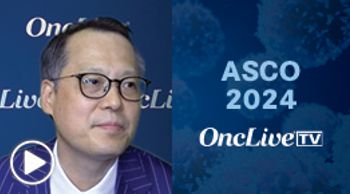
Byoung Chol Cho, MD, PhD, discusses findings from the CHRYSALIS-2 trial of amivantamab plus lazertinib in patients with atypical EGFR-mutant NSCLC.

Compared with standard-of-care chemotherapy, adagrasib significantly improved PFS and tumor responses in KRASG12C-mutated locally advanced or metastatic NSCLC.
Subcutaneous amivantamab was displayed noninferiority in terms of ORR vs intravenous administration in EGFR-mutated non–small cell lung cancer.
Amivantamab plus lazertinib improved progression-free survival vs osimertinib as frontline therapy in patients with high-risk, EGFR-mutant advanced NSCLC.
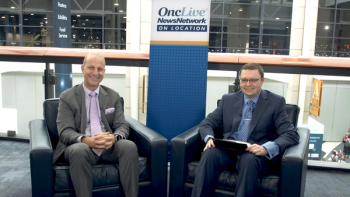
OncLive® will be LIVE with OncLive® News Network: On Location at the 2024 ASCO Annual Meeting. Each day, we will broadcast a series of interviews with top thought leaders, to learn their thoughts and reactions to data presented across oncology during the conference.
Here is your guide to important regulatory approvals made by the FDA in May 2024.
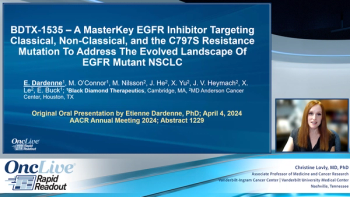
Christine Lovly, MD, PhD, shares data on BDTX-1535, a “masterkey” EGFR inhibitor targeting classical, non-classical, and the C797S resistance mutation in patients with EGFR mutant non-small cell lung cancer (NSCLC), from a presentation at AACR 2024.

Ivonescimab monotherapy improved PFS vs pembrolizumab in the first-line treatment of PD-L1–positive NSCLC in China.

Lorlatinib extended PFS and improved time to intracranial progression vs crizotinib in patients with ALK-positive non–small cell lung cancer.
In case you missed any, below is a recap of every OncLive On Air episode that aired in May 2024.
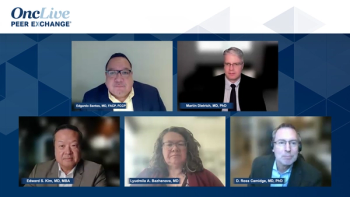
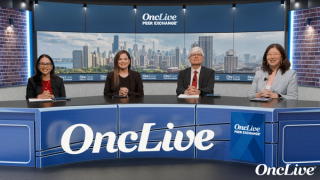
The panel concludes the discussion with key takeaways on the evolving treatment landscape in HER2 non–small cell lung cancer.
Experts on HER2 NSCLC provide clinical insights on selecting between antibody-drug conjugates and TKIs, treatment sequencing, and the role of chemoimmunotherapy.
The FDA granted fast track designation AFM24 plus atezolizumab for advanced EGFR wild-type non–small cell lung cancer.
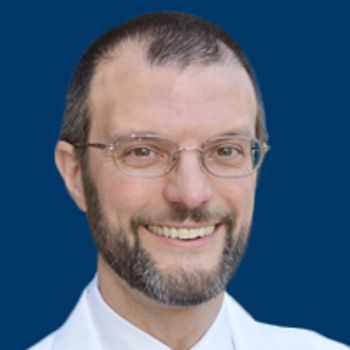
The FDA granted priority review to an sBLA seeking the approval of pembrolizumab plus chemotherapy as frontline therapy in malignant pleural mesothelioma.
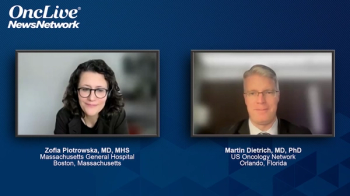
The expert panel underscores the critical importance of rapid diagnostic testing and identification of driver alterations to optimize patient outcomes, given the often-narrow therapeutic window for chemotherapy and targeted therapies.
Key opinion leaders examine the current National Comprehensive Cancer Network (NCCN) guidelines regarding the utilization of liquid and tissue biopsies, highlighting the necessity for the NCCN to prioritize and recommend concurrent testing as the preferred approach over relying on a single liquid or tissue biopsy alone.
Dato-DXd elicited a clinically meaningful but not statistically significant improvement in overall survival in pretreated, advanced non–small cell lung cancer.
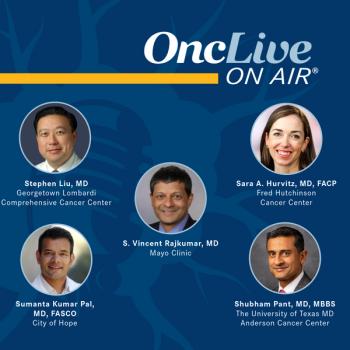
Experts from across oncology specialties discuss the abstracts and presentations they are most looking forward to seeing at the 2024 ASCO Annual Meeting.
The expert panel shares its thoughts on current challenges and unmet needs in the overall HER2-mutated non–small cell lung cancer treatment landscape.
D. Ross Camidge, MD, PhD, discusses the main adverse events seen with TKIs in patients with HER2-mutated non–small cell lung cancer.

Guardant360 CDx received In Vitro Diagnostic Regulation certification for tumor mutation profiling in solid tumors and for companion diagnostic indications in NSCLC and breast cancer.
Martin Dietrich, MD, PhD, shares his approach to optimizing the use of diagnostic testing from both a tissue perspective and cost perspective, noting he routinely orders tissue and liquid biopsies during the initial patient visit if prior testing has not been conducted.
Zofia Piotrowska, MD, MHS, and Martin Dietrich, MD, PhD, emphasize the crucial role of molecular testing in disease diagnosis, focusing on the significance of rapid turnaround times and the ability of liquid biopsies to address time-sensitive diagnostic needs.

Stephen V. Liu, MD, discusses studies being presented at the 2024 ASCO Annual Meeting that may provide valuable insights into the management of NSCLC.
Advertisement
Advertisement
Trending on OncLive
1
FDA Approves Tucatinib Plus Trastuzumab/Pertuzumab as First-Line Maintenance in Advanced HER2+ Breast Cancer
2
Iberdomide Plus Daratumumab/Dexamethasone Yields Significant PFS Benefit in R/R Myeloma
3
FDA Approves Atezolizumab Plus Chemo for Stage III dMMR Colon Cancer
4
VIR-5500 Receives FDA Fast Track Designation in mCRPC
5