






Lung Cancer
Latest News
Advertisement
Latest Videos
































































Advertisement
More News

Health Canada has approved subcutaneous atezolizumab for use in patients with lung cancer, breast cancer, and hepatocellular carcinoma.

Although FAK inhibition alone has displayed modest activity to date, there is interest in developing FAK-targeted therapies for combination regimens.

Ashish Saxena, MD, PhD, discusses recent shifts in treatment with the use of targeted and immune therapies in non–small cell lung cancer.

The FDA has approved alectinib as adjuvant treatment in select patients with ALK-positive non–small cell lung cancer.

Experts on HER2-mutated non–small cell lung cancer provide clinical insights on biomarker testing challenges and the role of reflex testing.
A panel of thoracic oncologists introduce themselves and discuss biomarker testing strategies and the diagnosis of HER2-mutated non–small cell lung cancer (NSCLC).
Eric Vallieres, MD, FRCSC, discusses the impact of induction therapy on surgical candidacy and operative complexity in patients with thoracic malignancies.

Benjamin Levy, MD, discusses the utility of multidisciplinary treatment in lung cancer care.
In case you missed it, these were the key regulatory decisions made by the FDA in March 2024.
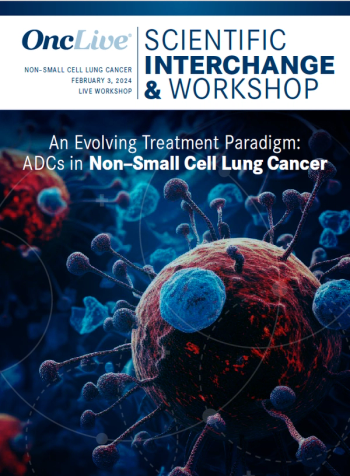
ON FEBRUARY 3, 2024, a select multidisciplinary group of physicians that included surgeons, radiation oncologists, and medical oncologists from academic and community practices participated in a live workshop to discuss current practices and recent updates on ADCs for the treatment of patients with NSCLC. A discussion moderated by Ticiana Leal, MD, provided perspectives and insights on approved and emerging ADCs in NSCLC including key clinical trial data on ADC efficacy and safety, treatment selection, and strategies to manage associated adverse events (AEs). Leal also presented patient cases for discussion.

Responses with savolitinib plus osimertinib were higher in patients with NSCLC who had higher MET amplification cutoffs vs the overall population.

The FDA has granted fast track designation to PT217 for patients with extensive stage small cell lung cancer with disease progression.
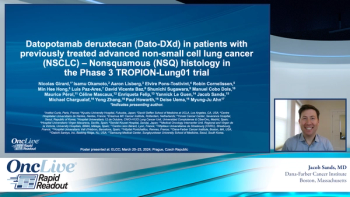
Jacob Sands, MD, shares updated data from the phase 3 TROPION-Lung01 trial of datopotamab deruxtecan versus docetaxel in non-squamous non-small cell lung cancer recently presented at the 2024 European Lung Cancer Congress (ELCC).
The FDA has granted breakthrough therapy designation to sunvozertinib for patients with locally advanced or metastatic NSCLC with an EGFR exon 20 insertion mutation.

Neel P. Chudgar, MD, discusses his presentation on resectability in non–small cell lung cancer at the 21st Annual Winter Lung Cancer Conference®.

Jaime Schneider, MD, PhD, discusses considerations for patients with EGFR-mutant non–small cell lung cancer that progresses on osimertinib.

Durvalumab monotherapy showed clinical benefit in limited-stage small cell lung cancer, according to data from the phase 3 ADRIATIC trial.

Data from the phase 2 KICKSTART trial of tomivosertib plus pembrolizumab do not support the combination's use in patients with non–small cell lung cancer.

Ben Creelan, MD, discusses survival outcomes with cemiplimab in patients with squamous non–small cell lung cancer.

Keeping investigators on the edge of their seats, new data from clinical trials evaluating ADCs continue to impress.

Neel P. Chudgar, MD, discusses considerations for determining lung cancer resection eligibility and how neoadjuvant therapy may affect resectability.

Paul K. Paik, MD, discusses the FDA approval of tepotinib for metastatic non–small cell lung cancer harboring MET exon 14 skipping alterations.

Joshua K. Sabari, MD, discusses the FDA approval of frontline amivantamab plus chemotherapy for NSCLC harboring EGFR exon 20 insertion mutations.

Adagrasib improved progression-free survival and objective response rates vs docetaxel in pretreated KRAS G12C–mutant non–small cell lung cancer.
Advertisement
Advertisement
Trending on OncLive
1
FDA Approves Tucatinib Plus Trastuzumab/Pertuzumab as First-Line Maintenance in Advanced HER2+ Breast Cancer
2
Iberdomide Plus Daratumumab/Dexamethasone Yields Significant PFS Benefit in R/R Myeloma
3
FDA Approves Atezolizumab Plus Chemo for Stage III dMMR Colon Cancer
4
VIR-5500 Receives FDA Fast Track Designation in mCRPC
5