



Lung Cancer
Latest News
Advertisement
Latest Videos































































Advertisement
More News
The FDA and EMA have accepted applications seeking the approval of neoadjuvant nivolumab/chemotherapy followed by surgery and adjuvant nivolumab in NSCLC.

Edgardo S. Santos Castillero, MD, FACP, spotlights some impactful trials in lung cancer that were discussed in 2023, including the phase 3 MARIPOSA-2 trial, and more.

Coral Olazagasti, MD, discusses her participation in a case-based discussion at the 21st Annual Winter Lung Cancer Conference®.

Samuel Rosner, MD, discusses ongoing efforts to individualize the use of perioperative/neoadjuvant therapy in early-stage NSCLC.

Thomas J. Lynch Jr, MD, details how treatments are evolving for patients with EGFR-mutated advanced non–small cell lung cancer.

Corey J. Langer, MD, FACP, discusses findings from the IMpower010 and KEYNOTE-091 studies, which examined immunotherapy in NSCLC.
Dr. Shirish Gadgeel discusses recent EVOKE-2 trial results showing promising response rates with sacituzumab govitecan combined with pembrolizumab for metastatic non-small cell lung cancer.

Investigators evaluated risk factor–based guidelines and risk model–based strategies for lung cancer screening in World Trade Center–exposed responders.
Edgardo S. Santos Castillero, MD, FACP, expands on outcomes from pivotal phase 3 trials such as ADAURA and FLAURA2 in patients with EGFR-mutant NSCLC.
The UV1 cancer vaccine received fast track designation for use in combination with ipilimumab and nivolumab for patients with unresectable malignant pleural mesothelioma.
Balazs Halmos, MD, discusses treatment strategies for patients with EGFR-mutant non–small cell lung cancer.
Wally Curran, MD, discusses current and developing treatment strategies for patients with stage III unresectable non–small cell lung cancer.
Benjamin Levy, MD, discusses the mechanism of action of antibody-drug conjugates in patients with non–small cell lung cancer.
Ticiana Leal, MD, discusses the variety of DLL3-targeted agents in development for patients with small cell lung cancer and neuroendocrine tumors.

Bruna Pellini, MD, discusses the importance of developing circulating tumor DNA assays with increased sensitivity.
Estelamari Rodriguez, MD, MPH, discusses adverse effects associated with HER2-directed antibody-drug conjugates in non–small cell lung cancer.
The FDA granted priority review to a sNDA seeking the approval of alectinib as adjuvant treatment after surgery for early-stage ALK-positive NSCLC.
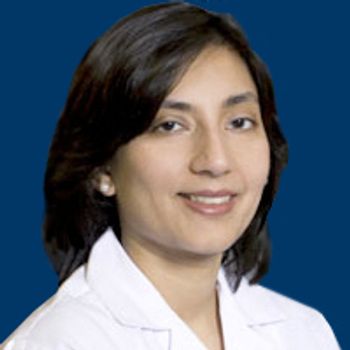
Ranee Mehra, MD, and colleagues detail treatment updates across lung cancer subtypes, including navigating the array of available ALK inhibitors in NSCLC.
Dr Edgardo Santos highlights key takeaways from the presented data and provides insights into how these findings could shape the future landscape of healthcare directions.
Benjamin Levy, MD, reviews clinical data on Dato-DXd in patients with advanced NSCLC and their practical implications.
Edgardo Santos, MD, FACP, FCCP, offers expert insights into the squamous subgroup analysis of EMPOWER-Lung1 and 3, shedding light on the implications of these data for the treatment of individuals with squamous non-small cell lung cancer (NSCLC).

The phase 3 EVOKE-01 trial did not meet its primary end point of significantly improved OS with sacituzumab govitecan vs docetaxel in pretreated NSCLC.
Jason Porter, MD, discusses the progress in the development of treatment options for patients with KRAS G12C-mutated non–small cell lung cancer.
Benjamin Levy, MD, reviews clinical data on T-DXd in HER2 mutated advanced NSCLC and their practical implications.
Edgardo Santos, MD, FACP, FCCP, analyzes the influence on clinical practice arising from the application of cemiplimab with chemotherapy in advanced non-small cell lung cancer (NSCLC) observed in the EMPOWER-Lung3 trial.
Advertisement
Advertisement
Trending on OncLive
1
FDA Approves Tucatinib Plus Trastuzumab/Pertuzumab as First-Line Maintenance in Advanced HER2+ Breast Cancer
2
FDA Grants Breakthrough Device Designation to Natera’s Multi-Cancer Early Detection Assay
3
VIR-5500 Receives FDA Fast Track Designation in mCRPC
4
FDA Approves Atezolizumab Plus Chemo for Stage III dMMR Colon Cancer
5