



Lung Cancer
Latest News
Advertisement
Latest Videos


































































Advertisement
More News
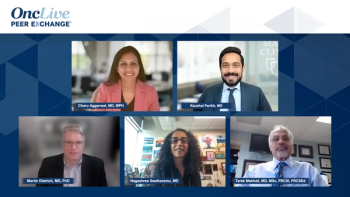
Experts share treatment experiences with osimertinib and afatinib, the potential role of immunotherapy, and ongoing investigations with ADCs and emerging TKIs for patients with uncommon EGFR mutations.
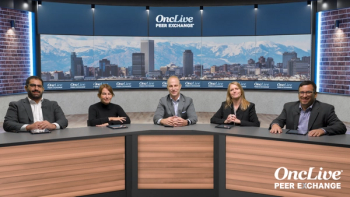
The panel discusses the use of antibody-drug conjugates for patients with EGFR-mutant non–small cell lung cancer, with a focus on the HERTHENA-Lung01 and TROPION-Lung05 studies.
A panel of experts on non–small cell lung cancer provide their thoughts MARIPOSA-2, which studied amivantamab and chemotherapy in EGFR-mutant NSCLC in the second line and beyond.
Insights into how the UNICORN study, which assessed osimertinib, is impacting treatment decisions for uncommon EGFR mutations, and other ongoing trials shedding light on effective treatments for this patient population.
The 2023 ESMO Congress took place October 20 to 24 in Madrid, Spain, with global perspectives on groundbreaking data. We break down some of the key highlights from the annual meeting that oncology fellows should absorb, and apply to practice, as soon as possible.

The FDA has accepted and granted priority review to the biologics license application seeking the approval of the HER3-directed antibody-drug conjugate patritumab deruxtecan for the treatment of adult patients with locally advanced or metastatic EGFR-mutated non–small cell lung cancer.
Eduardo Santos, MD, FACP, FCCP, provides an overview of immunotherapy-based treatment strategies for advanced NSCLC, outlining key factors influencing treatment selection.
Dr. Eduardo Santos, MD, FACP, FCCP, examines immunotherapy-based treatment approaches for NSCLC in the adjuvant setting, highlighting updates from KEYNOTE-091.

The National Comprehensive Cancer Network has updated its Clinical Practice Guidelines for Non–Small Cell Lung Cancer for 2024 to include 2 new category 1 recommendations for amivantamab alongside chemotherapy in patients with treatment-naive, EGFR-mutated advanced NSCLC.
A supplemental biologics license application and new drug application seeking the approval of amivantamab plus lazertinib as frontline therapy for the treatment of patients with locally advanced or metastatic NSCLC with EGFR mutations have been submitted to the FDA.
Experts discuss the difference in toxicities demonstrated in both adagrasib and sotorasib in second line KRAS-mutated NSCLC, highlighting hepatotoxicity and achieving durable response with combination PD-1/PD-L1 inhibitors.
Dr. Sabari and Dr. Garon discuss second line sotorasib and the results of the CodeBreaK 200 study, highlighting the recent FDA oncologic drugs advisory committee (ODAC) and their assessment of the study results.
Joshua K. Sabari, MD, reviews data from the MARIPOSA-2 trial and discusses treatment options in the second line and beyond for patients with EGFR-mutant non–small cell lung cancer.
Expert insights on sequencing treatment options for patients with uncommon EGFR mutations who have progressed on afatinib, emphasizing clinical trial considerations, biomarker testing, and emerging therapeutic approaches.
The panel reacts to the MARIPOSA trial, which looked at amivantamab and lazertinib in the front line in patients with EGFR-mutant non–small cell lung cancer.
Explore dosing nuances and adverse event management strategies for afatinib in treating EGFR mutant non-small cell lung cancer, reflecting real-world practices and clinical insights.
Press Release
Diagnosing early-stage lung cancer with low-dose computed tomography screening drastically improves the survival rate of cancer patients over a 20-year period, according to a large-scale international study being presented by Mount Sinai researchers at the annual meeting of the Radiological Society of North America.

Alexander Drilon, MD, highlights how the approval of repotrectinib addresses the need for improved therapies for patients who have progressed on a previous TKI and delves into notable neurologic toxicities seen with the agent.
Dr. Eduardo Santos, MD, FACP, FCCP, highlights advancements in neoadjuvant immunotherapy for NSCLC presented during key conferences in 2023, underscoring pivotal findings and the potential transformation of treatment approaches.
Dr. Eduardo Santos, MD, FACP, FCCP, provides and overview of immunotherapy-based treatment strategies for NSCLC in the neoadjuvant and perioperative setting.
Comprehensive insights on FLAURA2, which looked at osimertinib and chemotherapy in the front line for patients with EGFR-mutant NSCLC.
A panel of thoracic medical oncologists discuss the first-line treatment options for patients with EGFR-mutant advanced non–small cell lung cancer.
The FDA has accepted and granted priority review to the biologics license application seeking the approval of tarlatamab for the treatment of patients with advanced small cell lung cancer.
Expert oncologists discuss patients who may progress to the second line setting with KRAS G12C mutations.
A comprehensive review of hepatotoxicity in ongoing studies evaluating KRAS inhibitors in the frontline setting, highlighting adagrasib and sotorasib in the KRYSTAL-7 and CodeBreaK 100 studies, respectively.
Advertisement
Advertisement
Trending on OncLive
1
FDA Approves Tucatinib Plus Trastuzumab/Pertuzumab as First-Line Maintenance in Advanced HER2+ Breast Cancer
2
FDA Grants Breakthrough Device Designation to Natera’s Multi-Cancer Early Detection Assay
3
VIR-5500 Receives FDA Fast Track Designation in mCRPC
4
Iberdomide Plus Daratumumab/Dexamethasone Yields Significant PFS Benefit in R/R Myeloma
5