



Lung Cancer
Latest News
Advertisement
Latest Videos
































































Advertisement
More News
Pooled findings from exploratory analyses of the phase 2 DESTINY-Lung01 and DESTINY-Lung02 trials showed that different doses of fam-trastuzumab deruxtecan-nxki elicited similar intracranial responses in patients with HER2-mutated non–small cell lung cancer who had treated or untreated brain metastases at baseline.
A nurse practitioner provides insights on toxicity management strategies for patients with lung cancer who are receiving antibody-drug conjugates.
A medical oncologist reviews the antibody-drug conjugate landscape in lung cancer.
Sandip P. Patel, MD, discusses the 2023 Bridging the Gaps in Lung Cancer meeting, expanding on the continued importance of replicating clinical trial approaches in the real-world setting.
Lyudmila A. Bazhenova, MD, discusses the 2023 Bridging the Gaps in Lung Cancer meeting, expanding on the hope to confirm a consensus on how to best move forward to address gaps in lung cancer care.

Datopotamab deruxtecan elicited encouraging responses in patients with heavily pretreated non–small cell lung cancer harboring actionable genomic alterations.

While progress in outcomes has been greater in non–small cell lung cancer, recent advances, including molecularly targeted therapies against EGFR and ALK, checkpoint inhibitors that boost immune response, improved staging, and video-assisted surgery have all contributed to progress in treatment of all types of lung cancer, including in SCLC.

Experts on lung cancer review key data from the HERTHENA-Lung01 study investigating patritumab deruxtecan (HER3-DXd) in patients with advanced EGFR-mutated NSCLC.

A medical oncologist discusses the role of HER3 in the treatment of non–small cell lung cancer and provides an overview of the HERTHENA-Lung01 clinical trial.
OncLive® will be LIVE with OncLive® News Network: On Location at the 2023 ESMO Congress. Each day, we will broadcast a series of interviews with top thought leaders, to learn their thoughts and reactions to data presented across oncology during the conference.

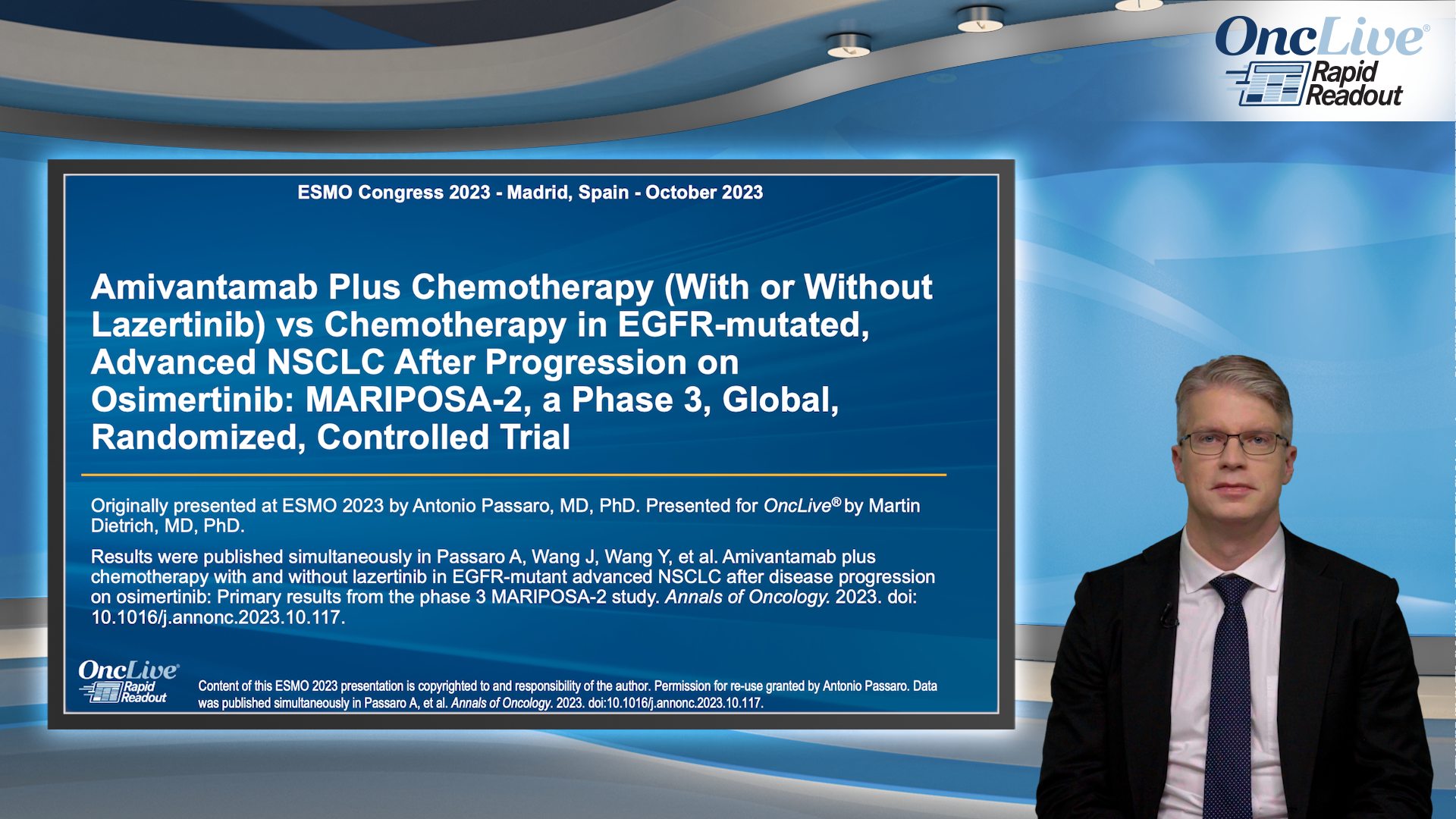
Patients with EGFR-mutated advanced non–small cell lung cancer who experienced disease progression after treatment with osimertinib experienced a progression-free survival benefit with amivantamab plus chemotherapy with or without lazertinib compared with chemotherapy alone.

The Trop-2 directed antibody drug conjugate datopotamab deruxtecan demonstrated a statistically significant improvement in progression-free survival vs docetaxel in patients with advanced or metastatic non–small cell lung cancer, however those with squamous histology did not experience a benefit.

The combination of amivantamab and lazertinib reduced the risk of disease progression or death by 30% compared with osimertinib alone as frontline therapy for patients with advanced non–small cell lung cancer harboring classical EGFR sensitizing mutations.
Dr Keshava discusses the rationale behind lung nodule programs, common barriers to implementing these programs, and how multidisciplinary collaboration can lead to successful early lung cancer diagnoses.

Byoung Chul Cho, MD, PhD, discusses key findings from the phase 3 MARIPOSA study of first-line amivantamab plus lazertinib vs osimertinib in EGFR-mutant locally advanced or metastatic non– small cell lung cancer.
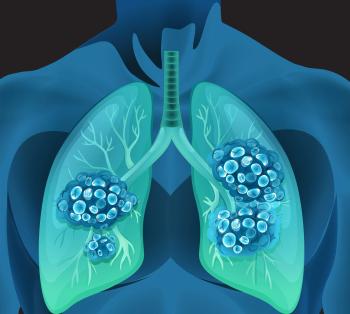
The European Commission has approved fam-trastuzumab deruxtecan-nxki for the treatment of patients with advanced non–small cell lung cancer whose tumors harbor an activating HER2 mutation and who require systemic therapy following platinum-based chemotherapy with or without immunotherapy.

Osimertinib plus chemotherapy reduced the risk of central nervous system disease progression or death vs osimertinib alone in patients with locally advanced or metastatic EGFR-positive non–small cell lung cancer who had brain metastases at baseline, according to data from the phase 3 FLAURA2 trial.
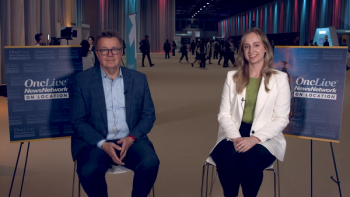
OncLive® will be LIVE with OncLive® News Network: On Location at the 2023 ESMO Congress. Each day, we will broadcast a series of interviews with top thought leaders, to learn their thoughts and reactions to data presented across oncology during the conference.

Nicolas Girard, MD, PhD, discusses primary efficacy results from the phase 3 PAPILLON trial of amivantamab plus chemotherapy in EGFR exon 20 insertion–mutated advanced non–small cell lung cancer.

The combination of amivantamab-vmjw (Rybrevant) and chemotherapy produced a median progression-free survival of 11.4 months vs 6.7 months with chemotherapy alone in patients with advanced, EGFR exon 20 insertion–positive non–small cell lung cancer.

Treatment with the oral ALK inhibitor alectinib led to a statistically significant improvement in disease-free survival in patients with resected ALK-positive non–small cell lung cancer.

Neoadjuvant treatment with nivolumab plus chemotherapy followed by surgery and adjuvant nivolumab resulted in a statistically significant improvement in event-free survival vs placebo plus chemotherapy, in patients with previously untreated resectable stage II to IIIB non-small cell lung cancer, according to data from the phase 3 CheckMate 77T trial.

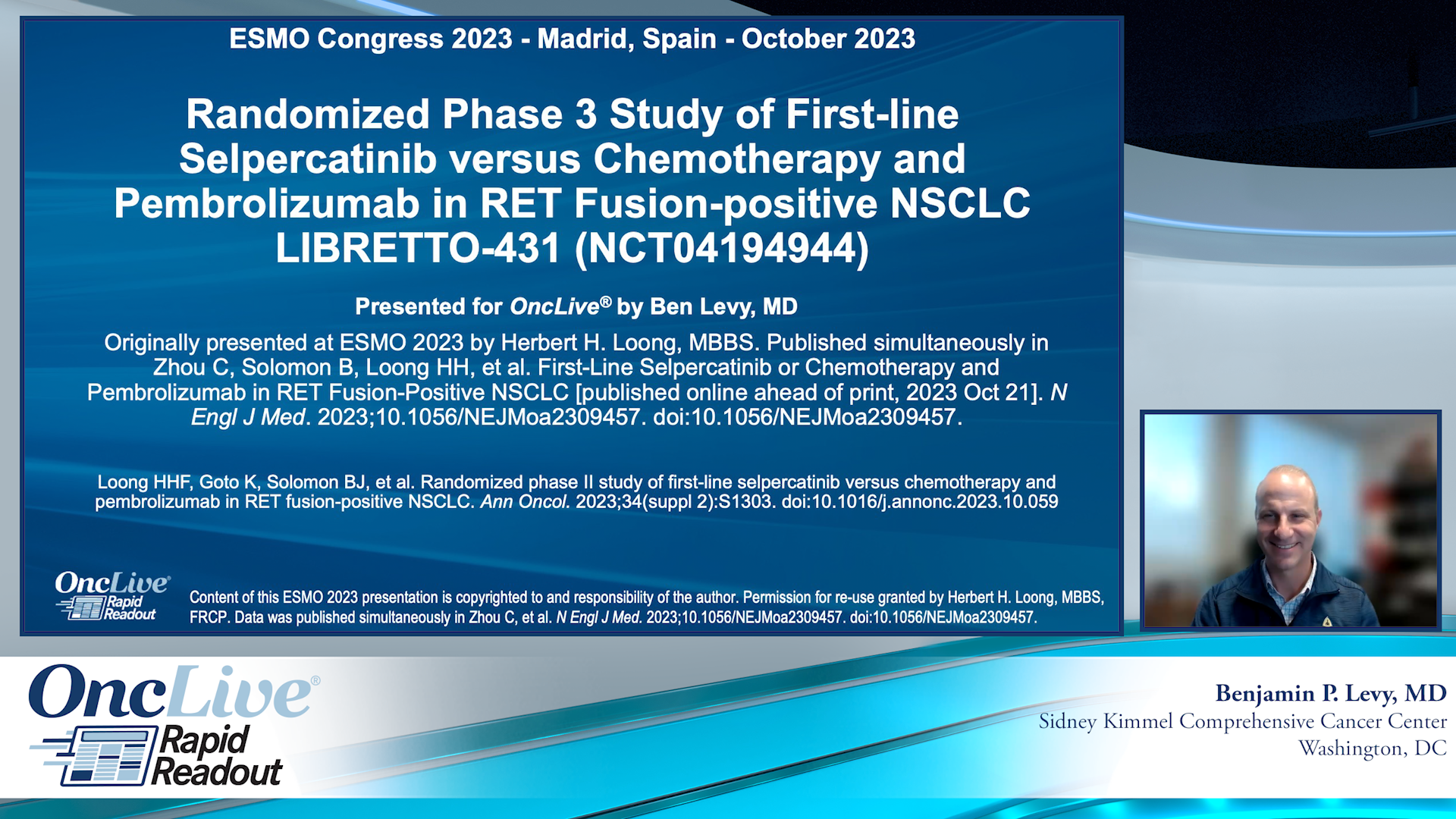
Selpercatinib (Retevmo) showcased superior efficacy, with improved progression-free survival, vs chemotherapy with or without pembrolizumab in the first-line treatment of patients with RET fusion–positive non–small cell lung cancer.

Second-line treatment with sacituzumab govitecan-hziy led to responses in patients with extensive-stage small cell lung cancer, according to results from the phase 2 TROPiCS-03 trial.

Dostarlimab plus chemotherapy elicited a higher objective response rate and showcased a numerical improvement in overall survival compared with pembrolizumab and chemotherapy in patients with treatment-naïve, nonsquamous non–small cell lung cancer.
Advertisement
Advertisement
Trending on OncLive
1
FDA Approves Tucatinib Plus Trastuzumab/Pertuzumab as First-Line Maintenance in Advanced HER2+ Breast Cancer
2
FDA Grants Breakthrough Device Designation to Natera’s Multi-Cancer Early Detection Assay
3
Five Under 5: Top Oncology Videos for the Week of 10/5/2026
4
GI Cancer Monthly Rewind: Key News and Expert Insights You May Have Missed in September 2026
5