






Lung Cancer
Latest News
Advertisement
Latest Videos


































































Advertisement
More News

Melissa L. Johnson, MD, spotlights the early-phase investigation of ifinatamab deruxtecan in advanced solid tumors, discusses the efficacy and safety of the agent in patients with small cell lung cancer, and emphasizes how results from a subgroup analysis support its continued investigation.

Stephen V. Liu, MD, discusses the 5-year overall survival data with atezolizumab and chemotherapy in patients with extensive-stage small cell lung cancer.

Sanam Loghavi, MD, discusses the expansion of genetically-defined categories of acute myeloid leukemia in the World Health Organization classification, and how this affects the diagnosis of patients in this space.

As oncogene-driven therapies move into clinical practice, it is paramount that clinicians have the tools and understanding to integrate the latest evidence for the appropriate treatment of patients with lung cancer.

Experts on non–small cell lung cancer discuss recent data on brigatinib and lorlatinib for the treatment of patients with ALK rearrangements.

Luis Raez, MD, offers insights on how co-mutations in STK11 or KEAP1 impact the use of immunotherapies in KRAS G12C–mutant non–small cell lung cancer.

Jia Luo, MD, discusses a retrospective analysis of initial chemotherapy regimens for the treatment of patients with locally advanced and metastatic NUT carcinoma, which was presented at the 2023 IASLC World Conference on Lung Cancer.

The European Medicines Agency’s Committee for Medicinal Products for Human Use has recommended fam-trastuzumab deruxtecan-nxki for use as a single agent in adult patients with HER2-mutated, advanced non–small cell lung cancer who require systemic treatment after platinum-based chemotherapy with or without immunotherapy.
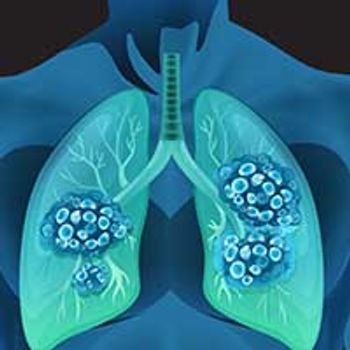
The European Medicines Agency’s Committee for Medicinal Products for Human Use has recommended the approval of pembrolizumab as adjuvant treatment for adult patients with non–small cell lung cancer who are at high risk of recurrence following complete resection and platinum-based chemotherapy.

Key opinion leaders share a focused discussion on lurbinectedin and its evolving role in small cell lung cancer following frontline therapy.

Expert oncologists Laurent Greiller, MD, and Christian Grohé, MD, reflect on the current state of second-line treatment options for patients with small cell lung cancer.

Anna Minchom, MB BCh, MRCP, MD, discusses the need to develop an amivantamab administration method that decreases the likelihood of infusion-related reactions in patients with solid tumors, revealed the RP2D of subcutaneous amivantamab that was determined in the PALOMA trial, and emphasized potential future directions with this agent.
Experts discuss the challenges of the ongoing cisplatin and carboplatin shortages in the United States and detail how they are adapting in their practices.

Natasha B. Leighl, BSc, MMSc, MD, discusses efficacy findings with the EGFR/MET inhibitor amivantamab in patients with advanced non–small cell lung cancer harboring MET exon 14 skipping mutations.

Ticiana Leal, MD, discusses the rationale for and findings from a PD-L1 subgroup analysis of the phase 3 LUNAR trial in patients with metastatic non–small cell lung cancer.
Joshua K. Sabari, MD, discusses adagrasib as a treatment of patients with NSCLC with KRAS G12C mutations, and provides insight on treating patients who have progressed on prior KRAS G12C inhibitors.
Expert panelists review the CodeBreaK trials focused on sotorasib in the treatment of patients with KRAS G12C-mutant non–small cell lung cancer.

The addition of atezolizumab to bevacizumab, carboplatin, and pemetrexed or paclitaxel (ABCP) did not result in a statistically significant improvement in progression-free survival vs BCP for patients with metastatic nonsquamous non–small cell lung cancer in the first line, missing the primary end point of the phase 3 IMpower151 study.
Marcelo Vailati Negrao, MD, discusses efficacy findings from the phase 1b/2 KontRASt-01 trial (NCT04699188) in patients with KRAS G12C–mutated solid tumors.

Shirish M. Gadgeel, MD, discusses 2-year follow-up data from the phase 1/2 KRYSTAL-1 trial in patients with advanced or metastatic non–small cell lung cancer harboring KRAS G12C mutations.

Treatment with durvalumab plus tremelimumab and chemotherapy led to higher rates of long-term clinical benefit compared with chemotherapy alone in the treatment of patients with first-line metastatic non–small cell lung cancer.
The addition of perioperative durvalumab to neoadjuvant chemotherapy led to a significant improvement in terms of pathological complete response and event-free survival compared with placebo plus chemotherapy in patients with resectable non–small cell lung cancer.

The addition of durvalumab to chemotherapy prior to surgery, followed by adjuvant durvalumab, did not provide a clear clinical benefit in patients with early-stage non–small cell lung cancer harboring an EGFR mutation, according to data from the phase 3 AEGEAN trial.

Zongertinib will proceed to phase 1b evaluation at doses of 120 mg and 240 mg once daily in patients with HER2–mutant non–small cell lung cancer following preliminary efficacy signals and acceptable safety in patients with advanced HER2–mutant solid tumors enrolled in the dose-escalation portion of the phase 1a/b BEAMION Lung-1 trial.
Treatment with durvalumab was associated with lower real-world progression-free survival in patients with unresectable, stage III EGFR-mutated non–small cell lung cancer vs patients with EGFR wild-type disease.
Advertisement
Advertisement
Trending on OncLive
1
FDA Approves Tucatinib Plus Trastuzumab/Pertuzumab as First-Line Maintenance in Advanced HER2+ Breast Cancer
2
FDA Grants Breakthrough Device Designation to Natera’s Multi-Cancer Early Detection Assay
3
Iberdomide Plus Daratumumab/Dexamethasone Yields Significant PFS Benefit in R/R Myeloma
4
VIR-5500 Receives FDA Fast Track Designation in mCRPC
5