





Lung Cancer
Latest News
Advertisement
Latest Videos




































































Advertisement
More News

Nicholas C. Rohs, MD, delves into the details of the case study a patient who had a lung cancer relapse detected following a referral to a dermatologist due to pityriasis rubra pilaris.
Benjamin Besse, MD, PhD, discusses the results from the ATALANTE-1 trial and details the mechanism of action of the OSE2101 vaccine.

Richard Lazzaro, MD, FACS, discusses the advantages of standard low-dose computed tomography scans in lung cancer screening in high-risk individuals, as well as future opportunities to integrate biomarker-based assays into screening protocols to improve early detection.
Nicholas C. Rohs, MD, discusses a case study that he presented during the Interesting Cases session at the 18th Annual New York Lung Cancers Symposium®.
Benjamin Philip Levy, MD, discusses antibody-drug conjugates under investigation in patients with non–small cell lung cancer.

While there are considerable barriers to incorporating comprehensive genotyping, the use of circulating tumor DNA offers an improvement in molecular testing—and doing so earlier can accelerate the time to treatment and improve survival for patients with lung cancer.
As treatments for patients with stage IV non–small cell lung cancer continue to evolve, patients with PD-L1–negative disease represent a unique cohort and chemotherapy/immunotherapy or immunotherapy doublet regimens appear to be effective.
Although the emergence of immunotherapy have created additional treatment options for patients with various types of cancer, these agents are associated with significant toxicities and immune-related adverse effects.
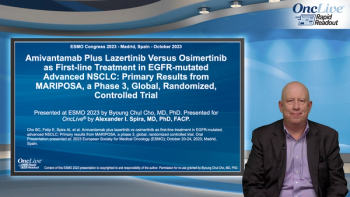
Expert oncologist Alex Spira, MD, PhD, FACP, reviews primary results from the MARIPOSA study in advanced NSCLC following the ESMO 2023 annual meeting.
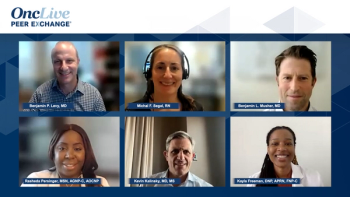
The expert panel discusses TROP2 as a target for patients with cancer who are receiving antibody-drug conjugates.
A review of antibody-drug conjugates approved for treatment of patients with breast, lung, or gastrointestinal cancers.

Ticiana Leal, MD, and Sandip P. Patel, MD, discuss clinical trials evaluating the use of patritumab deruxtecan in patients with non–small cell lung cancer and remaining unmet needs.
In their updated guidelines for patients with small cell lung cancer (SCLC), ASCO has recommended the CDK4/6 inhibitor trilaciclib as a myeloid supportive agent for patients with untreated or previously treated extensive-stage SCLC who are receiving chemotherapy or chemoimmunotherapy.
Insights on managing antibody-drug conjugate toxicities for patients with gastric cancer.

A GI medical oncologist discusses the role of trastuzumab deruxtecan in the gastric cancer treatment space.
Clinical insights on where patritumab deruxtecan might fit in the treatment paradigm for patients with advanced non–small cell lung cancer.
Medical oncologists discuss the toxicity profile of patritumab deruxtecan and the safety outcomes from HERTHENA-Lung01 in non–small cell lung cancer.

The European Medicines Agency had validated a marketing authorization application seeking the approval of the combination of encorafenib and binimetinib for the treatment of adult patients with BRAF V600–mutant advanced non–small cell lung cancer.

Sarah Goldberg, MD, MPH, highlights the mechanism of action of VIC-1911, expands on its ongoing investigation in the phase 1 trial, and sheds light on next steps planned for the agent’s investigation in KRAS G12C–mutant non–small cell lung cancer.
Jorge Nieva, MD, discusses the rationale and design of an ongoing phase 2 trial investigating a telemedicine approach to delivering subcutaneous atezolizumab for patients with non–small cell lung cancer.
Misty D. Shields, MD, PhD, discusses systemic therapy updates for patients with extensive-stage small cell lung cancer.
Antonio Passaro, MD, PhD, medical oncologist, Division of Thoracic Oncology, European Institute of Oncology, discusses the significance of data from the phase 2 TROPION-Lung05 trial of datopotamab deruxtecan in patients with non–small cell lung cancer.
Stephen V. Liu, MD, discusses the significance of using fam-trastuzumab deruxtecan-nxki in patients with HER2-mutant non–small cell lung cancer and brain metastases according to pooled findings from exploratory analyses of the phase 2 DESTINY-Lung01 and DESTINY-Lung02 trials.

The FDA has granted breakthrough therapy designation to furmonertinib for use as a potential therapeutic option in patients with previously untreated, locally advanced or metastatic nonsquamous non–small cell lung cancer harboring EGFR exon 20 insertion mutations.
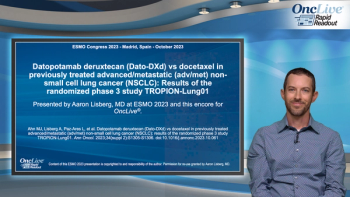
Aaron Lisberg, MD, reviews data from the TROPION-Lung01 study investigating Dato-DXd in previously treated patients with advanced/metastatic NSCLC.
Advertisement
Advertisement
Trending on OncLive
1
FDA Approves Tucatinib Plus Trastuzumab/Pertuzumab as First-Line Maintenance in Advanced HER2+ Breast Cancer
2
FDA Grants Breakthrough Device Designation to Natera’s Multi-Cancer Early Detection Assay
3
VIR-5500 Receives FDA Fast Track Designation in mCRPC
4
Iberdomide Plus Daratumumab/Dexamethasone Yields Significant PFS Benefit in R/R Myeloma
5