


Lung Cancer
Latest News
Advertisement
Latest Videos

































































Advertisement
More News
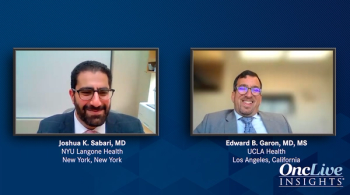
Joshua K. Sabari, MD, and Edward B. Garon, MD, MS, discuss the role and potential impact of KRAS G12C inhibitors in the frontline setting, highlighting the potential of monotherapy and in combination with a PD-1/PD-L1 inhibitor.
Shared insight into the consideration of KRAS G12C inhibitors in treating co-mutations in NSCLC.
Expert perspectives on the role of clinical biomarkers in selecting appropriate patients for antibody-drug conjugates in non–small cell lung cancer.
Joshua K. Sabari, MD, reviews data from the TROPION-Lung04 study, and the panel offers key takeaways on Dato-DXd and immunotherapy in advanced NSCLC.
Delve into the evolving landscape of treating EGFR mutations in lung cancer, exploring emerging therapies, structural classifications, and the complexity of individual mutation responses.
The impact of and strategies for addressing less frequent mutations in NSCLC treatment decisions, emphasizing actionable alterations and timely interventions in challenging scenarios.
Catherine Ann Shu, MD, discusses key therapeutic advances in the adjuvant setting for patients with early-stage non–small cell lung cancer.
David Harpole, MD, discusses key data from the first interim analysis of the AEGEAN trial, changes to the adjuvant treatment landscape that inspired the subgroup analysis of patients with EGFR mutations excluded from the intention-to-treat population, and more.

The addition of serplulimab to carboplatin and nab-paclitaxel significantly prolonged survival vs chemotherapy alone when used in the first-line treatment of patients with previously untreated locally advanced or metastatic squamous non–small cell lung cancer.

Christine Bestvina, MD, discusses strategies for managing adverse effects associated with the ROS1 TKI repotrectinib in patients with ROS1-positive metastatic non–small cell lung cancer.

The FDA has granted a fast track designation to BI 764532 for use as a therapeutic option in patients with advanced or metastatic DLL3-expressing large-cell neuroendocrine carcinoma of the lung who experienced disease progression after treatment with 1 or more lines of therapy, including platinum-based chemotherapy.

Experts reflect on the mixed enthusiasm for concurrent liquid and tissue testing, addressing insurance coverage concerns and the importance of shortening turnaround time, while highlighting efforts to make comprehensive testing the default in the community.
A comprehensive study on the association between the availability of molecular genotyping results and overall survival in advanced non-squamous, non-small cell lung cancer patients, shedding light on the importance of timely and concurrent testing.

Adjuvant treatment with the chemotherapy doublet of pemetrexed and cisplatin did not lead to a significant improvement in overall survival compared with vinorelbine plus cisplatin in patients with stage II to IIIA nonsquamous non–small cell lung cancer.
Lyudmila A. Bazhenova, MD, discusses factors to consider when navigating the use of neoadjuvant vs adjuvant EGFR– and ALK-directed treatment strategies for patients with non–small cell lung cancer who express oncogenic drivers.
Benjamin Philip Levy, MD, discusses the evolution of antibody-drug conjugates in non-small cell lung cancer following updated data to be read out for this treatment population throughout 2023.
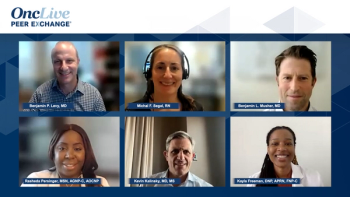
The expert panel concludes the program with key takeaways and closing thoughts on the evolving antibody-drug conjugate space.
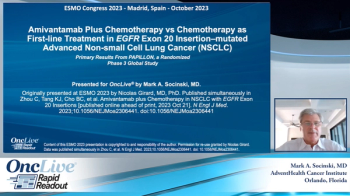
Mark A. Socinski, MD, reviews data from the PAPILLON study presented at ESMO 2023 on amivantamab plus chemotherapy vs chemotherapy in the first line for patients with EGFR exon 20 insertion–mutated advanced non–small cell lung cancer.

Lyudmila A. Bazhenova, MD, expanded on key considerations when navigating the use of perioperative immunotherapy for patients with or without oncogenically-driven lung cancers, the importance of multidisciplinary collaboration when deciding on a treatment plan, and the need for increased and earlier implementation of biomarker testing in all patients with lung cancer.
Experts review the current frontline treatments for patients with KRAS G12C-mutated NSCLC.
Explore the current landscape of targeted therapies in non-small cell lung cancer, focusing on KRAS G12C mutations, molecular testing, and current treatments.
The FDA has granted clearance for an investigational new drug application for a phase 1/2 safety lead-in trial investigating the engineered tumor-infiltrating lymphocyte KSQ-001EX in patients with melanoma, head and neck squamous cell carcinoma, and non–small cell lung cancer.
Edward B. Garon, MD, MS, reviews data from the EVOKE-02 study, and the panel offers their thoughts on antibody-drug conjugates for the treatment of advanced NSCLC.
The expert panel reviews the results from the TROPION-Lung01 study and discusses how the data can inform treatment decisions for patients with previously treated NSCLC.
Expert perspectives on improving turnaround times in genomic testing for lung cancer, covering strategies, challenges, and the significance of liquid biopsy in optimizing patient care.
Advertisement
Advertisement
Trending on OncLive
1
FDA Approves Tucatinib Plus Trastuzumab/Pertuzumab as First-Line Maintenance in Advanced HER2+ Breast Cancer
2
FDA Grants Breakthrough Device Designation to Natera’s Multi-Cancer Early Detection Assay
3
VIR-5500 Receives FDA Fast Track Designation in mCRPC
4
Iberdomide Plus Daratumumab/Dexamethasone Yields Significant PFS Benefit in R/R Myeloma
5