





Lung Cancer
Latest News
Advertisement
Latest Videos
































































Advertisement
More News

Overview and clinical implications of the CheckMate-816 study of neoadjuvant nivolumab plus platinum chemotherapy versus chemotherapy alone in early-stage NSCLC.
The European Commission has approved nivolumab in combination with platinum-based chemotherapy for the neoadjuvant treatment of patients with resectable non–small cell lung cancer at high risk of recurrence with tumor cell PD-L1 expression of at least 1%.

Vincent K. Lam, MD, discusses findings from a study profiling the tumor immune microenvironment in patients with ALK fusion–positive lung cancer and potential future directions for this research.

The FDA has granted fast track designation to the combination of quaratusugene ozeplasmid and atezolizumab as maintenance therapy in patients with extensive-stage small cell lung cancer whose disease did not progress after receiving initial standard treatment with atezolizumab and chemotherapy.
The National Medical Products Administration in China has accepted for review a new drug application seeking the approval of repotrectinib for use in adult patients with locally advanced or metastatic ROS1-positive non–small cell lung cancer.
The combination of galinpepimut-S and nivolumab provided positive survival outcomes with an acceptable safety profile in patients with malignant pleural mesothelioma who were refractory to or relapsed after at least 1 line of standard treatment.
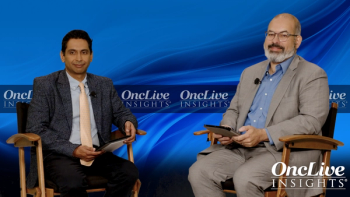
Jorge Nieva, MD, and Ashish Saxena, MD, PhD, consider the broader impact of supportive care on cost burden and quality of life and share scenarios in which supportive care is most appropriate.
Jorge Nieva, MD, and Ashish Saxena, MD, PhD, share insights about the value of patient-reported outcomes studies and the extent to which they can shape treatment decisions.
Joseph Christopher Murray, MD, PhD, discusses the investigation of peripheral myeloid cells as prognostic markers in patients with non–small cell lung cancer treated with cemiplimab.

In this fourth episode of OncChats: Examining LIFU–Aided Liquid Biopsy in Glioblastoma, Manmeet Singh Ahluwalia, MD, MBA, FASCO, and Michael W. McDermott, MD, discuss the key objectives of the phase 3 LIMITLESS study (NCT05317858) examining low-intensity focused ultrasound with immunotherapy and chemotherapy in patients with lung cancer and brain metastases.
Kersti Oselin, MD, PhD, discusses a subgroup analysis from the phase 3 PEARLS/KEYNOTE-091 study of pembrolizumab in patients with early-stage non‒small-cell lung cancer following resection.
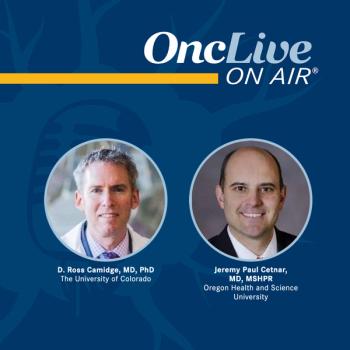
In this episode of ‘How This is Building Me,’ Dr Camidge is rejoined by Dr Cetnar to discuss the good, the bad, and the ugly of the lung cancer data that were presented at the 2023 ASCO Annual Meeting.
Panel experts review disease staging for limited and extensive stage small-cell lung cancer and discuss the impact of staging on treatment selection.
Expert oncologists provide an overview of the landscape surrounding small-cell lung cancer and highlight the importance of early referral and diagnosis for overall patient outcomes.
Martin Wermke, MD, discusses the investigation of BI 764532 in patients with DLL3-positive small cell lung cancer and neuroendocrine carcinoma.

Ben Levy, MD offers insight into how he approaches the selection of the optimal treatment strategy in early-stage non-small cell lung cancer.
A panel of experts who treat patients with non-small cell lung cancer provides an overview of staging, molecular testing and treatment options in stage I-IIIB non-small cell lung cancer.
Jorge Nieva, MD, and Ashish Saxena, MD, PhD, talk about factors to consider when weighing the risk/benefit ratio associated with the use of cyclin-dependent kinase 4/6 inhibition.
Jorge Nieva, MD, and Ashish Saxena, MD, PhD, discuss the impact of chemotherapy-induced myelosuppression on patients with SCLC.
Amin Nassar, MD, discusses findings from a retrospective study of the use of EGFR TKI therapy, durvalumab, or observation following concurrent chemoradiation in patients with unresectable, stage III non–small cell lung cancer harboring EGFR mutations.
Dr Reuss discusses the development of LP-300 in advanced NSCLC, the mechanisms of LP-300 that may help synergize with the activity of platinum-based chemotherapy, and its ongoing investigation in the phase 2 HARMONIC trial.

Martin Dietrich, MD, PhD, and Wade Thomas Iams, MD, review the value of TROP2 as a target in patients with NSCLC.
Experts review data on treatment with HER3-directed agents in NSCLC for patients with EGFR mutations.

Vinay Edlukudige Keshava, MD, shares the story of his fellowship and provides advice on how to best transition to the next step in an oncologic career.

The FDA has approved a 505(b)(2) new drug application for Pemrydi RTU, the first and only ready-to-use presentation of pemetrexed or injection that does not require reconstitution, dilution, or refrigeration
Advertisement
Advertisement
Trending on OncLive
1
FDA Approves Tucatinib Plus Trastuzumab/Pertuzumab as First-Line Maintenance in Advanced HER2+ Breast Cancer
2
Five Under 5: Top Oncology Videos for the Week of 10/5/2026
3
GI Cancer Monthly Rewind: Key News and Expert Insights You May Have Missed in September 2026
4
FDA Grants Fast Track Designation to PSV359 for Advanced FAP-Positive Solitary Fibrous Tumors
5