
Melanoma & Skin Cancer
Latest News
Advertisement
Latest Videos





























































Advertisement
More News
The treatment landscape changed significantly with the first melanoma clinical trials in 2001, which evaluated the CTLA-4 antibodies ipilimumab (Yervoy) and tremelimumab.
The European Medicines Agency's Committee for Medicinal Products for Human Use has recommended approval of nivolumab at a flat dosing schedule of either 240 mg over 30 minutes every 2 weeks, or 480 mg infused over 60 minutes every 4 weeks, for the adjuvant treatment of patients with melanoma who have involvement of lymph nodes or metastatic disease who have undergone complete resection.
Keith T. Flaherty, MD, discusses treatment beyond frontline therapy for patients with BRAF-mutant relapsed/refractory melanoma.
Five melanoma experts discuss findings from several exciting studies presented at the 2019 ASCO Annual Meeting that are helping to change the way patients with malignant melanoma are treated.
Paul D. Nathan, MBBS, PhD, FRCP, consultant medical oncologist, Mount Vernon Cancer Centre, discusses the long-term outcomes with the combination of dabrafenib (Tafinlar) and trametinib (Mekinist) in patients with BRAF V600-mutant unresectable or metastatic melanoma.
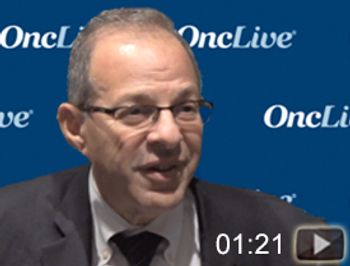
Mario Sznol, MD, professor of medicine, co-director, Yale SPORE in Skin Cancer, Yale Cancer Center, discusses the benefits of immunotherapy, specifically the combination of the CTLA-4 inhibitoripilimumab and the PD-1 inhibitor nivolumab, in melanoma.
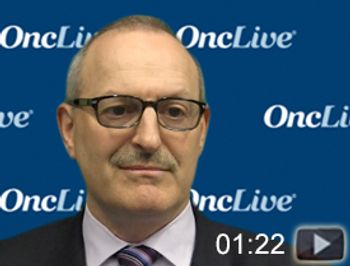
David Polsky, MD, PhD, Alfred W. Kopf, MD Professor of Dermatologic Oncology, Ronald O. Perelman Department of Dermatology, professor, Department of Pathology, and director, Pigmented Lesion Service, NYU Langone’s Perlmutter Cancer Center, discusses the next steps that have to be taken to validate the clinical utility of circulating tumor DNA (ctDNA) as a biomarker in BRAF-mutant melanoma.
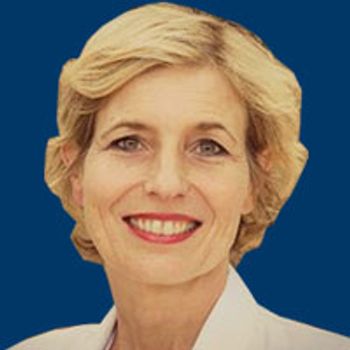
A 2018 Giants of Cancer Care® award winner in Melanoma and Other Skin Cancers, Caroline Robert, MD, PhD, has helped clarify the role of immune therapies in advanced melanoma with her groundbreaking work on clinical trials evaluating anti– CTLA-4 and anti–PD-1 antibodies.
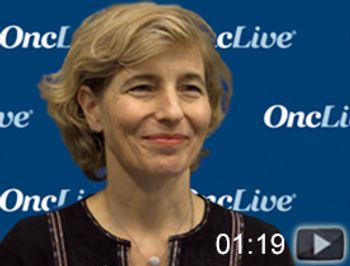
Caroline Robert, MD, PhD, head of the Dermatology Unit at the Institut Gustave-Roussey, co-director of the Melanoma Research Unit at INSERM 981 Paris-Sud University, explains why patients with melanoma and brain metastases were excluded from a trial evaluating the efficacy of dabrafenib plus trametinib.
Encorafenib (Braftovi) plus binimetinib (Mektovi) had superior overall survival and progression-free survival compared with encorafenib or vemurafenib (Zelboraf) alone in patients with BRAF V600–mutant melanoma.
Michael E. Hurwitz, MD, PhD, assistant professor of medicine, Yale Cancer, Center, discusses the various patient cohorts in the ongoing phase I/II PIVOT-02 trial.
Alexander Guminski, MD, PhD, medical oncologist, Royal North Shore Hospital, University of Sydney, discusses the 16-month follow-up results of a phase II trial evaluating cemiplimab (Libtayo) in patients with metastatic cutaneous squamous cell carcinoma.
Georgina V. Long, BSc, PhD, MBBS, FRACP, co-medical director of Melanoma Institute Australia (MIA), chair of Melanoma Medical Oncology and Translational Research at MIA and Royal North Shore Hospital, University of Sydney, discusses the results of the pooled analysis of parts 1 and 2 of the phase III COMBI-i study.
Jessica Geiger, MD, medical oncologist, Department of Hematology and Medical Oncology, Taussig Cancer Institute, Cleveland Clinic, discusses challenges with the patient population enrolled in the phase III KEYNOTE-630 trial exploring the use of adjuvant pembrolizumab (Keytruda) in cutaneous squamous cell carcinoma.
Michael B. Atkins, MD, deputy director, Georgetown-Lombardi Comprehensive Cancer Center, discusses data from a phase I trial exploring the combination of nivolumab (Opdivo) and ipilimumab (Yervoy) in patients with melanoma.
By the end of 2018, the 57 oncology drugs launched from 2014 to 2018 had gained 89 indications across 23 cancer types. These new agents included numerous checkpoint inhibitors, which saw tremendous uptake based on their ability to dramatically improve patient outcomes.
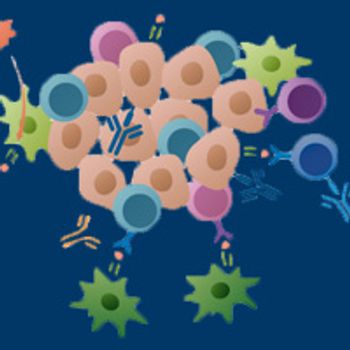
As the immunotherapy research field grows, NY-ESO-1 is emerging as a high-priority target for cancer vaccine development and adoptive T-cell therapies.
The FDA granted a breakthrough therapy designation to the combination of bempegaldesleukin (NKTR-214) and nivolumab (Opdivo) for the treatment of patients with previously untreated unresectable or metastatic melanoma.
Keith T. Flaherty, MD, director, Henri and Belinda Termeer Center for Targeted Therapy and director of clinical research, Massachusetts General Hospital Cancer Center, and professor of medicine, Harvard Medical School, discusses the rationale to explore triplet therapy in BRAF V600-mutant melanoma.
Paul D. Nathan, MBBS, PhD, FRCP, discusses the 5-year analysis of the COMBI-d and COMBI-v trials, which look at the long-term effects of dabrafenib plus trametinib in patients with BRAF V600–mutant unresectable or metastatic melanoma.
Advertisement
Advertisement
Trending on OncLive
1
FDA Approves Atezolizumab Plus Chemo for Stage III dMMR Colon Cancer
2
VIR-5500 Receives FDA Fast Track Designation in mCRPC
3
China’s NMPA Approves Adjuvant T-DXd for HER2+ Early Breast Cancer With Residual Invasive Disease
4
MAVERICK, B7-H3–Directed ADCs, and ADAURA Data Headline Key Lung Cancer Findings From WCLC 2026
5