


Melanoma & Skin Cancer
Latest News
Advertisement
Latest Videos





























































Advertisement
More News
David Polsky, MD, PhD, discusses potential applications of circulating tumor DNA as a biomarker in melanoma.
Jason J. Luke, MD, FACP, discusses the treatment landscape of metastatic melanoma.
Adil Daud, MD, clinical professor, Department of Medicine (Hematology/Oncology) and director, Melanoma Clinical Research, University of California, San Francisco Helen Diller Family Comprehensive Cancer Center, discusses research evaluating interferon gamma as a potential biomarker of response in melanoma.

Quickly following on the approval of single agents, adjuvant immunotherapy combinations are quickly progressing through development, with promising signs of clinical activity seen in phase II studies, according to a presentation by Jeffrey S. Weber, MD, PhD, at the 37th Annual CFS®.
Jeffrey S. Weber, MD, PhD, discusses biomarker research in the CheckMate-238 trial looking at patients with resected stage III/IV melanoma.
Georgina V. Long, BSc, PhD, MBBS, FRACP, discusses how to efficiently enroll patients with melanoma who have brain metastases in clinical trials.
Jeffrey S. Weber, MD, PhD, discusses the future of checkpoint inhibitors in melanoma.

The European Commission has approved nivolumab at a flat dosing schedule of either 240 mg over 30 minutes every 2 weeks, or 480 mg infused over 60 minutes every 4 weeks, for the adjuvant treatment of patients with melanoma who have involvement of lymph nodes or metastatic disease who have undergone complete resection.
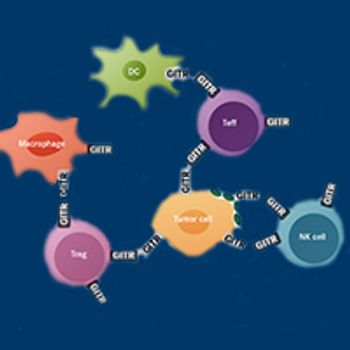
Immunotherapies designed to exploit the host immune system to specifically target cancer cells exploded onto the oncology scene in the mid-1980s, when the first such agents started to show success in melanoma and renal cell carcinoma.
Georgina V. Long, BSc, PhD, MBBS, FRACP, discusses the sequence of local therapy in patients with melanoma who have brain metastases.
Jeffrey S. Weber, MD, PhD, shares toxicity data from the randomized, double-blind, phase III CheckMate-238 trial in resected stage III or IV melanoma.
Michael B. Atkins, MD, deputy director, Georgetown-Lombardi Comprehensive Cancer Center, discusses long-term outcomes of the CheckMate-204 trial in melanoma.
Georgina V. Long, BSc, PhD, MBBS, FRACP, discusses the long-term data from the phase II ABC study , in which investigators are comparing the efficacy of nivolumab in combination with ipilimumab versus single-agent nivolumab in patients with melanoma brain metastases.
Jeffrey S. Weber, MD, PhD, discusses the rationale behind the randomized, double-blind, phase III CheckMate-238 trial in resected stage III or IV melanoma.
For nearly a decade, immunotherapy and molecularly targeted agents have been the focus of intense development. Now emerging evidence suggests that both modalities can deliver long-term benefits for patients, but the findings may prompt additional questions of how best to fit these transformative therapies into treatment landscapes.
Michael B. Atkins, MD, discusses results from the CA209-004 trial, which was a phase I study analyzing patients with advanced, unresectable melanoma treated with nivolumab plus ipilimumab.

The molecular profile of Merkel cell carcinoma differs depending upon whether the malignancy is driven by ultraviolet light or by a virus and can be correlated with responses to immunotherapy, according to recent study findings.
Advertisement
Advertisement
Trending on OncLive
1
FDA Approves Atezolizumab Plus Chemo for Stage III dMMR Colon Cancer
2
VIR-5500 Receives FDA Fast Track Designation in mCRPC
3
China’s NMPA Approves Adjuvant T-DXd for HER2+ Early Breast Cancer With Residual Invasive Disease
4
MAVERICK, B7-H3–Directed ADCs, and ADAURA Data Headline Key Lung Cancer Findings From WCLC 2026
5