
Melanoma & Skin Cancer
Latest News
Advertisement
Latest Videos































































Advertisement
More News
David Polsky, MD, PhD, Alfred W. Kopf, MD Professor of Dermatologic Oncology, Ronald O. Perelman Department of Dermatology, professor, Department of Pathology, and director, Pigmented Lesion Service, NYU Langone’s Perlmutter Cancer Center, discusses the predictive value of circulating tumor DNA (ctDNA) in BRAF-mutant melanoma.
Georgina V. Long, BSc, PhD, MBBS, FRACP, co-medical director of Melanoma Institute Australia (MIA), chair of Melanoma Medical Oncology and Translational Research at MIA and Royal North Shore Hospital, University of Sydney, discusses results from the 5-year analysis of the combination of dabrafenib and trametinib in patients with BRAF V600E-mutant melanoma.

Ulcerated melanoma is associated with worse outcomes and appears to be driven in part by systemic inflammation, which is more common in smokers, obese individuals, and those with vitamin D deficiency.
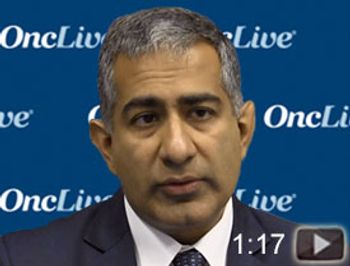
Nikhil Khushalani, MD, vice chair, Department of Cutaneous Oncology, Moffitt Cancer Center, discusses the plans for the CA045-001 trial, an international, multicenter study that is comparing bempegaldesleukin plus nivolumab versus nivolumab monotherapy in patients with previously untreated, unresectable, or metastatic melanoma.
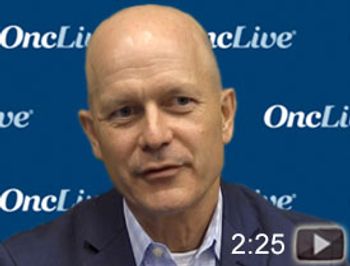
Keith T. Flaherty, MD, discusses an update on overall survival in COLUMBUS, a randomized phase III trial of encorafenib plus binimetinib versus vemurafenib or encorafenib in patients with BRAF V600-mutant melanoma.
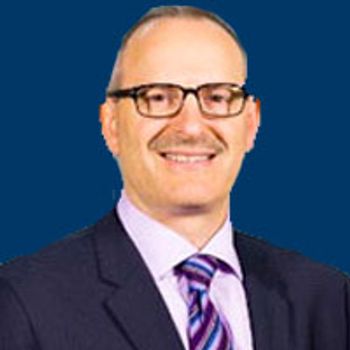
David Polsky, MD, PhD, discusses findings from an analysis in patients with BRAF-mutant, unresectable, metastatic melanoma, as well as the next steps for validating these findings and potentially using circulating tumor DNA to help inform treatment decisions.
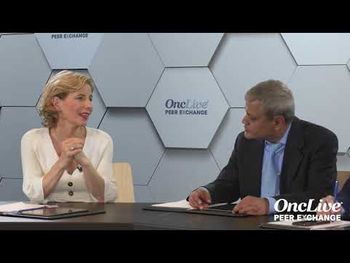

Georgina V. Long, BSc, PhD, MBBS, FRACP, discusses the activity of the combination of dabrafenib and trametinib alone as well as in combination with spartalizumab in patients with advanced BRAF V600E-mutant melanoma.
The FDA has accepted 6 supplemental biologics license applications for review to update the dosing schedule for pembrolizumab (Keytruda) to include an every-6-weeks option at 400 mg over 30-minute infusions.
Nikhil Khushalani, MD, discusses the CA045-001 study, a phase III, randomized study that compared bempegaldesleukin plus nivolumab versus nivolumab monotherapy in patients with previously untreated, unresectable, or metastatic melanoma.

Ryan J. Sullivan, MD, discusses the results of the COMBI-d and COMBI-v studies that led to changes in practice for patients with BRAF V600-mutant unresectable or metastatic melanoma.
Advertisement
Advertisement
Trending on OncLive
1
FDA Approves Atezolizumab Plus Chemo for Stage III dMMR Colon Cancer
2
VIR-5500 Receives FDA Fast Track Designation in mCRPC
3
China’s NMPA Approves Adjuvant T-DXd for HER2+ Early Breast Cancer With Residual Invasive Disease
4
MAVERICK, B7-H3–Directed ADCs, and ADAURA Data Headline Key Lung Cancer Findings From WCLC 2026
5