


Melanoma & Skin Cancer
Latest News
Advertisement
Latest Videos





























































Advertisement
More News

Genetically engineered T-cells targeting a common tumor antigen appeared safe and demonstrated some evidence of antitumor activity in a first-in-human clinical evaluation.
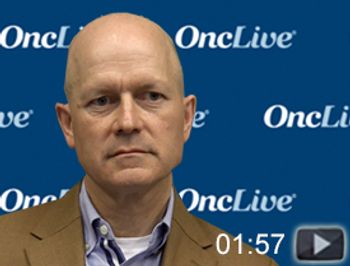
Keith T. Flaherty, MD, director, Termeer Center for Targeted Therapy, Massachusetts General Hospital Cancer Center, professor of medicine, Harvard Medical School, discusses BRAF inhibitors for the treatment of patients with melanoma.
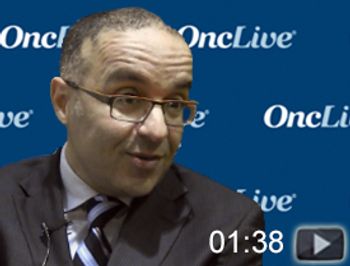
Hassane M. Zarour, MD, professor of medicine, University of Pittsburgh, discusses unmet needs in melanoma.

Gene expression-based biomarkers associated with disease recurrence in patients with cutaneous squamous cell carcinoma may help in identifying a population subset considered to have high-risk disease.
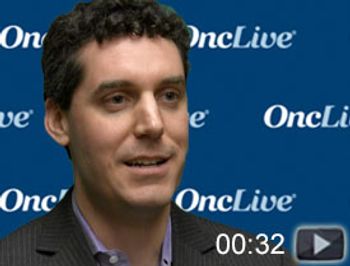
Michael A. Postow, MD, medical oncologist, Memorial Sloan Kettering Cancer Center, discusses the FDA approval of cemiplimab in patients with advanced or metastatic cutaneous squamous cell carcinoma.
Danny Rischin, MD, director, Division of Cancer Medicine, head, Department of Medical Oncology, Peter MacCallum Cancer Centre, discusses the FDA approval of cemiplimab for the treatment of patients with cutaneous squamous cell carcinoma.
The FDA has approved the PD-1 inhibitor cemiplimab (Libtayo) for the treatment of patients with metastatic cutaneous squamous cell carcinoma (CSCC) or patients with locally advanced CSCC who are not candidates for curative surgery or curative radiation.

More patients than ever before may now be good candidates for adjuvant therapy and derive long-term benefits from it, but new data and expanding treatment options have led to many new questions on how to optimize treatment for melanoma.
Jeffrey S. Weber, MD, PhD, discusses the promise of nivolumab in this setting and a general overview of the melanoma treatment landscape.
Alexander M. M. Eggermont, MD, PhD, director general of Gustave Roussy Cancer Campus Grand Paris in Villejuif, France, discusses the impact of pembrolizumab in melanoma.

Paul Nghiem, MD, PhD, Michael Piepkorn Endowed Chair in Dermatology Research, professor of Dermatology/Medicine at Fred Hutchinson Cancer Research Center, University of Washington Medicine, discusses challenges with immunotherapy in patients with Merkel cell carcinoma
The European Commission has approved the combination of encorafenib (Braftovi) and binimetinib (Mektovi) for the treatment of adult patients with BRAF V600–mutant unresectable or metastatic melanoma.
The FDA has granted a priority review to a supplemental biologics license application for pembrolizumab for the treatment of pediatric and adult patients with recurrent locally advanced or metastatic Merkel cell carcinoma.
Sanjiv S. Agarwala, MD, chief of medical oncology and hematology, St. Luke’s Cancer Center, professor of medicine, Temple University School of Medicine, discusses the impact of entinostat for patients with melanoma who progress on a PD-1/PD-L1 blocking antibody.
Keith T. Flaherty, MD, director, Termeer Center for Targeted Therapy, Massachusetts General Hospital Cancer Center, professor of medicine, Harvard Medical School, discusses the tolerability of the combination of encorafenib (Braftovi) and binimetinib (Mektovi) in patients with melanoma.

Keith T. Flaherty, MD, discusses the clinical implications of the COLUMBUS trial of encorafenib plus binimetinib in patients with BRAF-mutated melanoma.
Danny Rischin, MD, MBBS, FRACP, discusses the potential for cemiplimab as a novel PD-1 inhibitor for patients with metastatic and locally advanced cutaneous squamous cell carcinoma.
Paolo A. Ascierto, MD, director of the Unit of Melanoma, Cancer Immunotherapy and Innovative Therapy at the National Tumor Institute Fondazione G. Pascale in Naples, discusses investigational triplet therapies in patients with BRAF-positive melanoma.
The European Commission has approved the combination of dabrafenib (Tafinlar) and trametinib (Mekinist) for the adjuvant treatment of patients with BRAF V600–positive stage III melanoma.
Ahmad Tarhini, MD, PhD, director, Melanoma and Skin Cancer Program, Center for Immuno-Oncology Research, Cleveland Clinic, discusses some recent practice-changing clinical trials in melanoma.
Although checkpoint blocking immunotherapy has significantly improved outcomes for patients with advanced and metastatic disease, researchers believe the modality also may be effective in the neoadjuvant setting.
Joseph Stilwill, MD, medical oncologist, Sarah Cannon Research Institute, discusses exciting findings in melanoma from the 2018 ASCO Annual Meeting.

The European Commission has approved nivolumab (Opdivo) as an adjuvant treatment for adult patients with completely resected melanoma with lymph node involvement or metastatic disease, regardless of BRAF mutation status.
Paul Nghiem, MD, PhD, Michael Piepkorn Endowed Chair in Dermatology Research, professor of Dermatology/Medicine at Fred Hutchinson Cancer Research Center, University of Washington Medicine, discusses response to immunotherapy in Merkel cell carcinoma.
The European Medicines Agency’s Committee for Medicinal Products for Human Use has recommended approval of the combination of dabrafenib and trametinib for the adjuvant treatment of adult patients with BRAF V600E– or V600K–positive stage III melanoma following complete resection.
Advertisement
Advertisement
Trending on OncLive
1
FDA Approves Atezolizumab Plus Chemo for Stage III dMMR Colon Cancer
2
VIR-5500 Receives FDA Fast Track Designation in mCRPC
3
China’s NMPA Approves Adjuvant T-DXd for HER2+ Early Breast Cancer With Residual Invasive Disease
4
MAVERICK, B7-H3–Directed ADCs, and ADAURA Data Headline Key Lung Cancer Findings From WCLC 2026
5