
Melanoma & Skin Cancer
Latest News
Advertisement
Latest Videos





























































Advertisement
More News
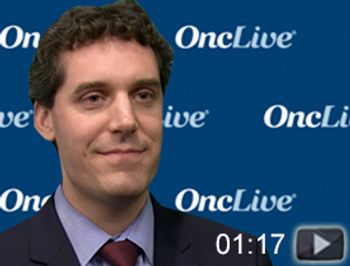
Michael A. Postow, MD, medical oncologist, Memorial Sloan Kettering Cancer Center, discusses combination therapy for patients with melanoma.
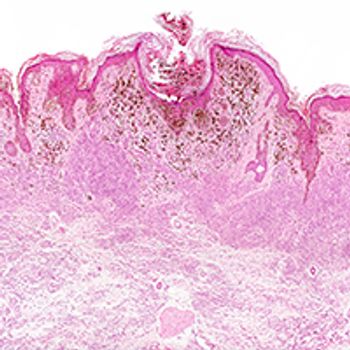
Ipilimumab was associated with a 1-year overall survival rate of 75% in adolescent patients with stage III/IV unresectable malignant melanoma.
Victoria Atkinson, MD, medical oncologist, Princess Alexandra Hospital, University of Queensland, discusses novel combinations for the treatment of patients with melanoma.
Jason Luke, MD, assistant professor of medicine at the University of Chicago Medicine, discusses the clinical trial landscape for melanoma
Peter Soyer, MD, academic dermatologist, professor, The University of Queensland Diamantina Institute, discusses the role of technology in melanoma.
Michael A. Postow, MD, medical oncologist, Memorial Sloan Kettering Cancer Center, discusses the role of entrectinib for patients with NTRK fusion-positive melanoma.

Neoadjuvant nivolumab plus ipilimumab demonstrated almost a tripling in objective response rate compared with the PD-1 inhibitor alone but at the cost of significant added grade 3 adverse events for patients with high-risk resectable melanoma.
The combination of the CD122-biased cytokine NKTR-214 and the PD-1 inhibitor nivolumab demonstrated target lesion reductions of 72% for patients with advanced cancers.
Peter Soyer, MD, academic dermatologist, professor, The University of Queensland Diamantina Institute, discusses screening for melanoma.
Jason Luke, MD, assistant professor of medicine at the University of Chicago Medicine, discusses the future of immunotherapy combinations for patients with melanoma.
Jeffrey S. Weber, MD, PhD, deputy director and co-director of the Melanoma Program at the Laura and Isaac Perlmutter Cancer Center at NYU Langone Medical Center, discusses the toxicity profile seen with nivolumab versus ipilimumab for patients with melanoma.
Researchers are seeking to determine whether the plethora of new therapies that have been introduced in recent years in the advanced and metastatic settings can benefit patients at risk of recurrence earlier in the treatment timeline for melanoma.
Michael A. Postow, MD, discusses the impressive efficacy seen with combining BRAF and MEK inhibitors for patients with melanoma.
Robyn Saw, FRACS, MS, MBBS, associate professor of surgery, The University of Sydney, discusses a study of vitamin D in melanoma.
Jason Luke, MD, assistant professor of medicine at the University of Chicago Medicine, discusses the combination of pembrolizumab (Keytruda) and talimogene laherparepvec (T-VEC; Imlygic) for the treatment of patients with melanoma.
Glembatumumab vedotin (CDX-011) induced a disease control rate of 61% in patients with metastatic uveal melanoma, despite a low a low objective response rate of 6%.
Pascale Guitera, MD, director, Sydney Melanoma Diagnostic Centre, associate professor, the University of Sydney, discusses the RADICAL trial of patients with melanoma.
Helmut Schaider, MD, associate professor, Dermatology Research Centre, the University of Queensland, discusses adaptive drug resistance for patients with melanoma.
Celeste Lebbe, MD, PhD, Hopital Saint Louis in Paris, discusses the efficacy of avelumab (Bavencio) in patients with stage IV Merkel cell carcinoma.
The FDA has awarded the combination of dabrafenib (Tafinlar) and trametinib (Mekinist) a breakthrough therapy designation for the adjuvant treatment of patients with stage III melanoma with a BRAF V600 mutation following complete resection.
The combination of adjuvant nivolumab and ipilimumab led to a 3-year relapse-free survival rate of 71% in patients with high-risk resected stage IIIC/IV melanoma.

A doubling in 3-year relapse-free survival rates remained consistent across patient subgroups treated with dabrafenib and trametinib, when compared with placebo, for patients with BRAF-mutant stage III melanoma.
Rodabe N. Amaria, MD, department of Melanoma Oncology, division of Cancer Medicine, The University of Texas MD Anderson Cancer Center, discusses using genetically modified tumor infiltrating lymphocytes (TILs) in patients with advanced melanoma.
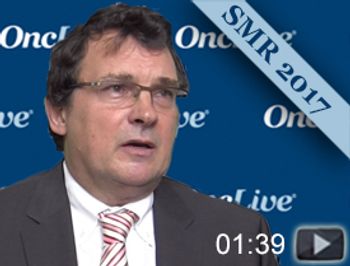
Dirk Schadendorf, MD, head of department for Dermatology, Venerology and Allergology, University Hospital Essen, Germany, discusses the efficacy of combining targeted therapy with checkpoint inhibitors for patients with melanoma.
The combination of nivolumab and ipilimumab showed an intracranial response rate of 46% for asymptomatic patients with melanoma brain metastases who had not received prior local therapy to the brain.
Advertisement
Advertisement
Trending on OncLive
1
FDA Approves Atezolizumab Plus Chemo for Stage III dMMR Colon Cancer
2
VIR-5500 Receives FDA Fast Track Designation in mCRPC
3
China’s NMPA Approves Adjuvant T-DXd for HER2+ Early Breast Cancer With Residual Invasive Disease
4
Individualized Neoantigen Vaccine Elicits Durable T-Cell Responses in Resected HPV– HNSCC
5