

Melanoma & Skin Cancer
Latest News
Advertisement
Latest Videos





























































Advertisement
More News
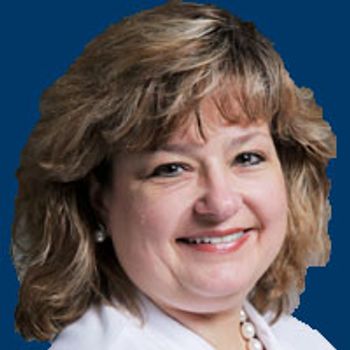
Anna C. Pavlick, DO, discusses adjuvant therapy for patients with high-risk melanoma.
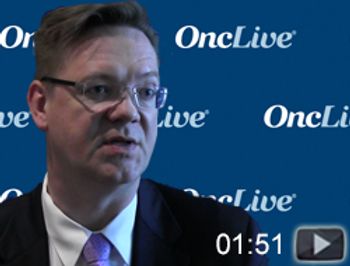
Robert Andtbacka, MD, associate professor in the Division of Surgial Oncology, Department of Surgery at the University of Utah School of Medicine, discusses the long-term follow-up of overall survival data from the phase III OPTiM study of taglimogene laherparepvec (T-VEC) for patients with metastatic melanoma.
Merrick I. Ross, MD, professor, Department of Surgical Oncology, Division of Surgery, The University of Texas MD Anderson Cancer Center, discusses treatment for liver metastasis in patients with melanoma.

Treatment with ipilimumab has been shown to improve overall survival; however, this efficacy often comes with toxicity.
Several clinical trials are examining the use of adjuvant PD-1 inhibition for patients with melanoma, with a potential new standard of care on the horizon for those at high risk of recurrence following resection.

Jeffrey S. Weber, MD, PhD, discusses the combination of nivolumab (Opdivo) and ipilimumab (Yervoy) for the treatment of brain metastases, the tolerability of the combination of ipilimumab and talimogene laherparepvec (Imlygic; T-VEC), and what is next on the horizon for pembrolizumab (Keytruda).
Melissa A. Wilson, MD, PhD, discussed the promising results with BRAF/MEK inhibitor combinations in melanoma and what ongoing studies have the potential to alter the landscape again.
Jean Jacques Grob, MD, PhD, discusses the efficacy and tolerability of different doses of ipilimumab given in the adjuvant setting for patients with melanoma.
Alexander J. Stratigos, MD, University of Athens Medical School, discusses prevention techniques for melanoma.
Paolo A. Ascierto, MD, National Tumour Institutue “Fondazione G. Pascale,” Unit of Melanoma, Naples, Italy, discusses the sequencing of targeted therapies for patients with melanoma.
Paolo A. Ascierto, MD, director at the Unit of Melanoma, Cancer Immunotherapy and Innovative Therapy, National Tumor Institute Fondazione G. Pascale, discusses findings from a phase Ib/II dose-escalation study evaluating the triple combination therapy with encorafenib, binimetinib, and ribociclib (Kisqali) in patients with BRAF V600-mutant solid tumors and melanoma.

The combination of the IDO inhibitor epacadostat and nivolumab demonstrated promising signs of activity for patients with squamous cell carcinoma of the head and neck and those with melanoma.

Nivolumab plus ipilimumab demonstrated an intracranial response rate of 42% in asymptomatic patients with melanoma brain metastases who had not received prior local therapy to the brain.

Combining the PD-1 inhibitor pembrolizumab (Keytruda) with the HDAC inhibitor entinostat demonstrated promising clinical activity and acceptable safety in patients with melanoma who were refractory to immune checkpoint inhibitors.

Psychological intervention can substantially lower fear of cancer recurrence in survivors, improving their quality of life, anxiety, and cancer-specific distress, according to a phase II randomized clinical trial presented at the 2017 ASCO Annual Meeting.
According to findings from part 2 of the phase III COLUMBUS trial, the combination of the BRAF inhibitor encorafenib and the MEK inhibitor binimetinib reduced the risk of disease progression or death by 23% compared with single-agent encorafenib for patients with BRAF-mutant melanoma.
Sanjiv S. Agarwala, MD, chief of medical oncology and hematology, St. Luke’s Cancer Center, professor of Medicine, Temple University School of Medicine, discusses whether the overall survival (OS) justifies the toxicities demonstrated in the CheckMate-067 trial for patients with melanoma.
Patients with stage III or IV melanoma assigned to 10 mg/kg ipilimumab (Yervoy) lived longer than patients assigned to a lower dose of the anti-CTLA-4 anticlonal antibody, but at the cost of greater toxicity.
Jedd D. Wolchok, MD, PhD, chief, Melanoma and Immunotherapeutics Service, Memorial Sloan Kettering Cancer Center, discusses weighing the overall survival (OS) benefit with the increased risk of toxicities seen with the combination of nivolumab (Opdivo) and ipilimumab (Yervoy) in treatment-naïve patients with advanced melanoma.
Adding the IDO inhibitor indoximod to pembrolizumab led to an overall response rate of 52% in patients with advanced melanoma, according to findings from a phase II trial reported at the 2017 AACR Annual Meeting.
Adding a formulation of the Coxsackievirus A21 (CAVATAK®) to ipilimumab (Yervoy) yielded an overall response rate of 50% and was well-tolerated in immunotherapy-naïve and pretreated patients with advanced melanoma.
Treatment with the RAF dimer inhibitor BGB-283 led to clinical benefit for patients with BRAF V600-mutated melanoma, papillary thyroid cancer, and ovarian cancer.
Jason J. Luke, MD, assistant professor of Medicine, The University of Chicago Medicine, discusses the controversy surrounding the combination of nivolumab (Opdivo) and ipilimumab (Yervoy) in treatment-naïve patients with advanced melanoma, which was explored in the CheckMate-067 trial, during the AACR Annual Meeting.

The PD-1 and CTLA-4 inhibitor combination of nivolumab (Opdivo) and ipilimumab (Yervoy) was associated with a 12% reduction in the risk of death versus nivolumab monotherapy in patients with treatment-naïve advanced melanoma.
Treatment with the PD-L1 inhibitor avelumab induced an objective response rate of 33% in patients with advanced Merkel cell carcinoma in the phase II JAVELIN Merkel 200 study, including 2 additional complete responses since the primary analysis.
Advertisement
Advertisement
Trending on OncLive
1
FDA Approves Atezolizumab Plus Chemo for Stage III dMMR Colon Cancer
2
VIR-5500 Receives FDA Fast Track Designation in mCRPC
3
China’s NMPA Approves Adjuvant T-DXd for HER2+ Early Breast Cancer With Residual Invasive Disease
4
Individualized Neoantigen Vaccine Elicits Durable T-Cell Responses in Resected HPV– HNSCC
5