
Melanoma & Skin Cancer
Latest News
Advertisement
Latest Videos





























































Advertisement
More News
The PD-1 inhibitor pembrolizumab (Keytruda) continues to be a promising frontline immunotherapy option for patients with advanced melanoma.
Investigators with the FDA’s Center for Drug Evaluation and Research and Oncology Center of Excellence conducted a pooled analysis of all trial reports and data marketing applications for the use of anti–PD-1 antibodies alone or in combination to treat patients with unresectable or metastatic melanoma.
Novel systemic therapies in the neoadjuvant and adjuvant settings have shown promising outcomes for locally advanced melanoma and may reduce the proportion of patients who need complete lymphadenectomy.

With the advent of the combination of dabrafenib (Tafinlar) plus trametinib (Mekinist) in melanoma physicians are no longer using BRAF inhibitors alone, but rather in combination with MEK inhibitors due to the improved efficacy.
Treatment with encorafenib and binimetinib improved survival versus single-agent vemurafenib (Zelboraf) in patients with BRAF-mutant advanced, unresectable or metastatic melanoma.
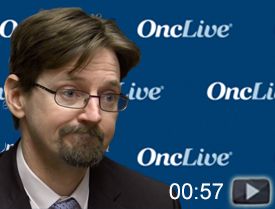
Daniel Coit, MD, discusses clinical findings with complete lymph node dissection and the evolution of surgery in the melanoma landscape.
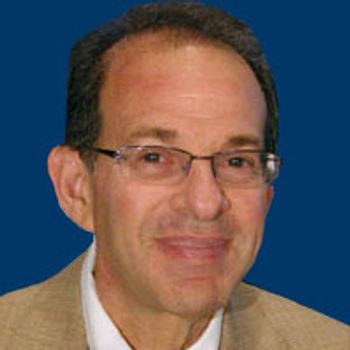
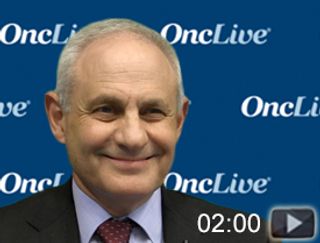
Mario Sznol, MD, discusses overall advances in the field of melanoma, as well as novel treatments with the potential to change the treatment paradigm.

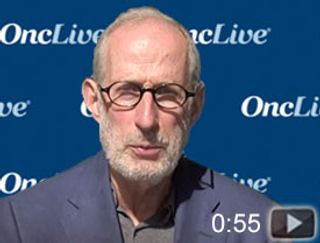
Jeffrey S. Weber, MD, PhD, discusses the future of immunotherapy in the treatment of melanoma.
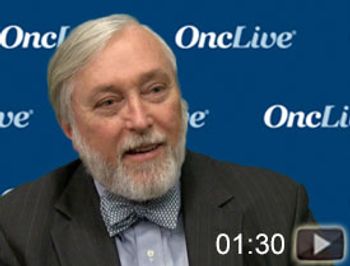
Daniel G. Coit, MD, FACS, surgical oncologist, Memorial Sloan Kettering Cancer Center, discusses the role of surgery in treating patients with melanoma.
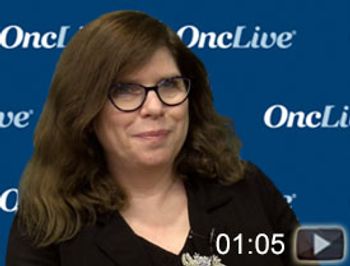
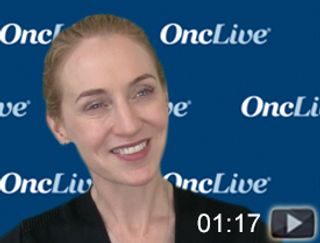
Harriet Kluger, MD, professor of medicine, associate cancer center director for education and training, deputy section chief, Medical Oncology, Yale Cancer Center, discusses the progression of treatment for patients with melanoma who have brain metastases.

Ipilimumab has been approved by the European Commission for the treatment of patients aged 12 and older with unresectable or metastatic melanoma.
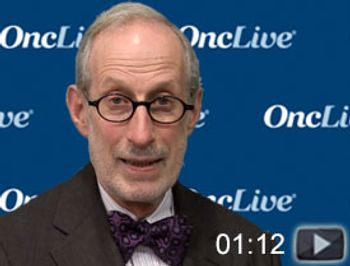
Jeffrey S. Weber, MD, PhD, Laura and Isaac Perlmutter Professor of Oncology, deputy director, co-director of the Melanoma Research Program, NYU Langone’s Perlmutter Cancer Center, discusses the clinical potential and monetary hindrances of triplet and four-drug regimens for patients with melanoma.
Ragini Kudchadkar, MD, assistant professor, Department of Hematology and Medical Oncology, associate director, Hematology and Medical Oncology Fellowship Program-Clinical/Service, Emory University School of Medicine, discusses immunotherapy in Merkel cell carcinoma.
Maria Teresa Landi, MD, PhD, senior investigator, Integrative Tumor Epidemiology Branch, National Cancer Institute, discusses the importance of screening in melanoma.
Adjuvant pembrolizumab reduced the risk of recurrence by 43% in patients with stage III resected high-risk melanoma.
Richard Carvajal, MD, director of Experimental Therapeutics and director of the Melanoma Service at Columbia University Medical Center, discusses the biology and distinctions of extracutaneous melanoma.
Patrick Ott, MD, PhD, clinical director, Melanoma Center, Center for Immuno-Oncology, physician, assistant professor of medicine, Harvard Medical School, Dana-Farber Cancer Institute, discusses ipilimumab (Yervoy) and nivolumab (Opdivo) both in combination and as a monotherapy for patients with melanoma.
Victoria Atkinson, MD, medical oncologist, Princess Alexandra Hospital, University of Queensland, discusses the treatment landscape for patients with BRAF-mutant metastatic melanoma.

The FDA has granted a priority review to a supplemental new drug application for the use of dabrafenib combined with trametinib as an adjuvant treatment for patients with BRAF V600E– or V600K–positive stage III melanoma following complete resection.
Jason J. Luke, MD, assistant professor of medicine, University of Chicago Medicine, discusses the FDA approval of nivolumab (Opdivo) to treat patients with melanoma who are at high risk of disease recurrence following complete surgical resection.
The FDA has approved nivolumab as an adjuvant treatment for patients with completely resected melanoma with lymph node involvement or metastatic disease.
Dirk Schadendorf, MD, head of department for Dermatology, Venerology and Allergology, University Hospital Essen, Germany, discusses sequencing agents in melanoma.

Checkpoint blockade immunotherapy has been hailed as a significant advance in anticancer treatment. Yet only a subset of patients experience long-term cancer remission as a result of these therapies, because a significant number of those who initially respond eventually develop resistance.
Maria Teresa Landi, MD, PhD, senior investigator, Integrative Tumor Epidemiology Branch, National Cancer Institute, discusses the association between genetic variance and melanoma risk.
Results from EMPOWER-CSCC 1 showed that cemiplimab (REGN2810) induced an overall response rate of 46.3% in patients with advanced cutaneous squamous cell carcinoma.
Advertisement
Advertisement
Trending on OncLive
1
FDA Approves Atezolizumab Plus Chemo for Stage III dMMR Colon Cancer
2
VIR-5500 Receives FDA Fast Track Designation in mCRPC
3
China’s NMPA Approves Adjuvant T-DXd for HER2+ Early Breast Cancer With Residual Invasive Disease
4
Individualized Neoantigen Vaccine Elicits Durable T-Cell Responses in Resected HPV– HNSCC
5