
Melanoma & Skin Cancer
Latest News
Advertisement
Latest Videos





























































Advertisement
More News

The European Commission has approved avelumab (Bavencio) for the treatment of patients with metastatic Merkel cell carcinoma.

The neutrophil-to-lymphocyte ratio is an independent factor for overall survival in patients with metastatic melanoma, whether they receive targeted therapy or immunotherapy.
The FDA has accepted new drug applications supporting use of the combination of the BRAF inhibitor encorafenib and the MEK inhibitor binimetinib for BRAF-mutant advanced, unresectable or metastatic melanoma.

Nearly half of patients with resectable stage IIIB/C BRAF V600-mutant melanoma achieved pathologic complete response with neoadjuvant combination therapy consisting of dabrafenib (Tafinlar) and trametinib (Mekinist).

Adjuvant therapy with vemurafenib for high-risk melanoma led to mixed results, as patients with stage IIIC or later did not benefit, but those with earlier stage disease did.
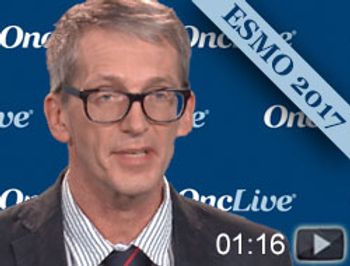
Reinhard Dummer, MD, of University Hospital Zurich, discusses the results of the phase III COMBI-AD study presented at the 2017 ESMO Congress in patients with stage III BRAF-mutant melanoma.

Nivolumab (Opdivo) may represent a new standard option for adjuvant therapy for patients with resected stage IIIB/C and IV melanoma, whether or not they have a BRAF mutation. In a comparison with current standard high-dose ipilimumab (Yervoy), nivolumab demonstrated a significant improvement in relapse-free survival.
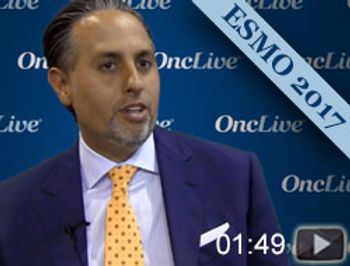
Omid Hamid, MD, director of the melanoma center at the Angeles Clinic & Research Institute in Los Angeles, discusses the phase III results of the ECHO-202/KEYNOTE-037 trial, which explored the IDO inhibitor epacadostat plus pembrolizumab (Keytruda) in patients with advanced melanoma.
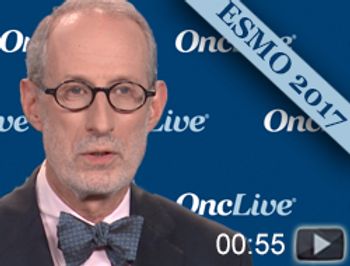
Jeffrey S. Weber, MD, PhD, deputy director and co-director of the Melanoma Program at the Laura and Isaac Perlmutter Cancer Center at NYU Langone Medical Center, discusses the CheckMate-238 trial for patients with melanoma.

Adjuvant treatment with dabrafenib and trametinib reduced the risk of relapse or death by 53% compared with placebo for patients with stage III BRAF-mutant melanoma.

A majority of patients with advanced melanoma responded to the combination of pembrolizumab and the investigational IDO1 inhibitor epacadostat.

The combination of encorafenib and binimetinib demonstrated significant improvements in PFS compared with single-agent vemurafenib or encorafenib for patients with BRAF-mutant advanced melanoma.
The FDA has granted a breakthrough therapy designation to cemiplimab (REGN2810) for the treatment of adults with metastatic cutaneous squamous cell carcinoma (CSCC) and adults with locally advanced and unresectable CSCC.
Merrick I. Ross, MD, professor, Department of Surgical Oncology, Division of Surgery, The University of Texas MD Anderson Cancer Center, discusses the future treatment landscape of melanoma.

Adding the IDO inhibitor indoximod to pembrolizumab (Keytruda) led to an overall response rate of 61% in patients with advanced melanoma.

The FDA has granted LN-144, an adoptive cell therapy that uses tumor-infiltrating lymphocyte technology developed by Iovance Biotherapeutics, a fast track designation for the treatment of patients with advanced melanoma.
Adil Daud, MD, clinical professor, Department of Medicine, Helen Diller Family Comprehensive Cancer Center, at University of California, San Francisco, discusses the current status of immunotherapy in melanoma.

Jean Jacques Grob, MD, PhD, professor of dermatology at the Hospital de la Timone, discusses the tolerability and efficacy of ipilimumab (Yervoy) for melanoma.

Robert Andtbacka, MD, discusses the long-term results for T-VEC in melanoma and the remaining challenges with the oncolytic immunotherapy.
Melissa A. Wilson, MD, PhD, an assistant professor of medicine at Perlmutter Cancer Center at NYU Langone Medical Center, discusses how physicians select between the 2 BRAF/MEK inhibitor combination regimens for their patients with melanoma.

Georgina V. Long, BSc, PhD, MBBS, discusses recent data with the combination of dabrafenib (Tafinlar) plus trametinib (Mekinist) in patients with BRAF V600-mutant unresectable or metastatic melanoma.
Jennifer A. Stein, MD, PhD, an associate professor of dermatology at NYU Langone Medical Center, discusses targeted therapies for patients with melanoma.
Shane A. Meehan, MD, associate professor, Ronald O. Perelman Department of Dermatology, associate professor, Department of Pathology, director of the Dermatopathology Fellowship Training Program, and director of the Dermatopathology Section at New York University Langone Medical Center, discusses the importance of immunohistochemistry (IHC) testing in melanoma.
Russell Berman, MD, division chief of Surgical Oncology at NYU Langone Medical Center, NYU Langone School of Medicine, shares insight on the evolving role of surgery in patients with melanoma.

Jennifer A. Stein, MD, PhD, an associate professor of dermatology at New York University School of Medicine in New York, discusses the skin-related adverse events (AEs) associated with melanoma treatment.
Advertisement
Advertisement
Trending on OncLive
1
FDA Approves Atezolizumab Plus Chemo for Stage III dMMR Colon Cancer
2
VIR-5500 Receives FDA Fast Track Designation in mCRPC
3
China’s NMPA Approves Adjuvant T-DXd for HER2+ Early Breast Cancer With Residual Invasive Disease
4
Individualized Neoantigen Vaccine Elicits Durable T-Cell Responses in Resected HPV– HNSCC
5