
Melanoma & Skin Cancer
Latest News
Advertisement
Latest Videos





























































Advertisement
More News
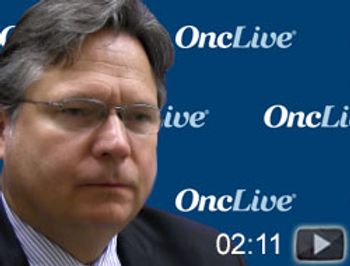
Igor Puzanov, MD, director, Early Phase Clinical Trials Program, chief of Melanoma, coleader, CCSG Experimental Therapeutics Program, professor of Oncology, Department of Medicine, Roswell Park Cancer Institute, discusses ways to manage patients with melanoma who may experience adverse events in response to treatment with immunotherapy.
Omid A. Hamid, MD, chief, Translational Research and Immunotherapy, director, Melanoma Therapeutics, The Angeles Clinic and Research Institute, discusses how to accurately select patients who are likely to have durable and long responses with single-agent immunotherapy versus combination treatment.
Yvonne Saenger, MD, director of Melanoma Immunotherapy at Columbia University Medical Center, discusses immunotherapy combinations in melanoma.
Jedd D. Wolchok, MD, PhD, chief, Melanoma and Immunotherapeutics Service, Department of Medicine and Ludwig Center at Memorial Sloan Kettering Cancer Center, 2014 Giant of Cancer Care in Melanoma, discusses an ongoing clinical trial that will explore optimal treatments for patients with melanoma who fail on a PD-1 inhibitor as a single agent.
Jason J. Luke, MD, an assistant professor of Medicine at the University of Chicago Medicine, discusses ongoing studies exploring immunotherapy for the treatment of patients with melanoma.
Igor Puzanov, MD, director, Early Phase Clinical Trials Program, chief of Melanoma, coleader, CCSG Experimental Therapeutics Program, professor of Oncology, Department of Medicine, Roswell Park Cancer Institute, discusses an ongoing study exploring the optimal sequence of immunotherapy agents and targeted therapies for patients with melanoma.
Stefani Spranger, PhD, postdoctoral fellow, Cancer Research Institute at The University of Chicago Medicine, discusses how the presence or absence of CD8 T cells can affect treatment approaches for patients with melanoma.
Jeffrey S. Weber, MD, PhD, deputy director and co-director of the Melanoma Program Laura and Isaac Perlmutter Cancer Center at NYU Langone Medical Center, discusses the risks and benefits of combination immunotherapy as treatment for patients with melanoma.
Omid Hamid, MD, chief, Translational Research and Immunotherapy, director, Melanoma Therapeutics, The Angeles Clinic and Research Institute, discusses different immunotherapy approaches that oncologists are currently exploring in melanoma.
Anna C. Pavlick, DO, medical oncologist, NYU Langone School of Medicine, discusses ongoing clinical trials exploring treatment with immunotherapy in patients with basal cell carcinoma as well as squamous cell carcinoma.
Jason Luke, MD, an assistant professor of Medicine at the University of Chicago Medicine, discusses some of the challenges that oncologists may face when administering immunotherapy agents to patients with melanoma.

Stefani Spranger, PhD, postdoctoral fellow, Cancer Research Institute at The University of Chicago, discusses immune checkpoint blockade therapies that are currently being used to treat patients with melanoma.
Omid Hamid, MD, chief, Translational Research and Immunotherapy, director, Melanoma Therapeutics, The Angeles Clinic and Research Institute, discusses 2 exciting, ongoing phase III randomized trials in melanoma.
Advertisement
Advertisement
Trending on OncLive
1
FDA Approves Atezolizumab Plus Chemo for Stage III dMMR Colon Cancer
2
VIR-5500 Receives FDA Fast Track Designation in mCRPC
3
China’s NMPA Approves Adjuvant T-DXd for HER2+ Early Breast Cancer With Residual Invasive Disease
4
Individualized Neoantigen Vaccine Elicits Durable T-Cell Responses in Resected HPV– HNSCC
5