
Melanoma & Skin Cancer
Latest News
Advertisement
Latest Videos


































































Advertisement
More News



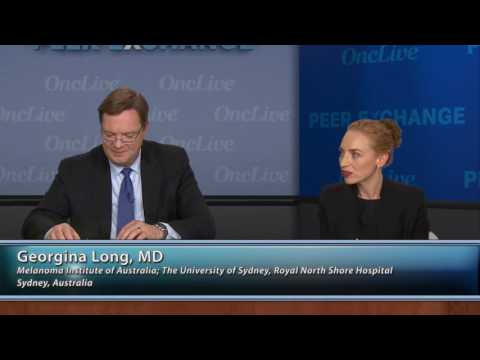
Georgina V. Long, BSc, PhD, MBBS, chair of Melanoma Medical Oncology and Translational Research at the Melanoma Institute of Australia (MIA) and Royal North Shore Hospital, University of Australia, discusses the patients with melanoma who respond best to the combination of dabrafenib plus trametinib.

Rodabe N. Amaria, MD, assistant professor Department of Melanoma Medical Oncology, Division of Cancer Medicine, The University of Texas MD Anderson Cancer Center, discusses the results of a recent trial testing neoadjuvant and adjuvant dabrafenib plus trametinib versus standard of care in high-risk resectable BRAF-mutant melanoma.

Results from a safety, tolerability, and dose escalation phase Ib/II study involving intratumoral SD-101 and pembrolizumab (Keytruda) have demonstrated that the combination was well-tolerated with no dose-limiting toxicities.

Treatment with the combination of dabrafenib and trametinib before and after surgery demonstrated a dramatic improvement in relapse-free survival compared with the standard of care for patients with stage IIIb/c or oligometastatic BRAF-mutant melanoma.

Keith T. Flaherty, MD, director of the Termeer Center for Targeted Therapy, Massachusetts General Hospital and professor of Medicine, Harvard Medical School, discusses the results from the COLUMBUS trial, testing encorafenib plus binimetinib compared to vemurafenib or encorafenib as single agents.

Bin Zheng, PhD, assistant professor of Dermatology at Harvard Medical School and assistant biologist at Massachusetts General Hospital, discusses the potential for phenformin, a drug created for Type 2 diabetes, to be used for patients with melanoma.

The combination of the BRAF inhibitor encorafenib and the MEK inhibitor binimetinib reduced the risk of progression or death by 46% compared with vemurafenib (Zelboraf) for patients with BRAF-mutant unresectable melanoma.

The combination of nilotinib and trametinib proved to be synergistic in BRAF/NRAS wild-type melanoma.

The combination of dabrafenib and trametinib continued to demonstrate durable efficacy for patients with BRAF V600E/K-mutant melanoma across patient subgroups in a 3-year analysis of the phase III COMBI-d study, with baseline site of metastasis identified as a predictor of overall survival ≥36 months,

Graham Mann, MBBS, PhD, FRACP, professor of Medicine, Westmead Clinical School and co-director of the Centre for Cancer Research, The Westmead Institute for Medical Research at the University of Sydney in Australia, discusses his findings from the Australian Melanoma Genome Project, which were presented at the 2016 Society for Melanoma Research (SMR) Congress.

Stefani Spranger, PhD, postdoctoral fellow at the University of Chicago, discusses recent findings about why a certain subgroup of patients with melanoma do not have T cells within their tumor microenvironment.

Helmut Schiader, MD, discusses why drug resistance may be due to epigenetic changes and not mutation-induced changes, as well as the role of immunotherapy/targeted therapy combinations in combating resistance.
Advertisement
Advertisement
Trending on OncLive
1
FDA Approves Atezolizumab Plus Chemo for Stage III dMMR Colon Cancer
2
VIR-5500 Receives FDA Fast Track Designation in mCRPC
3
China’s NMPA Approves Adjuvant T-DXd for HER2+ Early Breast Cancer With Residual Invasive Disease
4
Individualized Neoantigen Vaccine Elicits Durable T-Cell Responses in Resected HPV– HNSCC
5