

Melanoma & Skin Cancer
Latest News
Advertisement
Latest Videos





























































Advertisement
More News
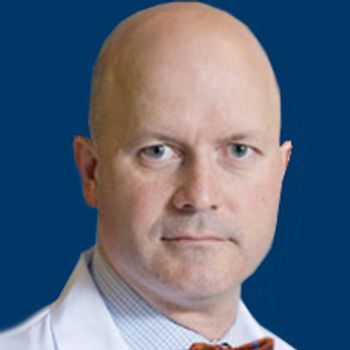
Keith T. Flaherty, MD, discusses choosing between immunotherapy and targeted therapy in the frontline setting for patients with BRAF-mutated melanoma.
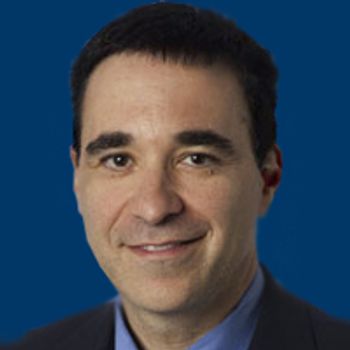
The PD-L1 inhibitor avelumab demonstrated durable responses and promising early survival data for patients with pretreated metastatic Merkel cell carcinoma.

Yardena Samuels, PhD, Tenured Associate Professor, Department of Moleular Cell Biology, the Weizmann Institute of Science, Israel, discuses her lab’s discovery of a potential prognostic biomarker in cutaneous sporadic melanoma.
The combination of dabrafenib and trametinib continued to demonstrate impressive overall survival and progression-free survival findings for patients with BRAF-mutant metastatic melanoma in 3-year follow-up data from the phase III COMBI-d study.
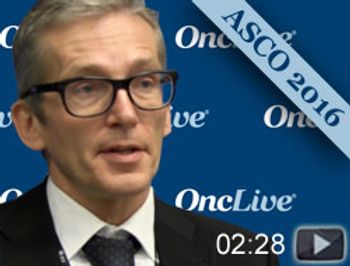
Reinhard Dummer, MD, professor, Department of Dermatology, University of Zurich Hospital, discusses the results of the phase III NEMO trial, which compared the efficacy of binimetinib with dacarbazine in patients with NRAS-mutant metastatic melanoma.
At a minimum follow-up of 18 months, the combination of nivolumab and ipilimumab reduced the risk of disease progression by 58% compared with ipilimumab alone, and single-agent nivolumab lowered the risk of progression by 45% versus ipilimumab monotherapy in patients with advanced melanoma.

The MEK inhibitor binimetinib reduced the risk of progression or death by 38% compared with dacarbazine in patients with NRAS-mutant metastatic melanoma.

A long-term analysis has shown that approximately one-fifth of patients with BRAF V600-mutant melanoma who were treated with the combination of dabrafenib (Tafinlar) and trametinib (Mekinist) remained progression-free after 3 years, suggesting a plateau of the survival curve.

Forty percent of patients with advanced melanoma who started taking pembrolizumab during the clinical trial that led to its initial approval were still alive after 3 years, with many responders in remission even after stopping treatment.

The European Commission has approved the combination of ipilimumab and nivolumab as a treatment for patients with unresectable or metastatic melanoma regardless of BRAF status.

Antoni Ribas, MD, PhD, shares exciting clinical trial results of immunotherapy agents in patients with melanoma, as well as what the future holds for the field.

Desiree Ratner, MD, discusses what oncologists should know about hedgehog inhibitors in advanced basal cell carcinoma and what the future holds for these agents.
Norman E. Sharpless, MD, professor of Medicine and Genetics, chair, the University of North Carolina (UNC) Lineberger Comprehensive Cancer Center, UNC School of Medicine, discusses how oncologists can best manage toxicities associated with the combination of nivolumab (Opdivo) and ipilimumab (Yervoy) for the treatment of patients with melanoma.
Chris Barker, MD, discusses a study investigating radiation therapy plus the hedgehog pathway inhibitor vismodegib (Erivedge) in patients with locally advanced basal cell carcinoma of the head and neck.
Patrick Ott, MD, PhD, discusses toxicity management and patient selection considerations required with the combination of nivolumab (Opdivo)/ipilimumab (Yervoy), and its role in BRAF-mutant melanoma.
Antoni Ribas, MD, PhD, professor of Hematology and Oncology and director of the Tumor Immunology Program Area at UCLA Jonsson Comprehensive Cancer Center, discusses triplet therapies for patients with melanoma and the sequencing challenges associated with the approvals of additional agents in the field.

Omid Hamid, MD, outlines a selection of combinations that are on the horizon in advanced melanoma.
Michael Postow, MD, medical oncologist, Memorial Sloan Kettering Cancer Center, discusses the overall survival (OS) results of the CheckMate-069 study, which investigated the combination of nivolumab (Opdivo) and ipilimumab (Yervoy) for the treatment of patients with melanoma.
The combination of ipilimumab (Yervoy) and nivolumab (Opdivo) showed a 42% improvement in overall survival compared with ipilimumab monotherapy for patients with advanced melanoma in a 2-year assessment of the phase II CheckMate-069 trial.
F. Stephen Hodi, MD, director of the Melanoma Center at Dana-Farber Cancer Institute, discusses the results of the longest follow-up survival study of patients with advanced melanoma who were treated with single-agent nivolumab (Opdivo).

Single-agent nivolumab demonstrated a robust 5-year overall survival rate of 34% for heavily pretreated patients with metastatic melanoma who had not received prior ipilimumab.
Talimogene laherparepvec (T-VEC; Imlygic), an oncolytic viral immunotherapy approved for patients with melanoma, is being evaluated in a presurgical setting in a phase II clinical trial that may help set the stage for expanding the toolkit of neoadjuvant options for patients with the malignancy.
Michael B. Atkins, MD, deputy director, Georgetown-Lombardi Comprehensive Cancer Center, professor of Oncology and Medicine, Georgetown University School of Medicine, discusses the adjuvant use of ipilimumab (Yervoy) in patients with melanoma.
PD-1/PD-L1 should be the backbone of melanoma treatment for many patients, says Jason Luke, MD, an assistant professor of Medicine at the University of Chicago Medicine.

Tara C. Mitchell, MD, discusses what oncologists need to know about using immunotherapies in melanomaâ€â€
Advertisement
Advertisement
Trending on OncLive
1
FDA Approves Atezolizumab Plus Chemo for Stage III dMMR Colon Cancer
2
VIR-5500 Receives FDA Fast Track Designation in mCRPC
3
China’s NMPA Approves Adjuvant T-DXd for HER2+ Early Breast Cancer With Residual Invasive Disease
4
Individualized Neoantigen Vaccine Elicits Durable T-Cell Responses in Resected HPV– HNSCC
5