

Melanoma & Skin Cancer
Latest News
Advertisement
Latest Videos





























































Advertisement
More News
Combining the CD122-biased cytokine NKTR-214 with the PD-1 inhibitor nivolumab (Opdivo) showed promising antitumor activity, particularly in PD-L1–negative patients.

Personalized therapy based on tumor molecular profiling resulted in improved overall survival for patients with advanced, hard-to-treat cancers.
IMCgp100, a novel immune-based treatment, demonstrated a 1-year survival rate of 73% for patients with heavily pretreated, which is nearly double the historical expectations for patients with the disease.
The unique biological characteristics of uveal melanoma have prompted the National Comprehensive Cancer Network to develop the first set of guidelines for the diagnosis and management of the rare cancer.
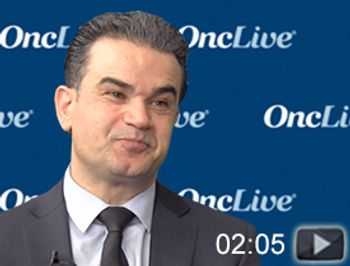
Ahmad Tarhini, MD, PhD, director, Melanoma and Skin Cancer Program, Center for Immuno-Oncology Research, Cleveland Clinic, discusses adjuvant therapy for patients with melanoma.
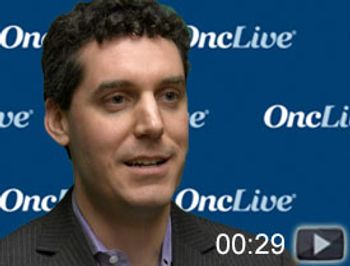
Michael A. Postow, MD, medical oncologist, Memorial Sloan Kettering Cancer Center, discusses the FDA approval of dabrafenib (Tafinlar) plus trametinib (Mekinist) as an adjuvant treatment for patients with BRAF V600E– or V600K–positive stage III melanoma following complete resection.
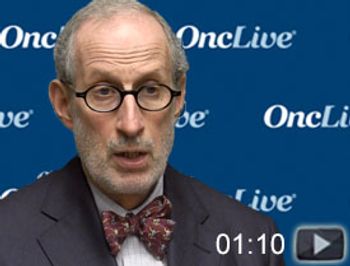
Jeffrey S. Weber, MD, PhD, the Laura and Isaac Perlmutter Professor of Oncology, co-director of the Melanoma Research Program, deputy director of the Perlmutter Cancer Center, NYU Langone Medical Center, and a 2016 Giant of Cancer Care® in Melanoma, discusses the FDA approval of dabrafenib (Tafinlar) plus trametinib (Mekinist) as an adjuvant treatment for patients with BRAF V600E– or V600K–positive stage III melanoma following complete resection.
The FDA has approved the combination of dabrafenib and trametinib for the adjuvant treatment of patients with BRAF V600E– or V600K–positive stage III melanoma following complete resection.
The FDA has granted a priority review to a biologics license application for the PD-1 inhibitor cemiplimab for the treatment of patients with metastatic cutaneous squamous cell carcinoma (CSCC) or patients with locally advanced CSCC who are not eligible for surgery.
The European Commission has approved 2 new dosing schedules for nivolumab across several tumor types.
Adjuvant treatment of patients with intermediate- and high-risk melanoma has changed drastically in the past decade, according to John M. Kirkwood, MD.
Alexander M. M. Eggermont, MD, PhD, director general of Gustave Roussy Cancer Campus Grand Paris in Villejuif, France, discusses the impact of adjuvant anti–PD-L1 agents on the treatment landscape of melanoma.
Combination use of CMP-001, an intratumoral toll-like receptor 9 agonist, and pembrolizumab (Keytruda) showed clinical activity in reversing PD-1 checkpoint inhibition resistance in patients with metastatic melanoma.
Adjuvant pembrolizumab (Keytruda) reduced the risk of recurrence or death by 43% in patients with resected, high-risk stage III melanoma, according to phase III results from the EORTC 1325-MG/KEYNOTE-054 trial.
Robert Andtbacka, MD, associate professor in the Division of Surgical Oncology, Department of Surgery at the University of Utah School of Medicine, discusses the future of talimogene laherparapvec (T-VEC; Imlygic) in the treatment of patients with melanoma.
Jeffrey S. Weber, MD, PhD, deputy director and co-director of the Melanoma Program, NYU Langone’s Perlmutter Cancer Center, 2016 Giant of Cancer Care® in Melanoma, discusses exciting recent advancements for patients with melanoma.

The combination of the PD-1 inhibitor pembrolizumab and the IDO1 inhibitor epacadostat failed to improve progression-free survival versus single-agent pembrolizumab in patients with unresectable or metastatic melanoma, according to findings from the phase III ECHO-301/KEYNOTE-252 trial.

The combination of nivolumab and ipilimumab induced an intracranial response of 46% in melanoma patients with asymptomatic, untreated brain metastases.
Ryan J. Sullivan, MD, instructor of Medicine, Harvard Medical School, assistant in medicine, MGH Cancer Center, Massachusetts General Hospital, discusses the current treatment of patients with melanoma.
Michael A. Postow, MD, medical oncologist, Memorial Sloan Kettering Cancer Center, discusses new targets in melanoma.
Robert Andtbacka, MD, associate professor in the Division of Surgical Oncology, Department of Surgery at the University of Utah School of Medicine, discusses combination therapy in melanoma.
Jeffrey S. Weber, MD, PhD, deputy director and co-director of the Melanoma Program at the Laura and Isaac Perlmutter Cancer Center at NYU Langone Medical Center, 2016 Giant of Cancer Care® in Melanoma, discusses the side effect profile of dabrafenib (Tafinlar) and trametinib (Mekinist) for patients with melanoma.
Eric Whitman, MD, surgeon, Atlantic Health System, discusses the role of pembrolizumab (Keytruda) in the treatment of patients with melanoma.

The FDA has approved a supplemental biologics license application adding a 4-week dosing schedule for nivolumab across several of the PD-1 inhibitor’s indications.
Michael A. Postow, MD, medical oncologist, Memorial Sloan Kettering Cancer Center, discusses side effects with combination therapy in melanoma.
Advertisement
Advertisement
Trending on OncLive
1
FDA Approves Atezolizumab Plus Chemo for Stage III dMMR Colon Cancer
2
VIR-5500 Receives FDA Fast Track Designation in mCRPC
3
China’s NMPA Approves Adjuvant T-DXd for HER2+ Early Breast Cancer With Residual Invasive Disease
4
MAVERICK, B7-H3–Directed ADCs, and ADAURA Data Headline Key Lung Cancer Findings From WCLC 2026
5