

Melanoma & Skin Cancer
Latest News
Latest Videos

CME Content
More News



Frederic Triebel, MD, PhD, chief scientific officer and chief medical director, Immuntep Ltd, discusses a novel immunotherapy combination in melanoma.

The addition of a novel PD-1 inhibitor to a combination of BRAF inhibitor dabrafenib (Tafinlar) and MEK inhibitor trametinib (Mekinist) is being tested to determine whether the triplet is safe and effective for patients with metastatic or unresectable melanoma.

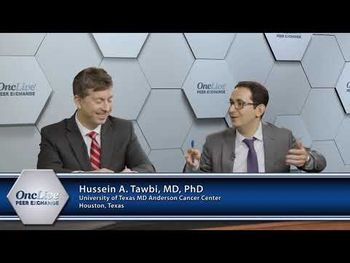
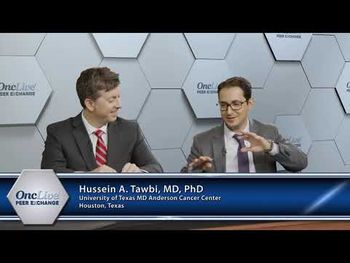
Hussein A. Tawbi, MD, PhD, associate professor, The University of Texas MD Anderson Cancer Center, discusses the promise of checkpoint inhibition in the treatment of melanoma.

Jeffrey S. Weber, MD, PhD, deputy director and co-director of the Melanoma Program, NYU Langone’s Perlmutter Cancer Center, 2016 Giant of Cancer Care® in Melanoma, discusses duration of checkpoint inhibitor therapy in patients with melanoma.

In the 44 years since John M. Kirkwood, MD began his career, he has seen melanoma become a growing field of research.

The treatment armamentarium for adjuvant melanoma has expanded rapidly, which has left the treatment challenge of selecting between immunotherapy and targeted therapy without any head-to-head comparative data.

Paolo A. Ascierto, MD, director of the Unit of Melanoma, Cancer Immunotherapy and Innovative Therapy at the National Tumor Institute Fondazione G. Pascale in Naples, discusses how to choose between combination therapies in the treatment of patients with melanoma.

Long-term follow-up from the COMBI-AD trial continued to show a significant relapse-free survival advantage for patients with resected stage III BRAF-mutant melanoma treated with adjuvant dabrafenib plus trametinib.

Genetically engineered T-cells targeting a common tumor antigen appeared safe and demonstrated some evidence of antitumor activity in a first-in-human clinical evaluation.

Keith T. Flaherty, MD, director, Termeer Center for Targeted Therapy, Massachusetts General Hospital Cancer Center, professor of medicine, Harvard Medical School, discusses BRAF inhibitors for the treatment of patients with melanoma.

Hassane M. Zarour, MD, professor of medicine, University of Pittsburgh, discusses unmet needs in melanoma.

Gene expression-based biomarkers associated with disease recurrence in patients with cutaneous squamous cell carcinoma may help in identifying a population subset considered to have high-risk disease.

Michael A. Postow, MD, medical oncologist, Memorial Sloan Kettering Cancer Center, discusses the FDA approval of cemiplimab in patients with advanced or metastatic cutaneous squamous cell carcinoma.

Danny Rischin, MD, director, Division of Cancer Medicine, head, Department of Medical Oncology, Peter MacCallum Cancer Centre, discusses the FDA approval of cemiplimab for the treatment of patients with cutaneous squamous cell carcinoma.

The FDA has approved the PD-1 inhibitor cemiplimab (Libtayo) for the treatment of patients with metastatic cutaneous squamous cell carcinoma (CSCC) or patients with locally advanced CSCC who are not candidates for curative surgery or curative radiation.

More patients than ever before may now be good candidates for adjuvant therapy and derive long-term benefits from it, but new data and expanding treatment options have led to many new questions on how to optimize treatment for melanoma.

Jeffrey S. Weber, MD, PhD, discusses the promise of nivolumab in this setting and a general overview of the melanoma treatment landscape.

Alexander M. M. Eggermont, MD, PhD, director general of Gustave Roussy Cancer Campus Grand Paris in Villejuif, France, discusses the impact of pembrolizumab in melanoma.

Paul Nghiem, MD, PhD, Michael Piepkorn Endowed Chair in Dermatology Research, professor of Dermatology/Medicine at Fred Hutchinson Cancer Research Center, University of Washington Medicine, discusses challenges with immunotherapy in patients with Merkel cell carcinoma