



Melanoma & Skin Cancer
Latest News
Advertisement
Video Series





Latest Videos
































































Advertisement
More News

EVX-01 plus pembrolizumab generated an overall response rate of 75% and durable T-cell responses in advanced melanoma.

The FDA has cleared BVd for multiple myeloma and revumenib for NPM1-mutant AML, and granted priority review to perioperative enfortumab vedotin in MIBC.

FDA Approval Insights: Adjuvant Cemiplimab for High-Risk CSCC: With Vishal A. Patel, MD, FAAD, FACMS
Dr Patel discusses the clinical relevance of the FDA approval of adjuvant cemiplimab for the management of high-risk cutaneous squamous cell carcinoma.

Adjuvant cemiplimab significantly cut recurrence risk and improved disease-free survival in high-risk CSCC, establishing a new standard of care.

Jessica C. Hassel, MD, discusses rationale for combining IO102-IO103 with pembrolizumab in patients with treatment-naive advanced melanoma.
The FDA granted fast track to NBM-BMX, a HDAC8 inhibitor, for metastatic uveal melanoma.
Neoadjuvant nivolumab plus ipilimumab proved superior to adjuvant nivolumab alone with longer follow-up data from the NADINA trial in stage III melanoma.
IO102-IO103 plus pembrolizumab was associated with a clinically relevant improvement in median progression-free survival.
Will the FDA approve a resubmitted biologics license application for RP1 plus nivolumab in advanced melanoma after progression on anti–PD-1 therapy?
Pembrolizumab plus lenvatinib was safe and active in HLA-A*02:01–negative and –positive uveal melanoma.
Adjuvant nivolumab significantly extended RFS vs ipilimumab in patients with resected stage IIIB to IIIC or IV melanoma.
Adjuvant cemiplimab and placebo were associated with similar rates of second primary tumors in high-risk CSCC.
BNT111 plus cemiplimab achieved an 18.1% ORR in PD-(L)1–refractory melanoma, meeting its primary end point in the phase 2 BNT111-01 trial.
The EMA’s CHMP has recommended the approval of adjuvant cemiplimab in CSCC at high risk of recurrence after surgery and radiation
Vishal A. Patel, MD, discusses the FDA approval of adjuvant cemiplimab for CSCC at high risk of recurrence following surgery and radiation.
The FDA approved adjuvant cemiplimab in cutaneous squamous cell carcinoma, issued a CRL to dasatinib in chronic myeloid leukemia, and more.
The FDA approved cemiplimab-rwlc for the adjuvant treatment of cutaneous squamous cell carcinoma at high risk of recurrence after surgery and radiation.
WTX-124 has received fast track designation from the FDA for locally advanced or metastatic cutaneous melanoma after standard-of-care immunotherapy.
Check out this September recap of OncLive’s coverage of the top news and expert insights in melanoma.
The FDA clears maintenance lurbinectedin combination in lung cancer, T-DxD sBLA in HER2-positive breast cancer is accepted for review, and more.
Here is your Q4 2025 preview spotlighting 10 FDA decisions to watch, including upcoming PDUFAs for belantamab mafodotin, revumenib, sevabertinib, and more.
Significantly longer recurrence-free survival has been demonstrated with neoadjuvant daromun vs surgery alone in patients with locally advanced melanoma.
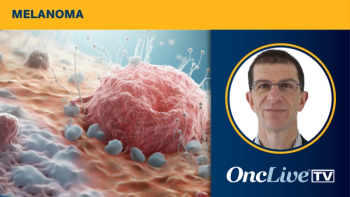
Danny Rischin, MD, discusses safety findings from the phase 3 C-POST trial of adjuvant cemiplimab vs placebo in patients with high-risk CSCC.
Janice M. Mehnert, MD, discusses the ongoing investigation of sarilumab plus ipilimumab, nivolumab, and relatlimab in unresectable stage III/IV melanoma.
Paul Nathan, MBBS, PhD, MRCP, describes the mechanism of action of roginolisib and its ongoing evaluation in metastatic uveal melanoma.
Advertisement
Advertisement
Trending on OncLive
1
FDA Approves Atezolizumab Plus Chemo for Stage III dMMR Colon Cancer
2
VIR-5500 Receives FDA Fast Track Designation in mCRPC
3
Individualized Neoantigen Vaccine Elicits Durable T-Cell Responses in Resected HPV– HNSCC
4
China’s NMPA Approves Adjuvant T-DXd for HER2+ Early Breast Cancer With Residual Invasive Disease
5